

When shopping for wood outdoor furniture, one of the most common questions homeowners ask is:
Should I choose eucalyptus wood or teak wood?
Both materials are popular for patios, decks, gardens, and poolside spaces because they offer natural beauty and excellent durability outdoors. However, they differ significantly in price, maintenance requirements, weather resistance, and overall lifespan.
If you're deciding between the two, this guide explains the key differences so you can choose the best material for your outdoor space and budget.
Quick Comparison
| Feature | Eucalyptus Wood | Teak Wood |
|---|---|---|
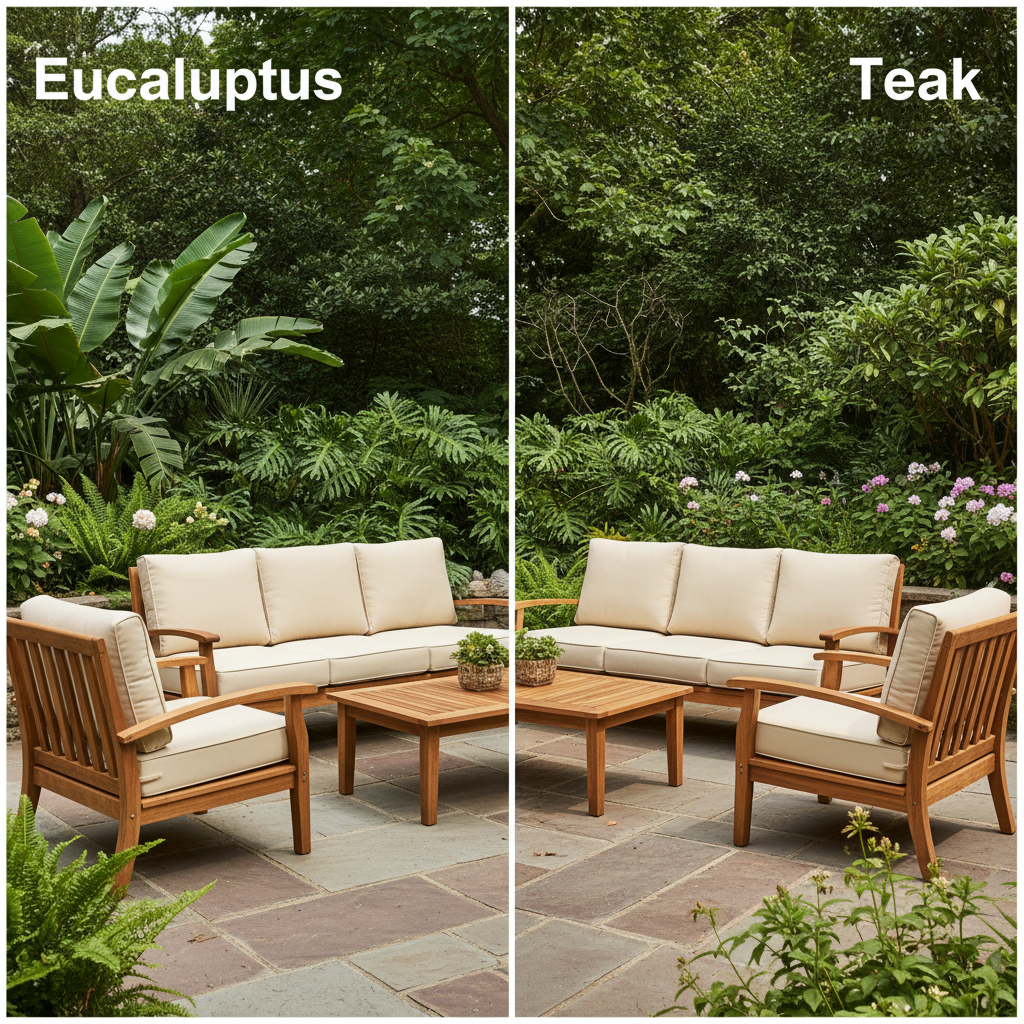
| Appearance | Warm golden to reddish brown | Rich golden brown that ages to silver gray |
| Durability | Very good | Excellent |
| Weather Resistance | Good | Outstanding |
| Natural Oils | Moderate | Very high |
| Insect Resistance | Good | Excellent |
| Maintenance | Oil once or twice a year | Minimal; optional oiling |
| Lifespan | 10–20 years with proper care | 25–50+ years |
| Sustainability | Fast-growing and renewable | Plantation-grown is sustainable; natural teak is limited |
| Price | $2000-$4000 | $4000+ |
1. Origin
Eucalyptus Wood
Eucalyptus is native to Australia but is now widely grown in South America, Africa, and Asia. Because eucalyptus trees grow rapidly—often reaching maturity within 10 to 15 years—they are considered one of the more sustainable hardwood options for outdoor furniture.
Teak Wood
Teak originates from Southeast Asia, especially Indonesia, Myanmar, and Thailand. Genuine teak requires several decades to mature, making it much rarer and more expensive.
Today, the highest-quality outdoor teak furniture is typically made from responsibly managed plantation teak, helping reduce pressure on natural forests.
2. Strength and Density
Although both are hardwoods, teak is noticeably denser.
Eucalyptus
- Strong enough for everyday outdoor use
- Less dense than teak
- Slightly more susceptible to dents and scratches
- Performs well when properly finished
Teak
- Extremely dense hardwood
- Outstanding structural stability
- Resists cracking, warping, and splitting
- Built to withstand decades of outdoor exposure
For families planning long-term patio investments, teak offers superior structural durability.
3. Appearance
One reason both woods remain popular is their natural beauty.
Eucalyptus
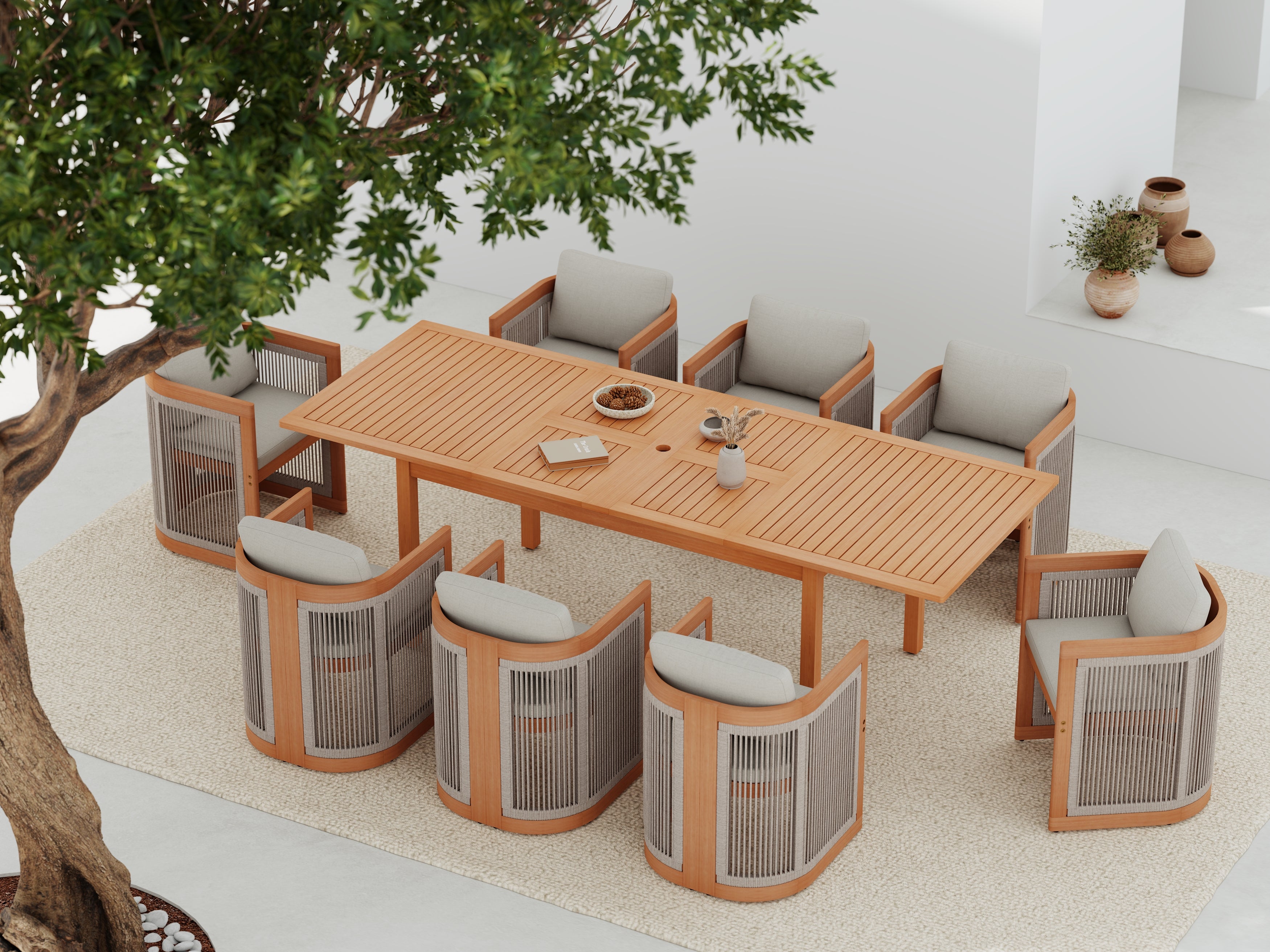
Fresh eucalyptus typically features warm honey, reddish-brown, or chestnut tones with attractive grain patterns that complement modern and transitional outdoor spaces.
Teak
Fresh teak has a rich golden-brown appearance with a smooth, luxurious grain. Over time, exposure to sunlight naturally transforms untreated teak into the iconic silver-gray patina many homeowners love.
Importantly, this color change is cosmetic only—it does not reduce the wood's strength.
4. Weather Resistance
Outdoor furniture constantly faces sun, rain, humidity, and changing temperatures.
Eucalyptus
Eucalyptus contains natural oils that provide good resistance to moisture and decay. However, these oils are less concentrated than those found in teak.
To maintain its appearance, eucalyptus furniture benefits from:
- Cleaning every few months
- Applying hardwood oil once or twice per year
- Using furniture covers during extended periods of rain or snow
Teak
Teak is famous for its exceptionally high natural oil content.
These oils help protect the wood against:
- Rain
- UV exposure
- Mold and mildew
- Rot
- Termites
- Other insects
Because of this, teak can remain outdoors year-round in many climates with very little maintenance.
5. Maintenance Requirements
Maintenance is often the deciding factor for homeowners.
Caring for Eucalyptus
To extend its lifespan:
- Wash with mild soap and water.
- Reapply protective hardwood oil once or twice each year.
- Avoid standing water.
- Cover or store furniture during severe winter weather when possible.
Caring for Teak
Teak is much easier to maintain.
Many owners simply:
- Rinse off dirt occasionally.
- Allow the wood to weather naturally.
- Skip oiling entirely if they prefer the silver-gray finish.
If you want to preserve teak's golden color, applying teak oil periodically is optional—not required for durability.
6. Sustainability
Sustainability has become increasingly important when purchasing outdoor furniture.
Eucalyptus
Because eucalyptus grows quickly and can be harvested responsibly within a relatively short period, it is considered one of the most environmentally friendly hardwood choices.
Teak
Teak's slower growth makes responsible sourcing more important. Look for furniture made from plantation-grown or responsibly managed teak rather than timber harvested from unmanaged natural forests.
7. Price
Price is where these two materials differ most.
Eucalyptus
- More affordable
- Excellent value
- Ideal for furnishing larger patios on a reasonable budget
Teak
- Premium pricing
- Higher upfront investment
- Exceptional long-term value thanks to its longevity
Although teak costs more initially, many owners keep teak furniture for several decades, making its lifetime cost surprisingly competitive.
Which Wood Is Better?
Choose Eucalyptus if you:
- Want beautiful natural wood at a more affordable price
- Don't mind occasional maintenance
- Enjoy refreshing the wood's appearance with seasonal care
- Need quality furniture without the premium cost
Choose Teak if you:
- Want maximum durability
- Live in humid, rainy, or coastal climates
- Prefer minimal maintenance
- Plan to keep your furniture for decades
- Are comfortable investing more upfront
Is Eucalyptus a Good Alternative to Teak?
Yes.
High-quality eucalyptus outdoor furniture offers an excellent balance between beauty, durability, sustainability, and affordability. For many homeowners, it provides nearly the same natural aesthetic as teak at a significantly lower cost.
While it won't match teak's legendary lifespan or weather resistance, regular care can keep eucalyptus furniture looking beautiful for many years.
Acacia wood is also a fantastic affordable alternative to teak. They mimic teak’s natural visual charm with much lower costs. Their natural weather durability is inferior to teak, but basic maintenance will keep the furniture intact and attractive for years outdoors. Learn more about the Acacia Wood Product Maintenance Guide.
Buyer Tips: How to Tell the Difference?
Because teak commands a much higher price, it's important to verify what you're buying.
When shopping for wooden outdoor furniture:
- Check the product specifications carefully.
- Ask whether the furniture is made from solid eucalyptus or solid teak.
- Request information about the wood's origin and sourcing.
- Be cautious of unusually low-priced "teak" furniture, as some sellers may market eucalyptus or mixed hardwoods as teak.
Understanding the material helps ensure you're paying a fair price for the performance and longevity you expect.
Eucalyptus and teak are both fantastic hardwood materials for outdoor furnishings. There is no absolute better option—your budget, maintenance habits and how long you plan to use the furniture will guide your best pick.
Once you know the unique perks of each wood type, you can easily select patio furniture matching your lifestyle and outdoor area layout. At Jardina, we provide solid wood outdoor furniture constructed with teak, eucalyptus and acacia wood to cover all your outdoor furnishing needs.