
Every few years the outdoor furniture world produces a shape that splits the room. Curved sectionals are the current contender. Scroll through any 2026 trend report and you'll find rounded silhouettes described as the defining look of the year — one report went so far as to call curved outdoor seating "the trend defining the coolest gardens in 2026," with the argument that rectangular forms are giving way to gentler, more organic profiles. That kind of language usually signals a fad.
But curves have been building for longer than a single season, and the reasons behind them aren't purely decorative. So let's separate the hype from what's actually happening.

First, "Curved" Covers More Than One Thing
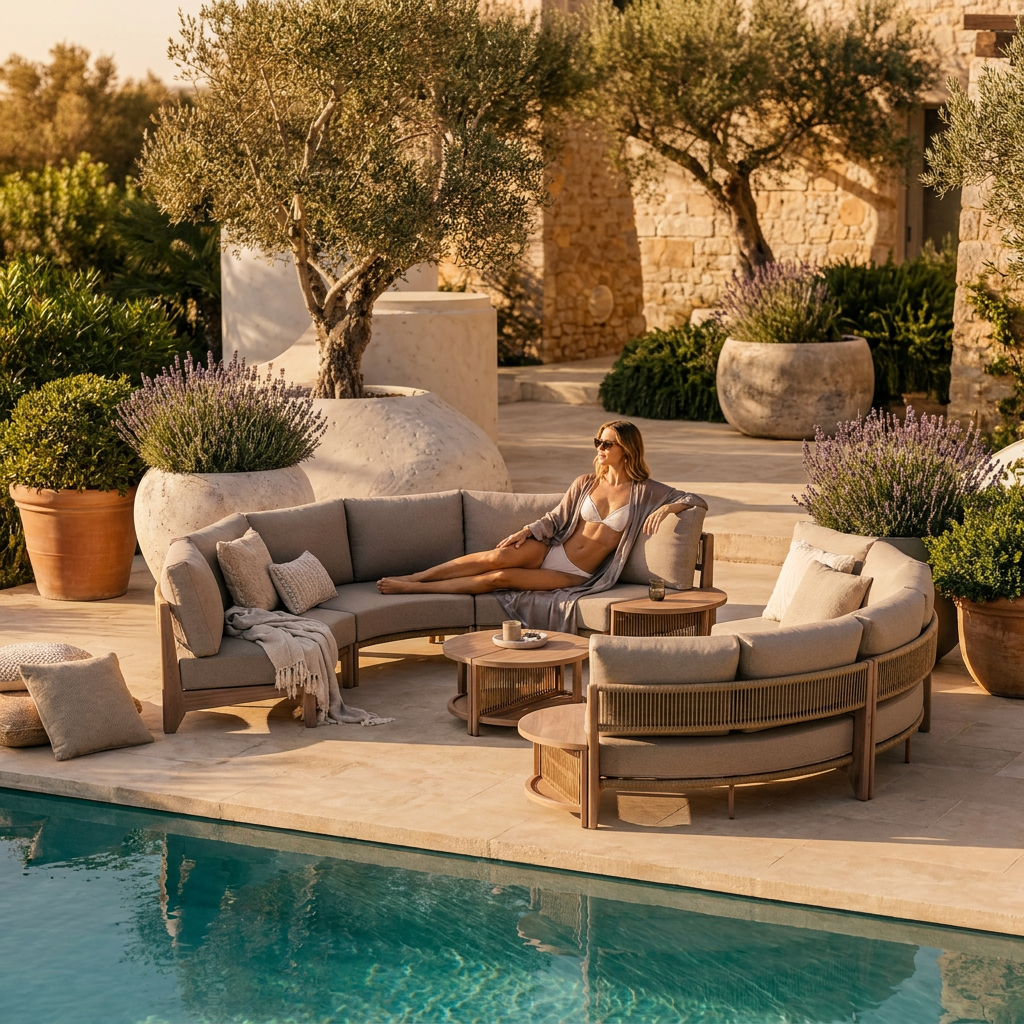
The phrase gets used loosely, and that looseness is part of why the trend-or-fad debate never resolves. A curved outdoor sectional might be a gently arced sofa, a half-moon arrangement, a pair of curved pieces flanking a round table, or a full open-circle configuration that nearly closes on itself.
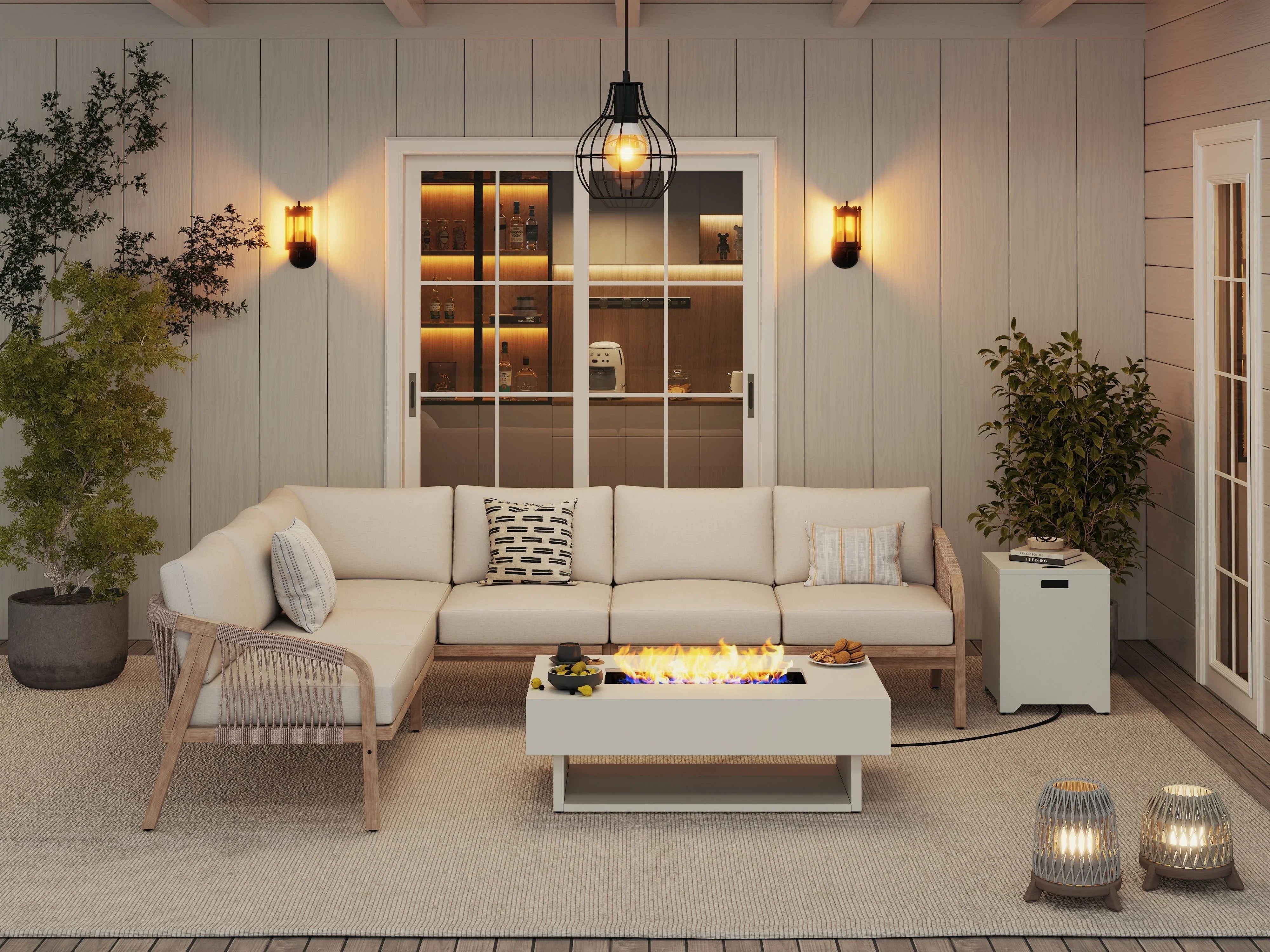
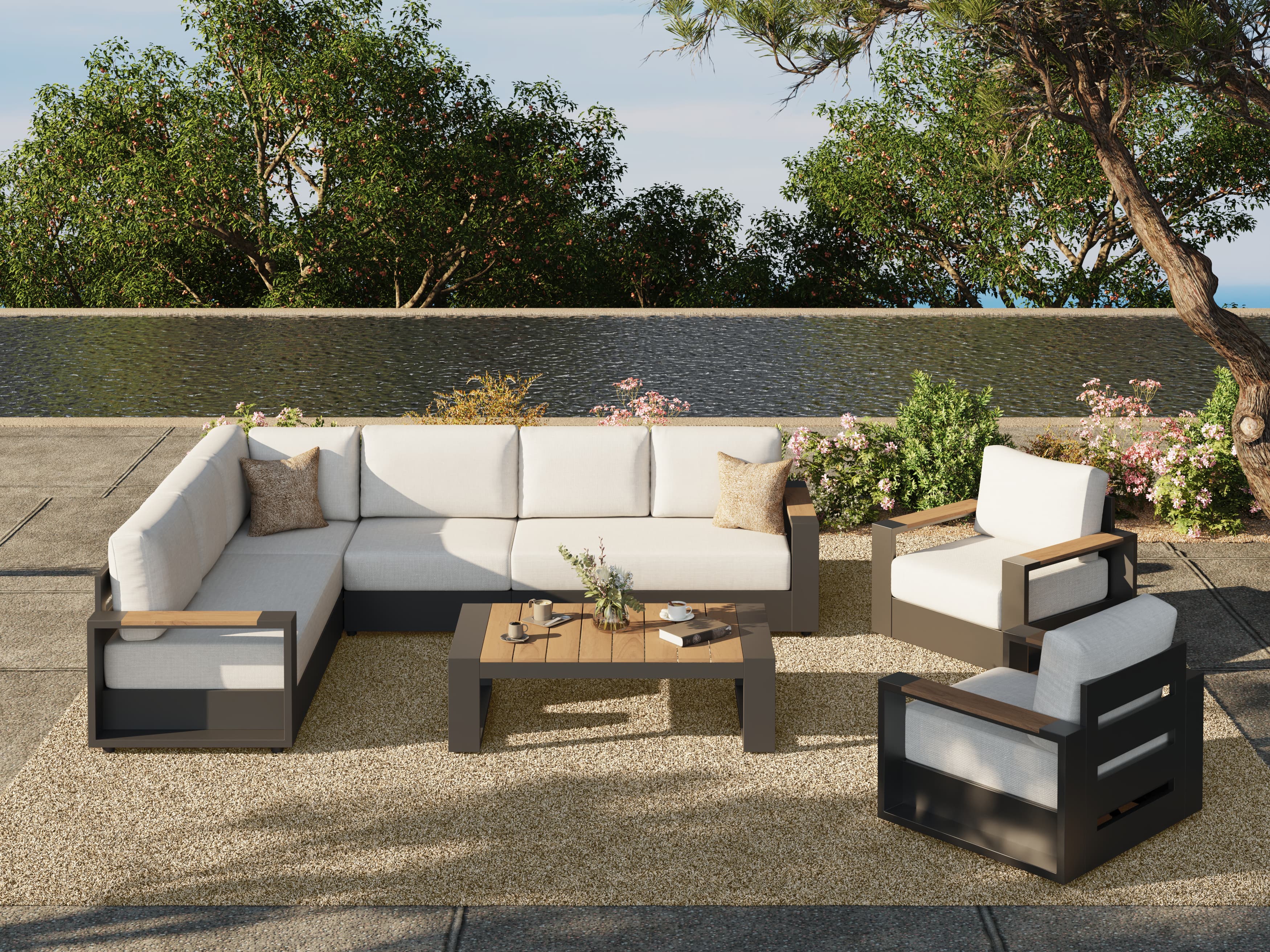
That range matters, because it explains who the shape is actually for. If you want the full picture of how these configurations differ — L-shaped, U-shaped, curved, modular — that breakdown of types of outdoor sectionals lays it out side by side.
The Case That It's a Real Shift
Three things separate a design trend from a flash in the pan: it solves a functional problem, it connects to a broader movement, and it survives more than one buying cycle. Curves are clearing all three.
The functional argument is the strongest. Curved seating creates a natural flow that encourages conversation and relaxation, rather than the rigid geometry of straight-lined furniture. Industry coverage puts it more bluntly — curved silhouettes aren't just aesthetic, they eliminate problems that boxy pieces create, and they soften sightlines in a way rectangles can't.
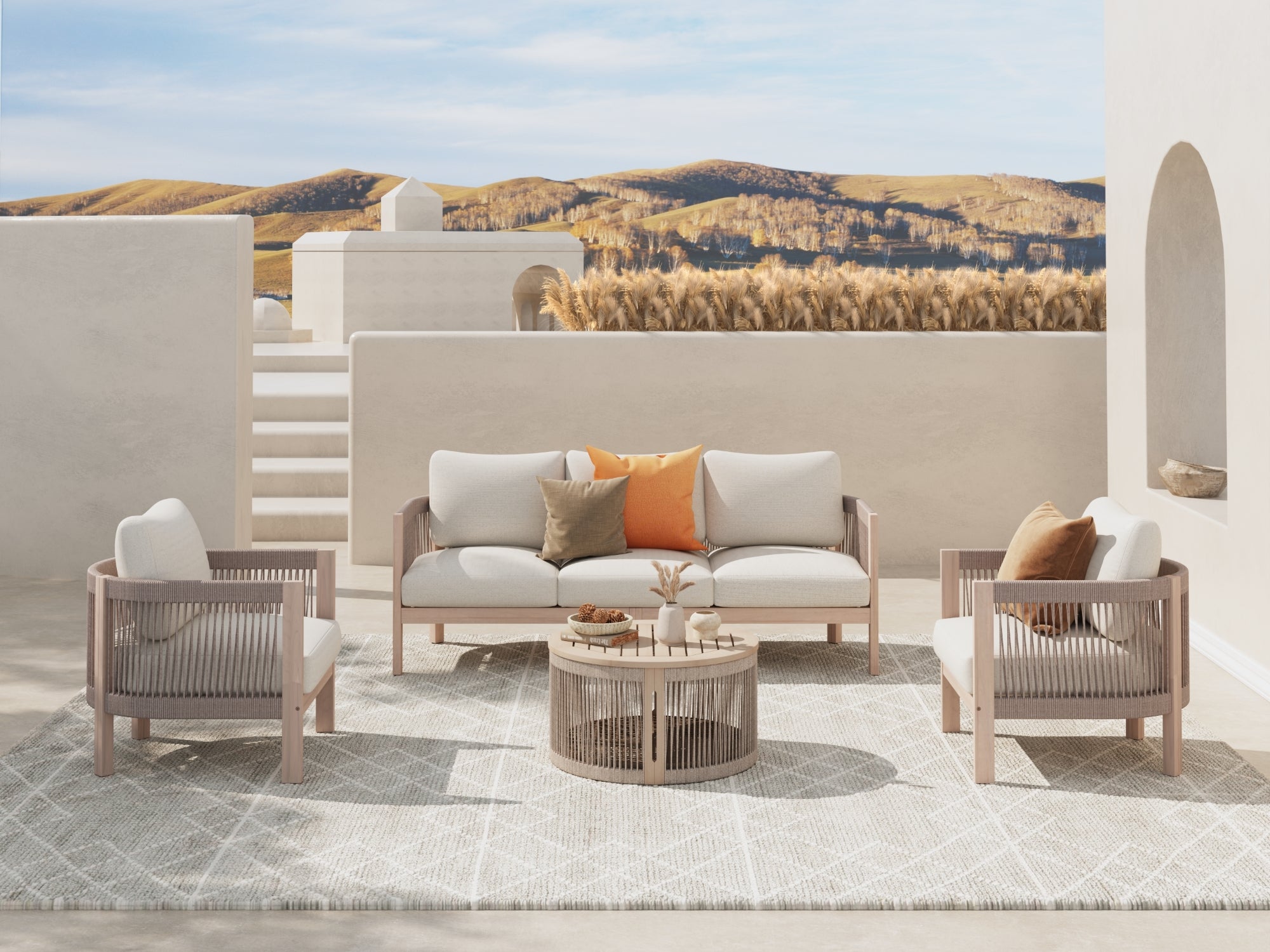
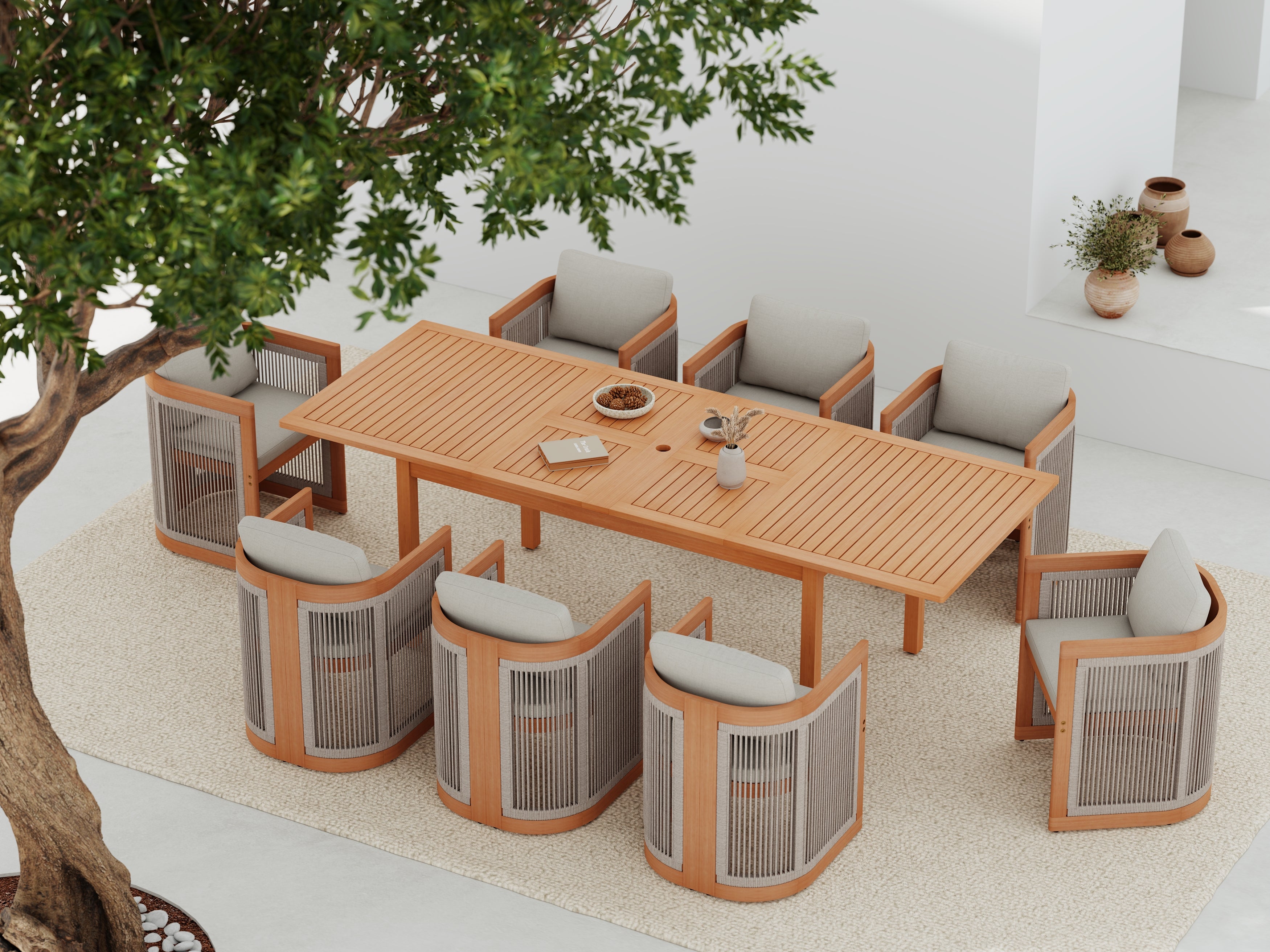
The broader movement is what the trade press keeps calling organic modernism. The sharp, geometric lines that dominated outdoor furniture for years are giving way to softer shapes — rounded sectionals, barrel chairs, dining sets with curved backs. Curved, sculptural silhouettes are leading 2026 design, moving away from the boxy straight-lined sectionals that defined the last decade. There's an aesthetic logic underneath that: as one designer quoted in trend coverage put it, nature itself rarely works in straight lines, so curved pieces sit comfortably outdoors.
And the reasoning isn't only visual. Part of the appeal of curved and modular pieces is practicality — a modular sectional can be reconfigured from an L-shape for conversation into separate sofas for a party, which makes the shape flexible rather than fussy.

Where the Skepticism Is Fair?
Any honest answer to "trend or fad?" has to include the friction, and curves do have friction.
They're harder to plan around than rectangles. Straight edges line up against patios, walls and steps; curves don't, so placement takes more thought. If you've spent time working out how to choose the right size for L-shaped outdoor furniture, you already know that the furniture footprint drives every other decision — and curved footprints are less forgiving, because there's no straight run to measure against. Rugs are the other sticking point: a curved arrangement often wants a round or organically shaped rug, and the standard rectangle rarely sits right.
None of that makes curves a gimmick. It just means they reward a little planning, the same way any distinctive piece does.

Why Curves Got Practical This Time?
Here's the part that convinces me this isn't a fad: curved outdoor seating stopped being a single sculptural object and became a modular system.
Earlier curved pieces were statement sofas — you bought the curve, and the curve dictated your entire patio. Today the curve is built from repeatable modules, so the shape adapts to the space instead of the other way around. Take the Arlo range at Jardina as an example. The Arlo 5-Piece Curved Outdoor Sectional Sofa pairs four curved lounge modules with a round table — a half-moon conversation layout that reads as one continuous piece rather than a sofa with add-ons.

Step up to the larger footprint and the Arlo 10-Piece Modular Conversation Set uses an open-circle configuration with multiple round tables, essentially an outdoor room with a curved perimeter.

Two details make those work as long-term purchases rather than seasonal buys. The frames are heat-transfer wood-look aluminum, so you get the warmth of timber without the maintenance a real wood frame outdoors demands, and the cushions use weather-resistant yarn-dyed fabric with a TPU waterproof coating and removable zip covers — anti-mildew, stain-resistant, washable.
How to Judge It for Your Own Patio?
The useful question isn't "are curves still in?" — it's whether the shape earns its space in your yard.
Curves pay off when conversation is the point. If your patio is where people sit facing each other for hours, a curved arrangement does that better than a straight sofa plus two chairs, because everyone is angled toward the group rather than toward a wall. They also work well on awkward or rounded spaces, where a rectangular sofa fights the site.
Rectangles still win in other situations. If your patio is a long narrow strip, if you need seating to tuck flush against a wall, or if you're optimizing strictly for seat count per square foot, straight lines are more efficient. And if you're weighing whether a sectional is the right category at all before you worry about its shape, the reasoning behind why choose an outdoor sectional for your patio is worth reading first.

So: Trend or Fad?
Trend — with a caveat. Curved outdoor sectionals have the three markers that outlast a season: a functional reason to exist, roots in a broader design movement toward organic forms, and a modular structure that makes them adaptable rather than precious. The 2026 coverage calling curves the year's defining look isn't a coincidence; it's the crest of something that's been building for several seasons.
The caveat is that "trendy" and "right for you" are different tests. Curves demand more considered planning around placement and rugs than a rectangular set does. Get that planning right, and the shape reads as a permanent part of the patio rather than a piece you bought because it looked good in a photo.
If you're shopping the category, it's worth browsing a full range of outdoor sectionals side by side — curved and straight — and judging them against your actual patio dimensions rather than the trend cycle.