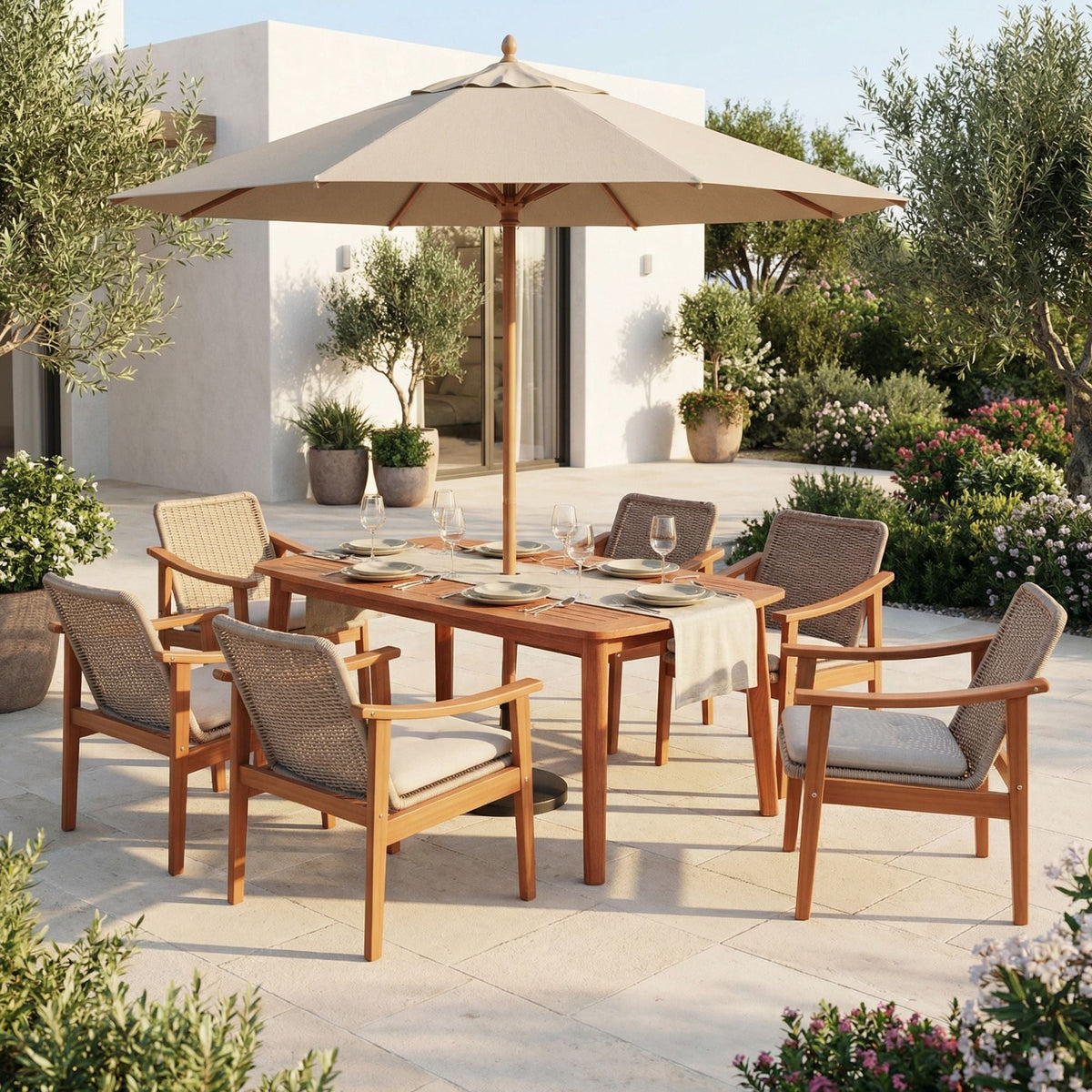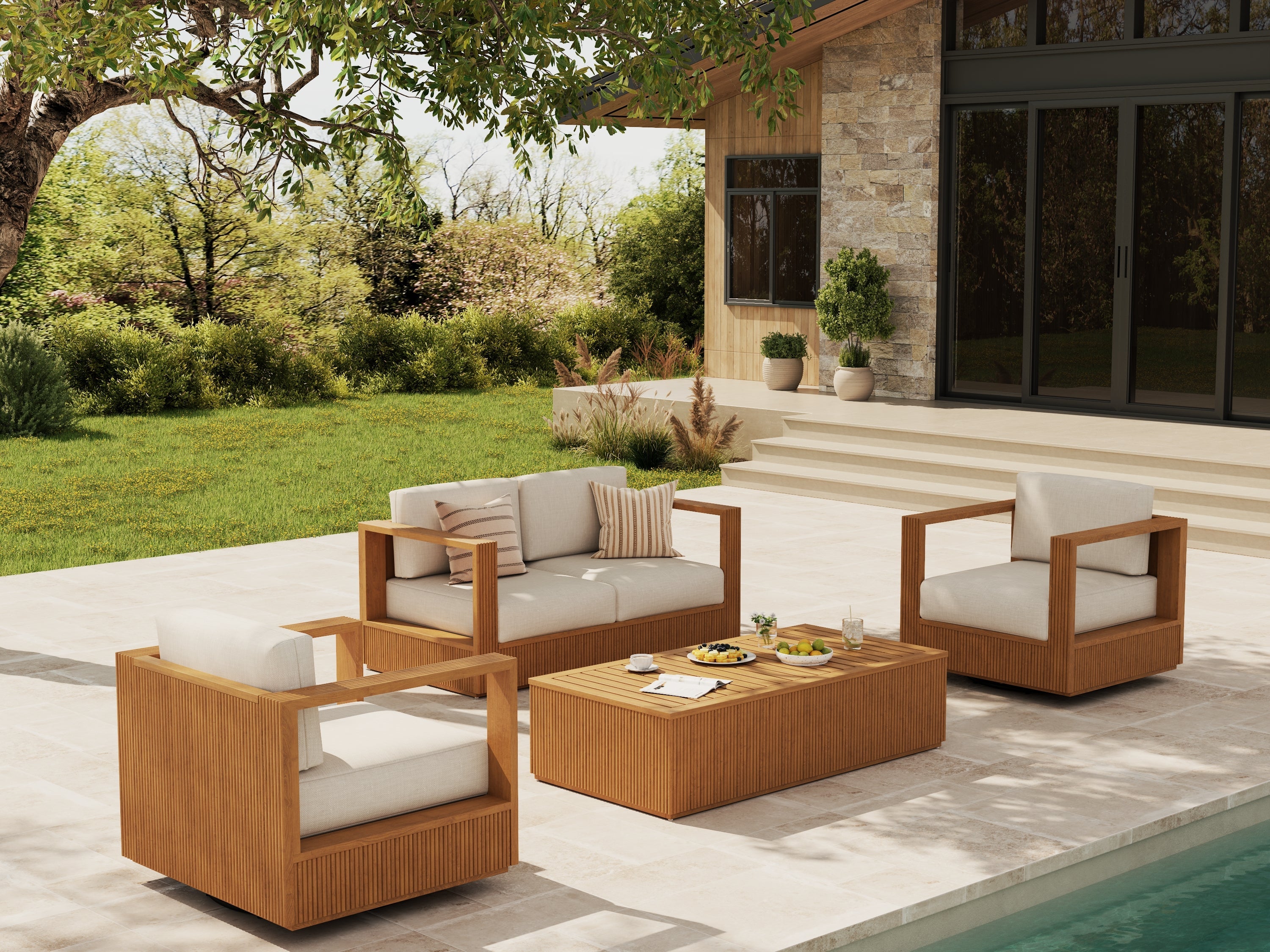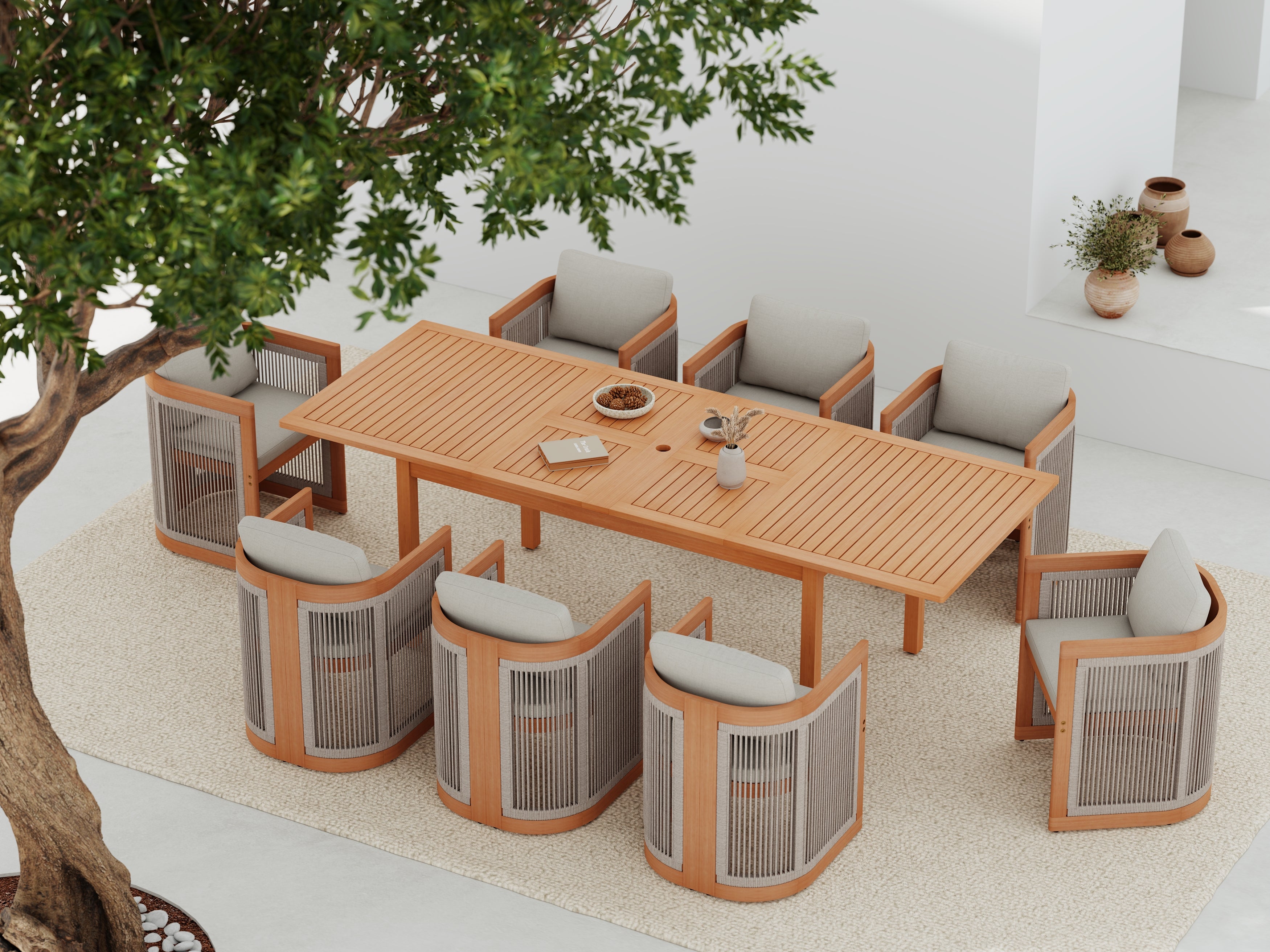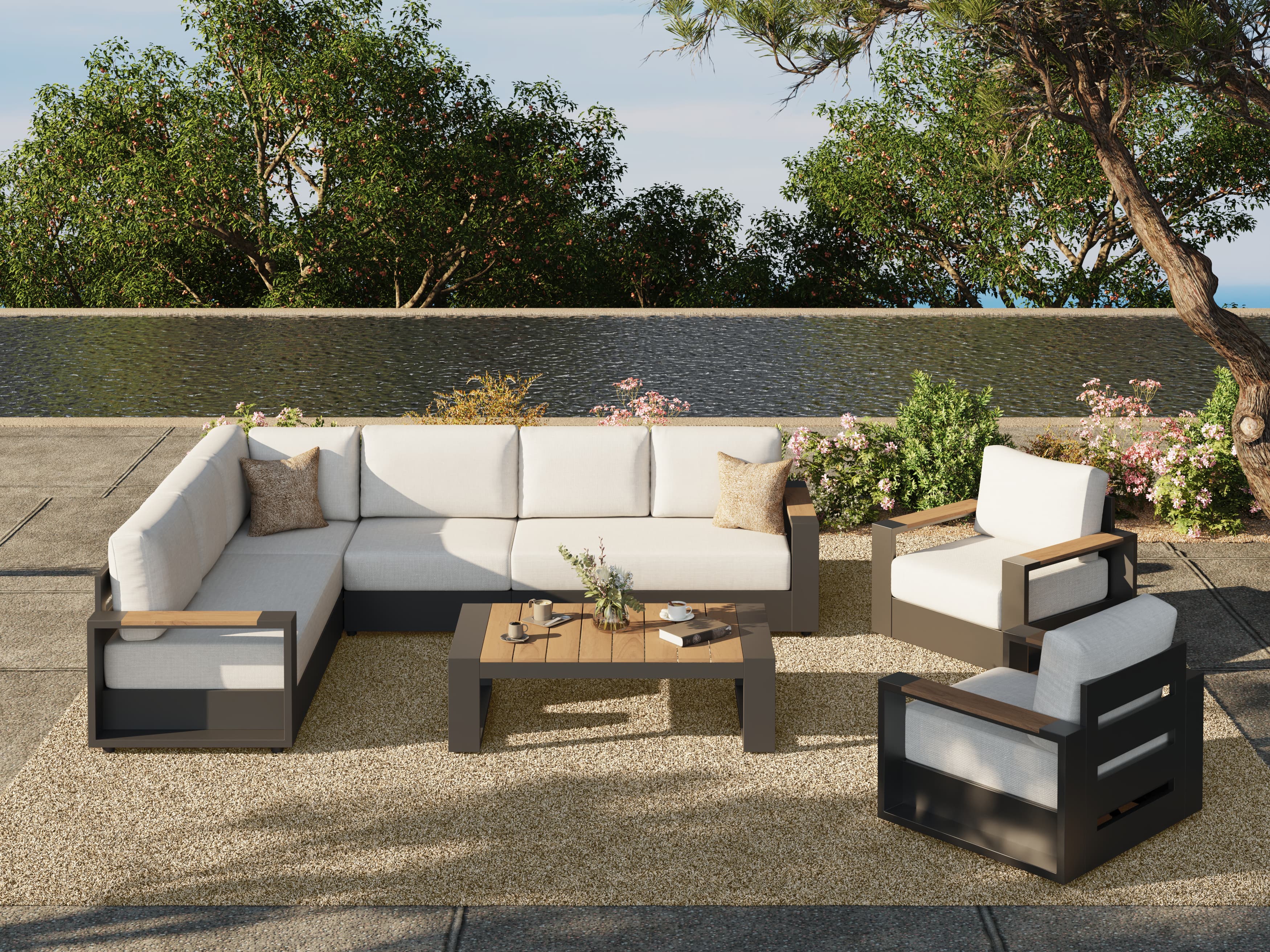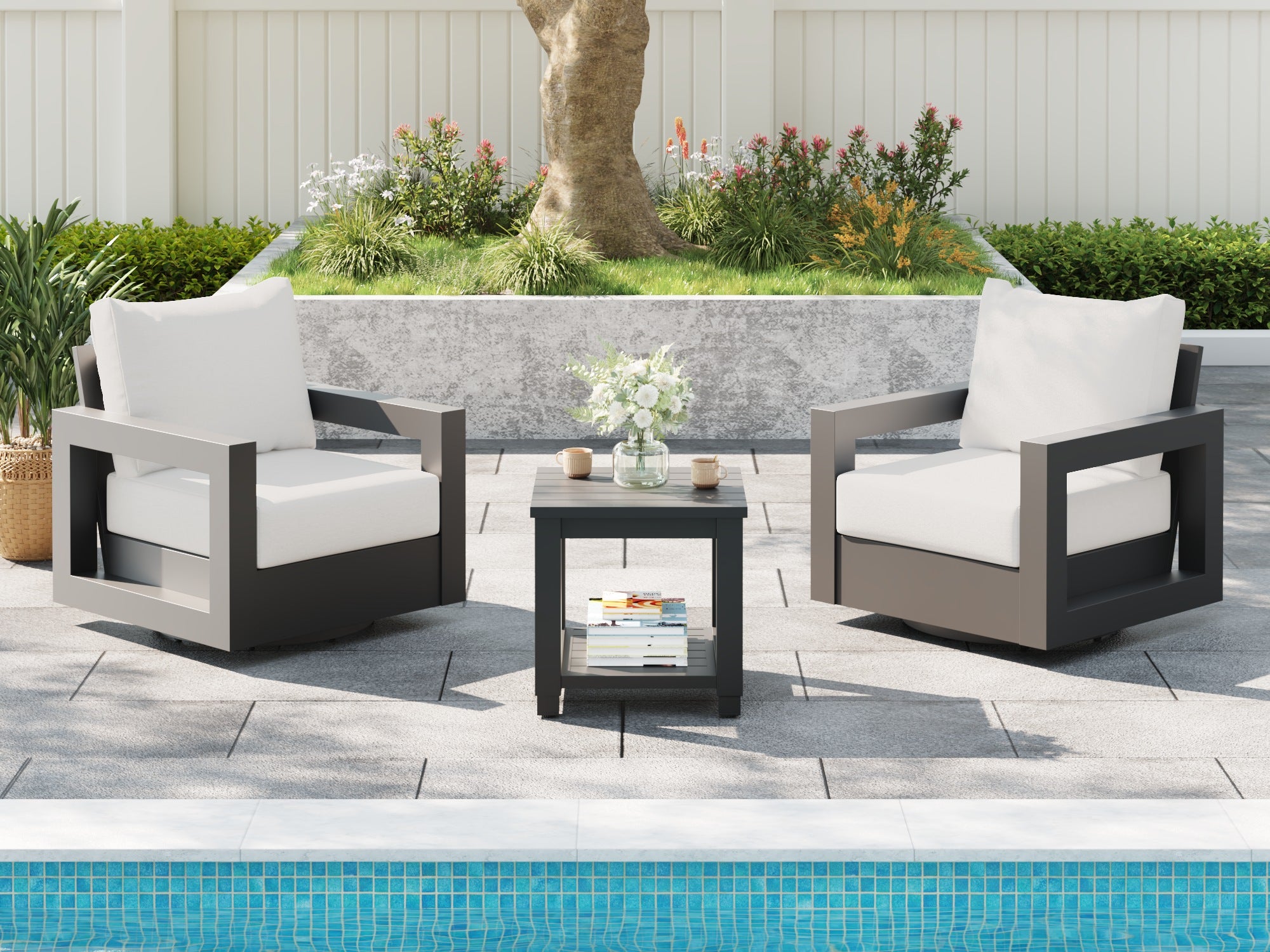

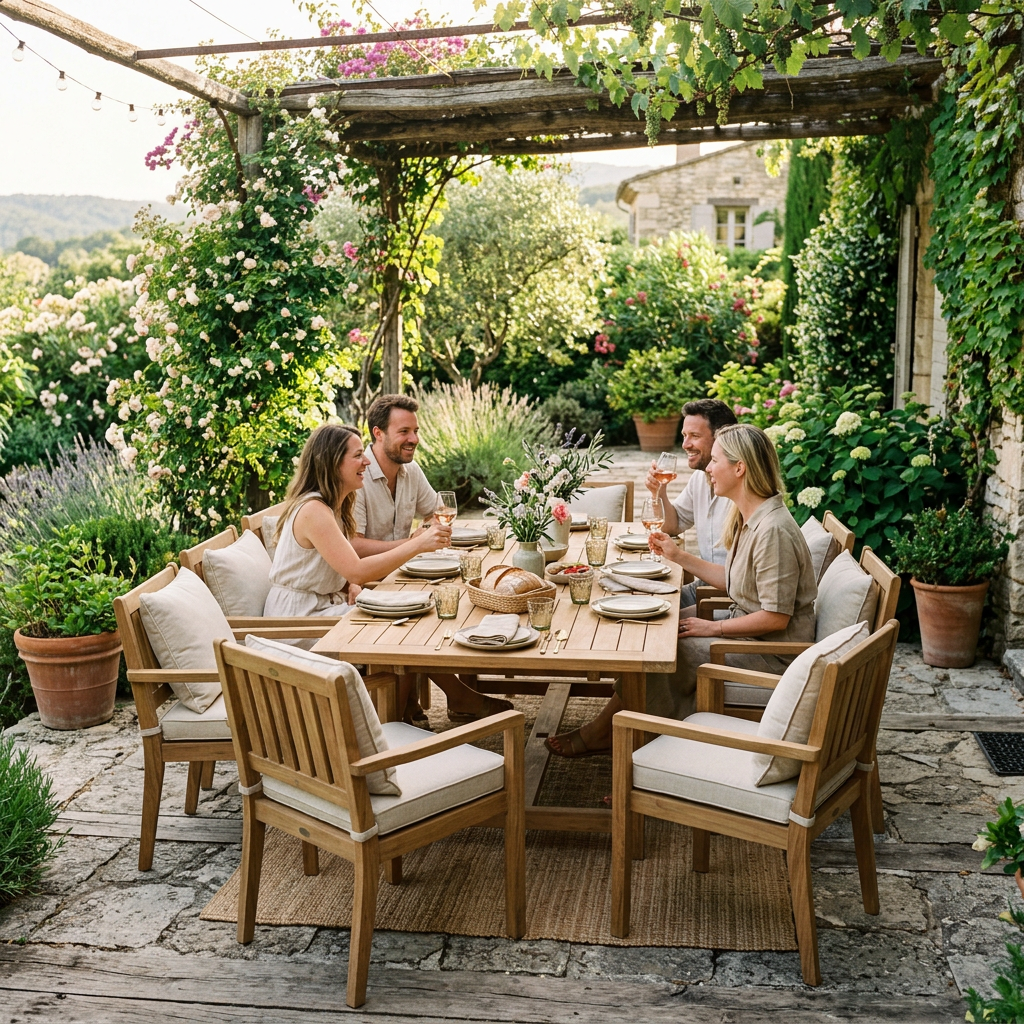
Unlike aluminum, steel, or powder-coated furniture, high-end teak is not a static, inert material. It is a living, breathing natural hardwood that continues to interact with its environment—sunlight, moisture, temperature, and humidity.
If you are considering adding teak to your patio or have recently invested in a new piece, understanding how teak behaves outdoors will help you appreciate its unique charm and avoid common misconceptions. Here is a guide to what you can expect from your outdoor teak furniture and how to care for it properly.

1. The Reality of Tannin Bleeding (Oil Runoff)
When teak is new, it contains natural oils and tannins. Following rainstorms or in high-humidity environments, these natural elements can surface, causing a brown or yellow runoff around table legs, joints, and edges.
- The Misconception: "My furniture is leaking oil or losing its color."
- What’s Happening: This is simply excess surface tannin washing away. However, it can stain light-colored pavers or white/beige cushions if it pools underneath.
- Pro Tip: For the first few rainfalls, keep cushions indoors or covered until the initial surface tannins wash out. Once the teak has weathered slightly, bleeding subsides significantly.
2. Hairline Cracks and Expansion
Because teak absorbs and releases moisture as weather changes, it naturally swells when wet and shrinks when dry.
This cyclical movement can occasionally produce:
- End grain cracks
- Hairline surface checks
- Slight joint gaps
These small surface shifts are completely normal and not structural defects. They do not compromise the integrity or longevity of premium teak furniture; rather, they are the natural hallmark of solid, organic wood adjusting to outdoor elements.
3. The Journey to a Silver-Gray Patina
Freshly milled teak typically features a warm, golden-brown hue. However, exposure to UV rays and outdoor oxidation triggers a color evolution:
This transformation is uneven. Tabletops exposed to direct sunlight will turn gray much faster than table legs or shaded under-frames. This tiered weathering is a sign of authentic, high-grade teak maturing gracefully in the open air.
Want to learn more about why teak remains a top-tier choice despite these changes?Check out our guide on Why Teak is the Best Material for Outdoor Furniture
4. Hardware Matters: The Stainless Steel Standard
One of the most overlooked details in outdoor furniture construction is hardware compatibility. Teak contains rich natural chemicals that, combined with prolonged outdoor moisture, can react poorly with low-quality metals.
- Standard steel components + teak + water = corrosion, black wood staining, and screw failure.
- High-end outdoor furniture relies on corrosion-resistant hardware.Look for304 stainless steel,and ideally316 marine-grade stainless steelif you live in coastal regions (such as Florida or the Gulf Coast) where salt air accelerates metal breakdown.
5. Humidity, Mildew, and Algae
While teak boasts exceptional natural rot resistance, it is not entirely immune to mildew if placed in stagnant, damp environments. Regions like the Pacific Northwest, Florida, or the Gulf Coast are particularly prone to high moisture.
If furniture sits in deep shade and stays wet for extended periods, you might spot:
- Gray weathering: Totally natural.
- Brown runoff: Tannin bleeding.
- Black or green spots: Potential mildew or algae.
- Dark halos around hardware: A reaction between moisture, metal, and tannins.
Regular cleaning with mild soap, water, and a soft-bristled brush will easily keep these surface blemishes at bay.
6. The "Teak Oil" Trap: To Oil or Not to Oil?
When consumers see their golden teak transition to a silver-gray, the instinct is often to panic and buy "Teak Oil" to restore the original color.
Our golden rule: No oil is required.
Applying heavy oils to outdoor teak often triggers a frustrating cycle:
Oil + Dust + UV Exposure→ Uneven Discoloration→Sticky Surface→Dark Mildew Spots
Instead, choose your aesthetic path from day one:
- A. Natural Teak (Low Maintenance): Leave it untreated (like Jardina teak collections) and let it age into a distinguished silver-gray patina.
- B. Golden Teak (High Maintenance): If you prefer to lock in the warm golden-brown tone, use a specialized teak sealer or protector rather than raw oil, and reapply as directed.
For a deeper dive into cleaning and upkeep schedules, read our complete How to Take Care of Teak Furniture guide.
Teak is a rewarding, durable investment that tells a story with every season. By understanding its natural rhythm—its shifting tones, minor checking, and tannin releases—you can enjoy luxury outdoor living with total peace of mind.