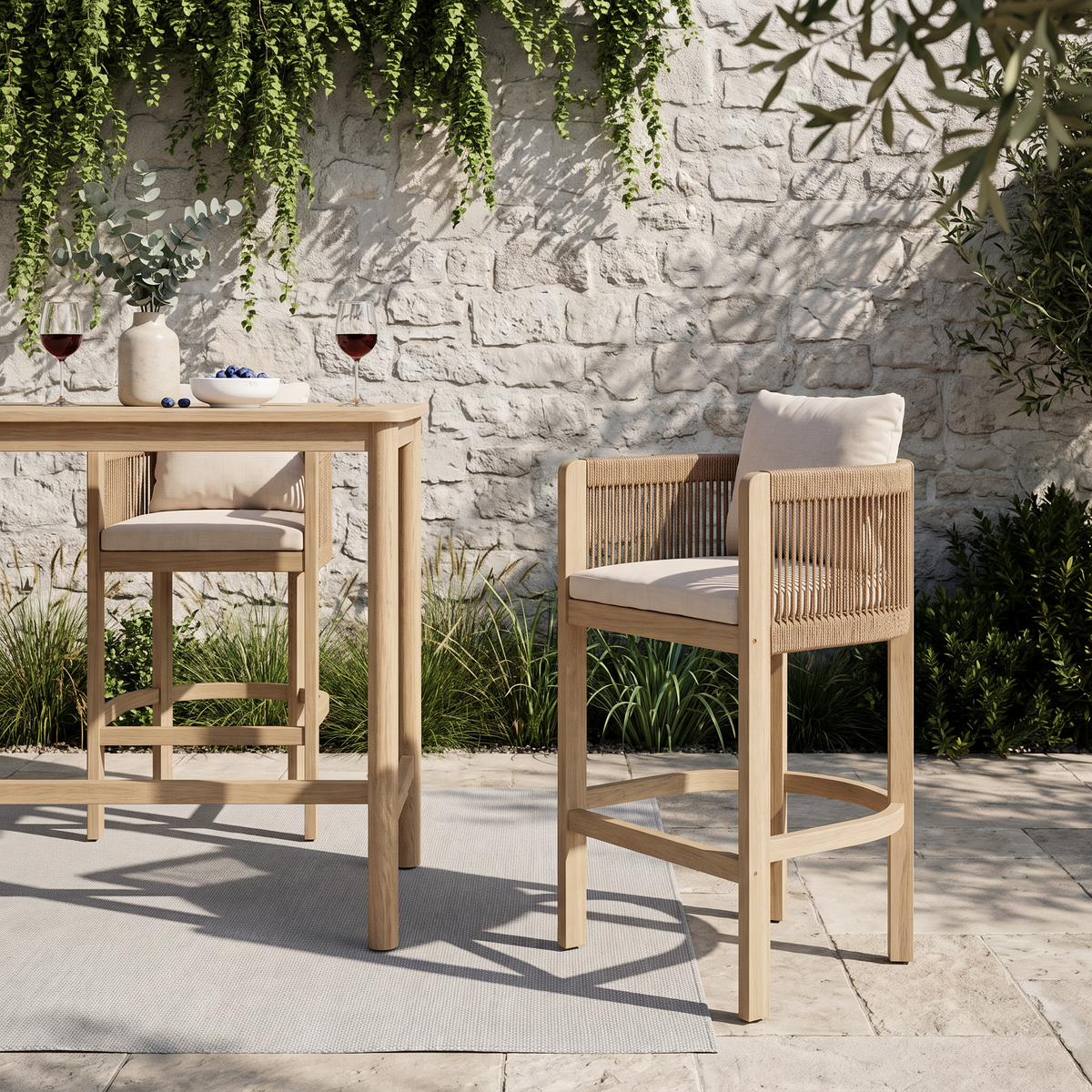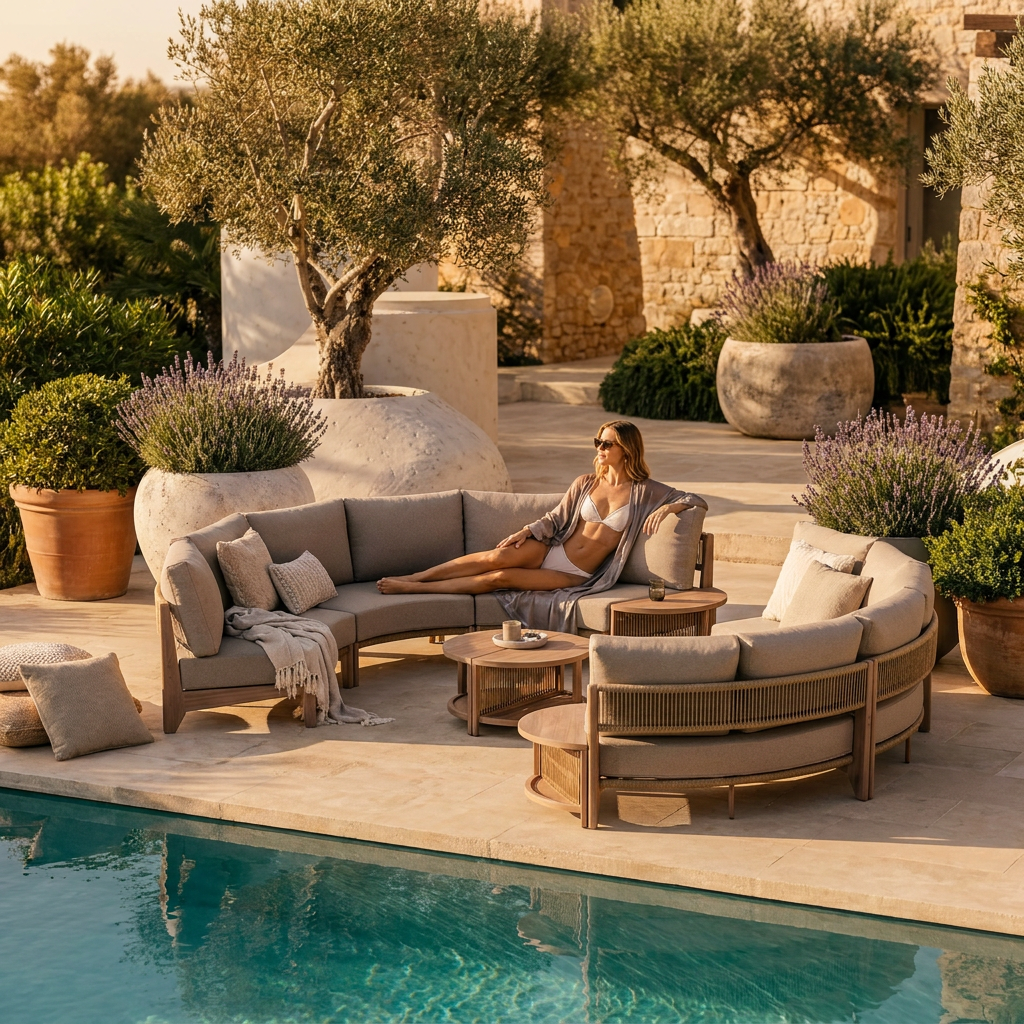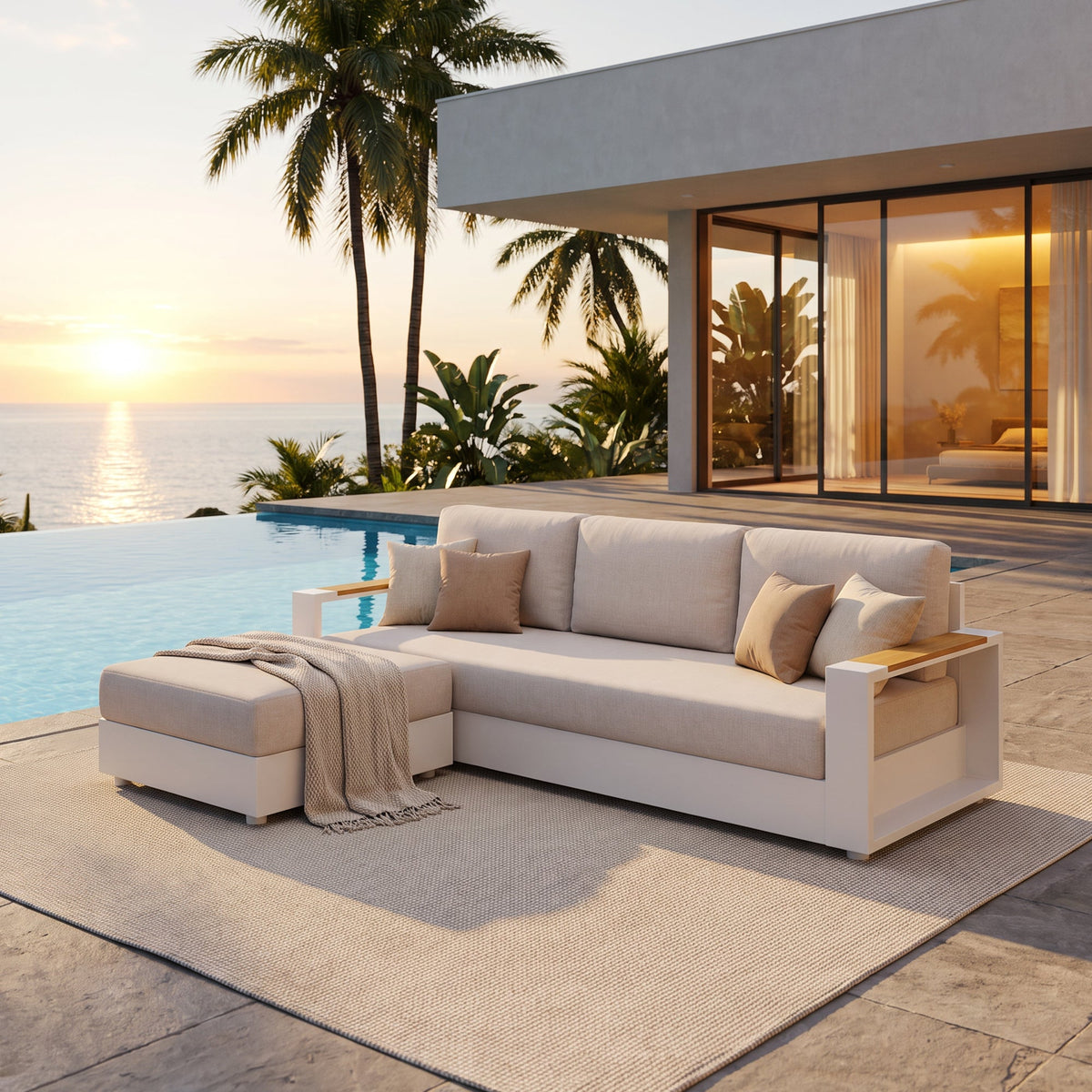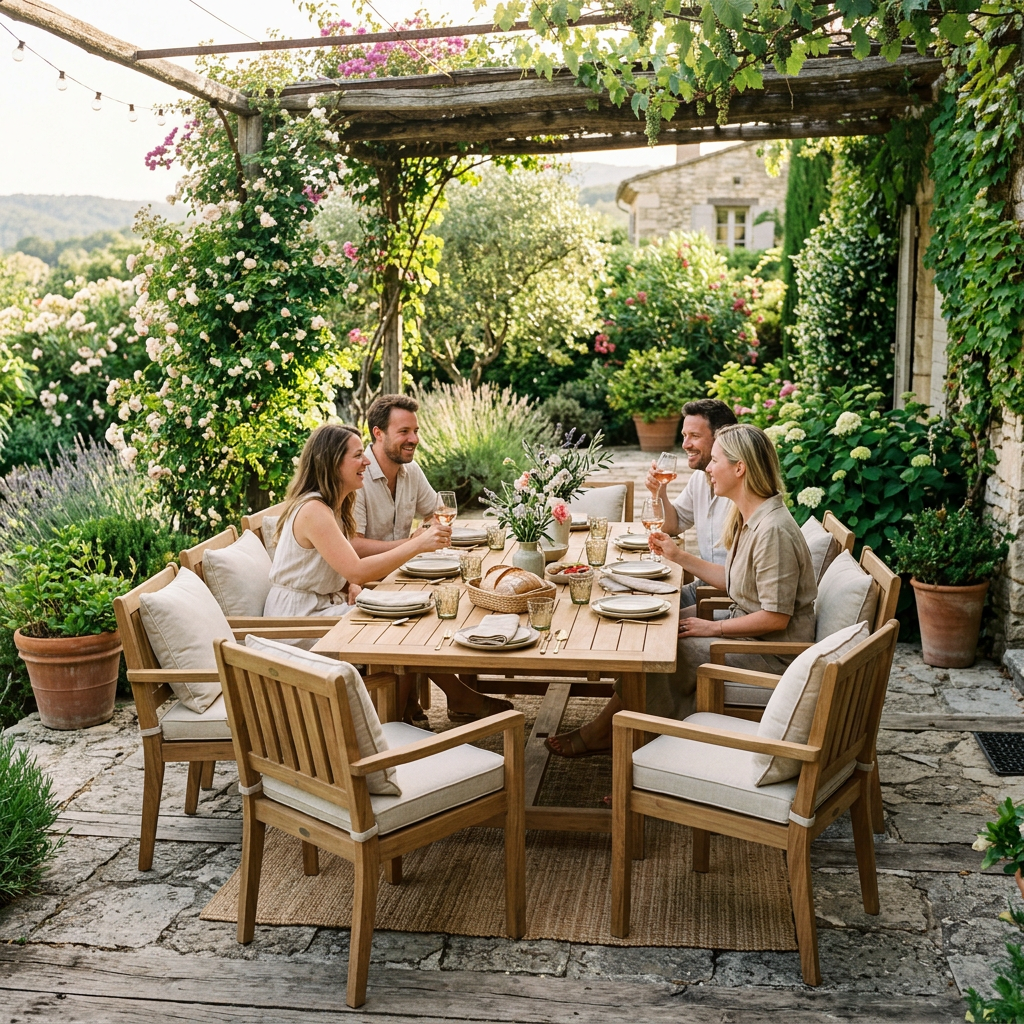

Outdoor furniture cushions do more than provide comfort. They need to maintain their color under strong sunlight, withstand frequent use, resist everyday moisture, and remain attractive through changing weather conditions. One of the most important factors influencing their long-term performance is how the fabric is colored.
Solution dyeing, also known as dope dyeing or mass coloration, is an advanced textile manufacturing process that incorporates color into synthetic fibers before they are formed. Unlike conventional dyeing, which applies color to existing fibers, yarns, or finished fabrics, solution dyeing integrates pigments directly into the polymer itself.
This process is widely used for outdoor textiles made from solution-dyed polyester and solution-dyed olefin. It helps create fabrics with excellent colorfastness while reducing the need for conventional water-based dyeing.
At Jardina, we pay close attention to both fabric performance and textile safety. Our cushion textiles combine outdoor-oriented material technology with OEKO-TEX® STANDARD 100 certification, providing added confidence in the materials used in our outdoor furniture.
Let's explore how solution dyeing works, why it matters for outdoor cushions, and what you should know about textile certifications.

What Is Solution Dyeing?
Solution dyeing is a fiber-coloration process in which pigment is added to the polymer melt or spinning solution before the synthetic fiber is formed.
It is also commonly called dope dyeing, mass coloration, or spun dyeing.
The key difference is when the color is introduced. Instead of dyeing an already manufactured fiber or fabric, manufacturers incorporate concentrated pigments directly into the raw polymer material during fiber production.
How Does the Solution Dyeing Process Work?

The manufacturing process typically involves four main stages:
Step 1: Preparing the Polymer
Synthetic polymer materials, such as polyester or polypropylene, are prepared for fiber production. Depending on the material, they are melted or dissolved to create a processable polymer mixture.
Step 2: Adding Color Pigments
Concentrated color pigments, often supplied in a form known as a masterbatch, are blended into the polymer material. The pigments are carefully dispersed to achieve consistent coloration throughout the mixture.
Step 3: Fiber Extrusion
The colored polymer mixture is pushed through a specialized component called a spinneret, which contains numerous tiny openings. As the material passes through these openings and solidifies, it forms continuous colored filaments.
Because the pigment was incorporated before the fibers were created, color is distributed throughout each fiber rather than simply being applied to its exterior.
Step 4: Yarn and Fabric Production
The colored filaments are drawn, processed into yarn, and then woven or knitted into fabric. The finished textile can subsequently be treated and manufactured into outdoor cushion covers.
The result is a fabric in which color is integrated into the fiber structure from the very beginning.
Solution-Dyed vs. Conventional Dyeing
The difference becomes clearer when we compare the different points at which color can be introduced.
- Solution dyeing: Pigments are added before the synthetic fiber is formed.
- Yarn dyeing: Finished yarn is dyed before being woven or knitted into fabric.
- Piece dyeing: The completed fabric is dyed after weaving or knitting.
While yarn-dyed and piece-dyed fabrics can both produce attractive colors and patterns, solution dyeing offers a different advantage: the pigment is incorporated throughout the fiber itself.
This makes solution-dyed fibers particularly valuable for textiles that experience prolonged sunlight exposure, repeated cleaning, and everyday outdoor use.
Why Is Solution Dyeing Ideal for Outdoor Furniture Cushions?
Outdoor cushions face challenges that indoor upholstery rarely experiences to the same degree. Direct sunlight, temperature changes, humidity, occasional rain, and regular friction can all affect the appearance and lifespan of a fabric.
Solution dyeing addresses one of the most important challenges: maintaining color over time.
Better Colorfastness and Fade Resistance
One of the main benefits of solution-dyed fabric is its excellent colorfastness.
Since pigment is distributed throughout the fiber, the color is less dependent on the outer surface remaining untouched. Surface abrasion or ordinary wear is therefore less likely to reveal a differently colored fiber interior.
This is particularly useful for outdoor cushions that receive prolonged exposure to sunlight.
It is important to remember that no textile is completely immune to UV degradation. Actual outdoor performance also depends on the polymer formulation, UV stabilizers, fabric construction, and manufacturing quality.
Nevertheless, solution dyeing provides an important foundation for producing outdoor fabrics with long-lasting color.
Reduced Color Bleeding and Washing-Related Color Loss
In conventional wet dyeing, color is introduced into existing fibers or fabrics through a dye bath. Depending on the dye chemistry and fixation quality, some color may be released during washing or repeated exposure to moisture.
With solution dyeing, pigment is incorporated into the polymer before fiber formation. This helps reduce color loss and transfer under normal use when the material is properly manufactured.
For outdoor furniture, this means cushions can maintain a more consistent appearance through regular cleaning and everyday use.
Reduced Water Consumption During Coloration
Another important advantage is the manufacturing process itself.
Traditional textile dyeing often relies on water-based dye baths, which can require substantial amounts of water, heating energy, auxiliary chemicals, and wastewater treatment.
Solution dyeing eliminates the separate conventional wet-dyeing stage used to color the synthetic fiber. Because the pigment is incorporated during fiber production, there is no need for a subsequent dye bath to introduce the base color.
This can significantly reduce water consumption and dyeing-related wastewater.
However, it is worth distinguishing between waterless coloration and completely waterless textile manufacturing. Other stages of textile production may still require water and energy.
Solution dyeing is therefore a more resource-efficient approach to coloring suitable synthetic fibers, rather than a guarantee that the entire manufacturing process uses no water.
Consistent Color Throughout Production
Because pigments are measured and blended into the polymer during production, solution dyeing can also help manufacturers achieve consistent coloration across large production runs.
This is especially valuable for outdoor furniture collections, where matching cushion colors across sofas, lounge chairs, and sectional components is important for a coordinated appearance.
Solution-Dyed Polyester: Durable Color for Outdoor Cushions

Polyester is one of the most widely used synthetic textile fibers. It is valued for its strength, dimensional stability, versatility, and ability to support a wide range of fabric textures and designs.
When polyester is solution-dyed, color pigments are incorporated into the polyester polymer before the fibers are extruded.
This creates solution-dyed polyester fabric with color distributed throughout the fiber structure.
Key Benefits of Solution-Dyed Polyester
- Long-lasting color: Color incorporated into the fiber helps improve resistance to fading and color loss during regular use.
- Strength and durability: Polyester fibers offer good tensile strength and abrasion resistance, making them suitable for frequently used furniture cushions.
- Versatile design options: Polyester can be manufactured into different yarn types, fabric weights, textures, and finishes, allowing furniture manufacturers to create a wide range of cushion styles.
- Easy everyday maintenance: Properly constructed polyester outdoor fabrics are generally easy to maintain with appropriate cleaning methods.
For outdoor furniture, solution-dyed polyester offers a practical combination of color performance, durability, and design versatility.
One important distinction: not all polyester outdoor fabrics are solution-dyed. The manufacturing and coloration methods should always be confirmed rather than assumed from the fiber name alone.
Solution-Dyed Olefin: A Popular Choice for Outdoor Upholstery
Olefin is another important synthetic fiber used in outdoor furniture fabrics.
In upholstery and outdoor textile applications, olefin generally refers to polypropylene-based fibers. Like solution-dyed polyester, solution-dyed olefin incorporates pigment into the polymer before the fiber is extruded.
Olefin is particularly suitable for outdoor applications because of its naturally low moisture absorption and lightweight structure.

Key Benefits of Solution-Dyed Olefin
- Excellent moisture resistance: Polypropylene absorbs very little moisture, helping the fabric remain lightweight and dry relatively quickly.
- Good colorfastness: When pigments are integrated into the fiber during production, the fabric can maintain its color well under normal outdoor conditions.
- Resistance to mildew-related deterioration: Olefin fibers are naturally resistant to moisture-related degradation. However, dirt and organic residue on a fabric can still support surface mildew growth if cushions are not properly cleaned and dried.
- Lightweight and comfortable: Olefin fabrics can provide a soft, inviting upholstery surface while maintaining the practical characteristics needed for outdoor furniture.
- Good everyday durability: Olefin offers useful resistance to abrasion and many common chemicals, making it a popular material for outdoor upholstery.
Solution-Dyed Polyester vs. Solution-Dyed Olefin: Which Is Better?

Both materials can perform well in outdoor furniture applications, but they have different characteristics.
Solution-dyed polyester is valued for its strength, dimensional stability, abrasion resistance, and design versatility.
Solution-dyed olefin is particularly attractive for outdoor use because of its low moisture absorption, lightweight construction, and resistance to moisture-related deterioration.
Neither material is automatically superior in every situation. The actual performance of an outdoor cushion depends on the quality of the fiber, pigment formulation, UV stabilization, fabric construction, protective finishes, and cushion design.
For homeowners, the best choice is a well-manufactured outdoor fabric that balances comfort, durability, color retention, and ease of maintenance.
OEKO-TEX® STANDARD 100: An Additional Layer of Textile Safety

Fabric performance is only one part of choosing outdoor furniture. The materials used in the cushions also matter, particularly because people spend extended periods sitting and relaxing on upholstered furniture.
This is where OEKO-TEX® STANDARD 100 becomes important.
What Is OEKO-TEX® STANDARD 100?
OEKO-TEX® STANDARD 100 is an internationally recognized textile testing and certification label for products that have been tested for harmful substances.
The testing criteria cover more than 1,000 potentially harmful substances, including substances that may be restricted or regulated under relevant international requirements.
The certification applies to textile articles and their covered components, including relevant threads, accessories, and materials within the certified product scope.
Its requirements also vary according to the intended use of the textile. Products involving more direct skin contact or more sensitive users are subject to stricter requirements.
For consumers, OEKO-TEX® STANDARD 100 provides additional confidence that the certified textile materials have undergone independent testing for harmful substances.
Why Does OEKO-TEX® Matter for Outdoor Cushions?
Outdoor furniture cushions are not simply decorative accessories. They are frequently used in close contact with the human body.
Whether someone is relaxing on a patio sofa, enjoying a meal outdoors, or spending an afternoon in a lounge chair, the cushion fabric is an important part of the overall furniture experience.
Choosing textiles with OEKO-TEX® STANDARD 100 certification adds another consideration beyond appearance and durability: material safety.
At Jardina, our products use OEKO-TEX® STANDARD 100-certified textile materials, reflecting our attention to the materials used in everyday outdoor living.
Solution Dyeing and OEKO-TEX®: What Is the Difference?
These two technologies serve different purposes, and it is important not to confuse them.
Solution dyeing is a manufacturing process that determines how color is incorporated into synthetic fibers. Its main advantages include improved colorfastness and reduced reliance on conventional wet dyeing.
OEKO-TEX® STANDARD 100 is a textile safety certification that evaluates the presence of harmful substances in the certified materials or articles.
In other words:
- Solution dyeing focuses on color performance and the coloration process.
- OEKO-TEX® STANDARD 100 focuses on testing textiles for harmful substances.
One does not automatically guarantee the other. A solution-dyed fabric is not automatically OEKO-TEX® certified, and an OEKO-TEX® certified fabric is not necessarily solution-dyed.
Combining high-performance coloration technology with independently tested textile materials offers a more comprehensive approach to outdoor cushion quality.

How to Choose the Right Fabric for Outdoor Furniture Cushion?
When shopping for outdoor conversation sets, sectional sofas, or patio lounge chairs, it is worth looking beyond the fabric's appearance.
Consider these factors:
1. Check the fiber composition.
Find out whether the cushions use polyester, polypropylene-based olefin, acrylic, or another synthetic material. Different fibers have different moisture, strength, and maintenance characteristics.
2. Ask about the dyeing process.
Look for solution-dyed or dope-dyed fabric when long-term color retention is a priority. Do not assume that every synthetic outdoor fabric is solution-dyed.
3. Consider UV and colorfastness performance.
Look for relevant lightfastness test results and confirm that the fabric is designed for prolonged outdoor exposure.
4. Check moisture and cleaning characteristics.
Water resistance, water repellency, quick drying, and cleanability are related but different properties. A solution-dyed fabric is not automatically waterproof or stain-proof.
5. Look for textile safety certification.
OEKO-TEX® STANDARD 100 certification provides additional assurance regarding harmful substances in the certified textile articles. Check that the certificate is current and covers the relevant materials.
6. Consider the cushion construction.
Fabric performance is only one part of the equation. Cushion filling, foam density, protective liners, removable covers, stitching, and drainage all influence long-term comfort and usability.
The best outdoor cushions combine carefully selected fibers, reliable construction, appropriate protective treatments, and well-tested materials.
How to Maintain Solution-Dyed Outdoor Cushions?
Although solution-dyed fabrics offer excellent color performance, regular care is still important.
A few simple habits can help extend the life of outdoor cushions:
- Remove loose dust, leaves, and dirt regularly using a soft brush or cloth.
- Blot spills promptly rather than rubbing them into the fabric.
- Clean with mild soap and water, following the manufacturer's care instructions.
- Allow cushions to dry thoroughly before storing them.
- Use protective furniture covers or store cushions during extended periods of severe weather or non-use.
Remember that solution dyeing helps preserve the color within the fiber, but it does not make a cushion completely waterproof, stain-proof, or maintenance-free.
Proper care helps preserve both the fabric's appearance and the overall comfort of your outdoor furniture.
Frequently Asked Questions About Solution-Dyed Outdoor Fabrics
What does solution-dyed fabric mean?
Solution-dyed fabric is made from fibers that are colored before they are formed. Pigments are added to the polymer melt or spinning solution and distributed throughout the fiber during extrusion. This process helps improve colorfastness compared with many conventional dyeing methods.
Is solution-dyed polyester good for outdoor cushions?
Yes. Solution-dyed polyester offers good strength, abrasion resistance, and color retention. It is a practical choice for outdoor cushions that need to withstand regular use and sunlight exposure. Actual performance depends on the fabric construction and UV stabilization.
Is solution-dyed olefin better than polyester?
Neither is universally better. Olefin, typically made from polypropylene, absorbs very little moisture and is lightweight. Polyester offers good strength, dimensional stability, and design versatility. The best choice depends on the intended use, climate, fabric specifications, and overall cushion construction.
Does solution-dyed fabric fade?
Solution-dyed fabrics generally offer better colorfastness because pigments are incorporated throughout the fiber rather than applied to an already formed fiber or fabric. However, prolonged UV exposure can eventually affect any textile. UV stabilizers, fiber quality, and fabric construction also matter.
Is solution-dyed fabric waterproof?
No. Solution dyeing describes how color is incorporated into the fiber, not how the fabric responds to water. Water resistance and water repellency depend on the fiber properties, fabric construction, and any additional protective treatments.
Is OEKO-TEX® STANDARD 100 the same as solution dyeing?
No. Solution dyeing is a textile manufacturing process designed to improve color performance and reduce conventional dyeing requirements. OEKO-TEX® STANDARD 100 is a safety certification that tests textile articles for harmful substances. They address different aspects of textile quality.
Is solution dyeing more environmentally friendly?
Solution dyeing can reduce the water consumption, dye chemicals, and wastewater associated with conventional wet dyeing because the color is introduced during fiber production. However, the overall environmental impact still depends on raw materials, energy sources, manufacturing practices, transportation, and product lifespan.

Enjoy Outdoor Comfort with Confidence
Great outdoor furniture is about more than a beautiful frame or a comfortable seat. The quality of its cushions also plays an important role in how well the furniture performs over time.
Solution-dyed polyester and solution-dyed olefin offer valuable advantages for outdoor upholstery, particularly when long-lasting color and everyday durability are priorities. Meanwhile, OEKO-TEX® STANDARD 100 certification adds another layer of confidence in the textile materials used.
At Jardina, we believe thoughtful material selection is essential to creating outdoor furniture that looks beautiful, feels comfortable, and supports everyday outdoor living.
Explore Jardina's Outdoor Conversation Sets and discover outdoor seating designed to make every moment outside more enjoyable.