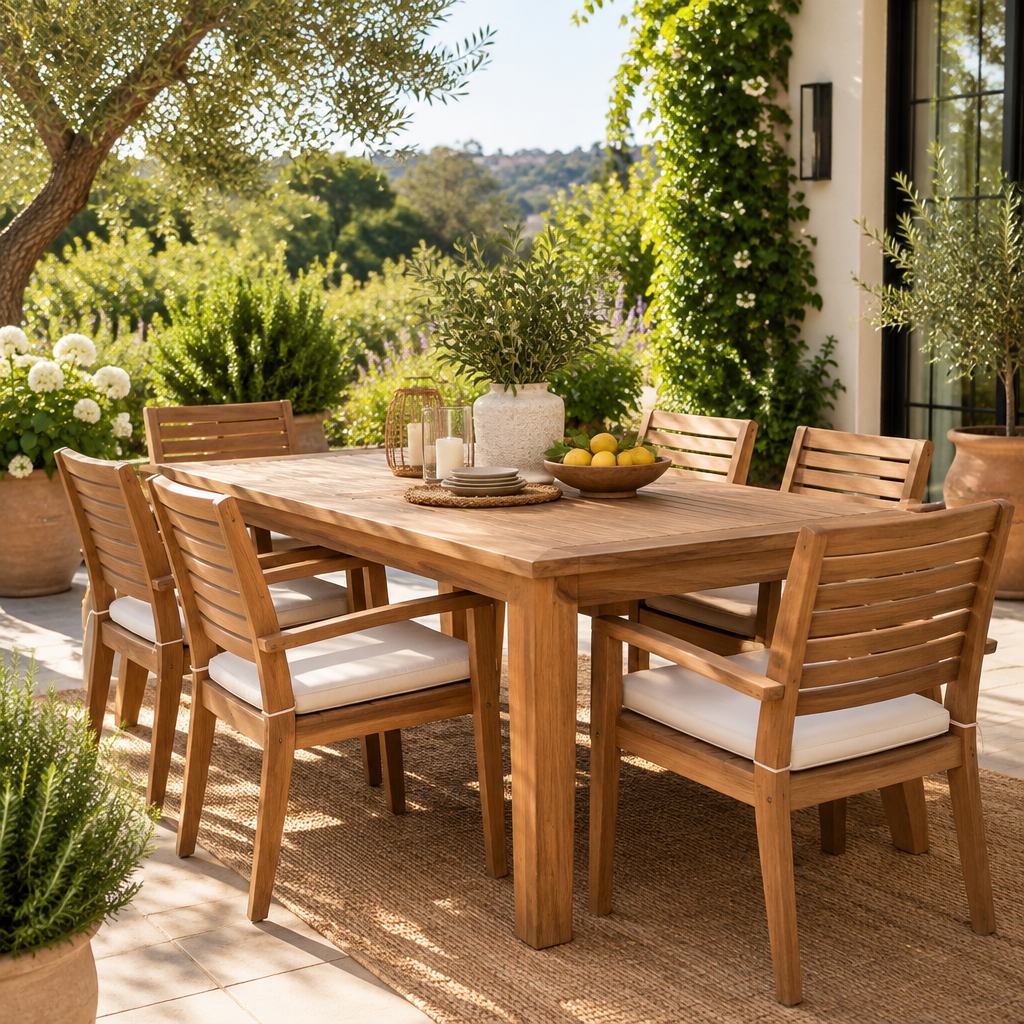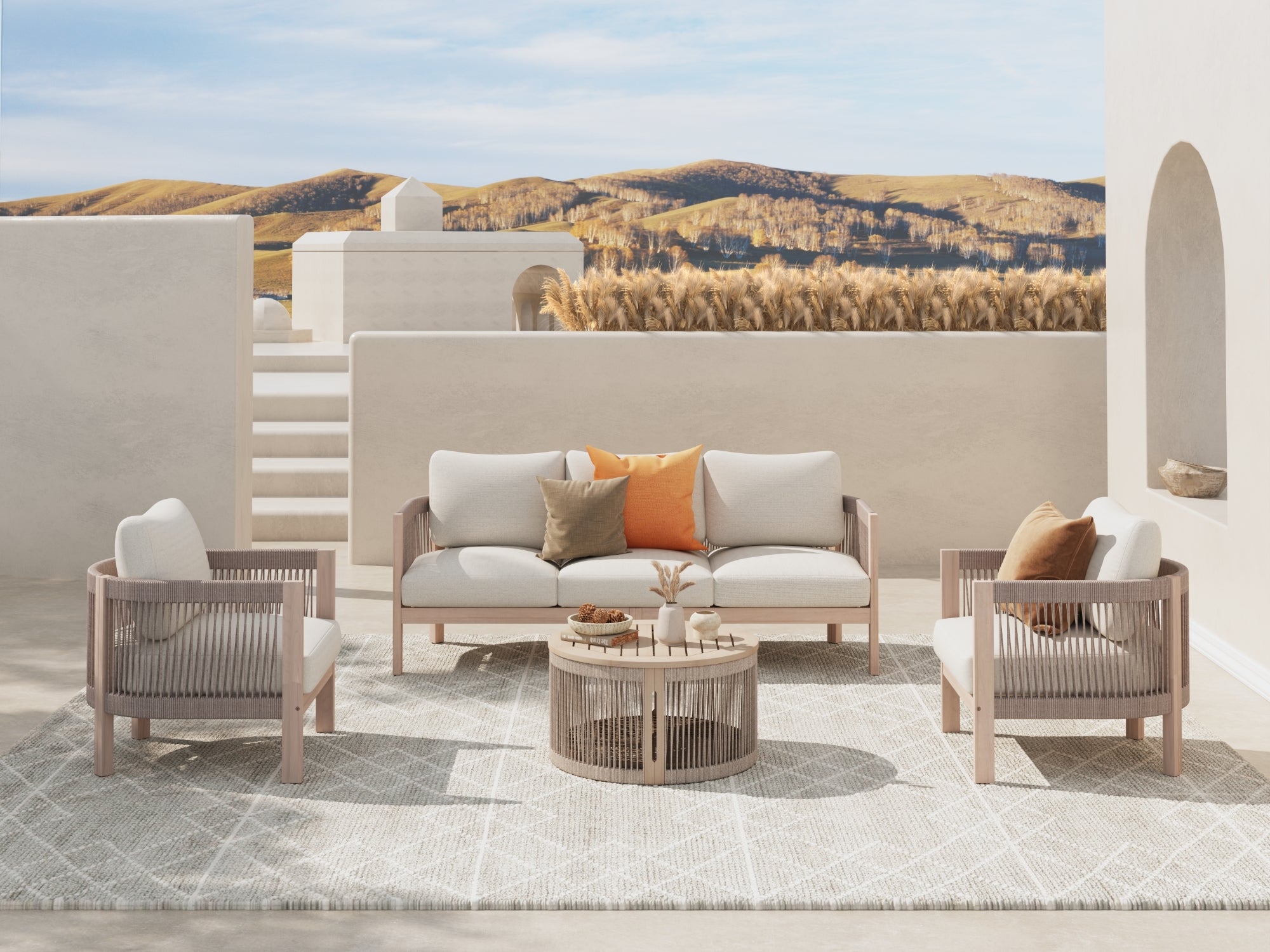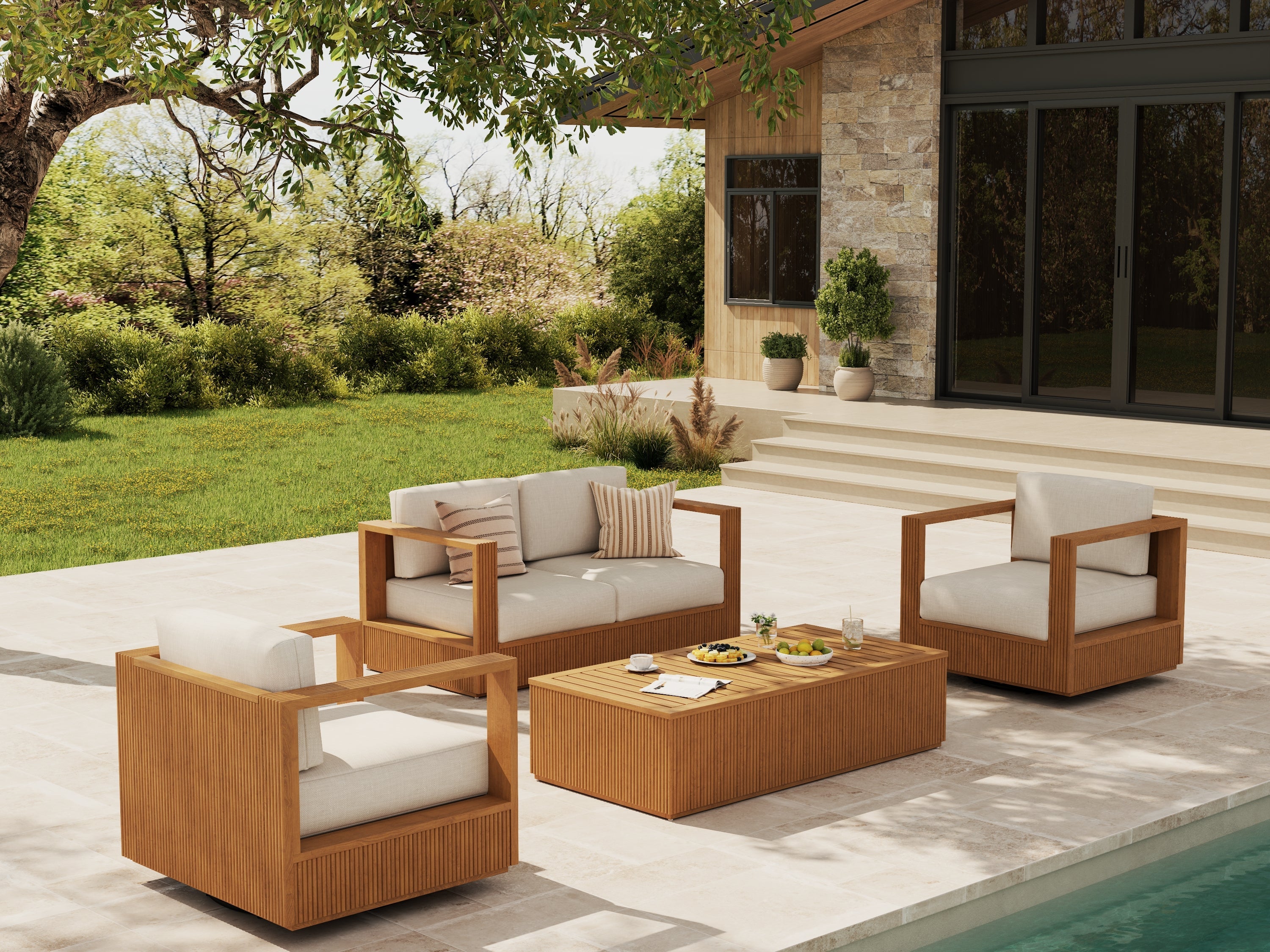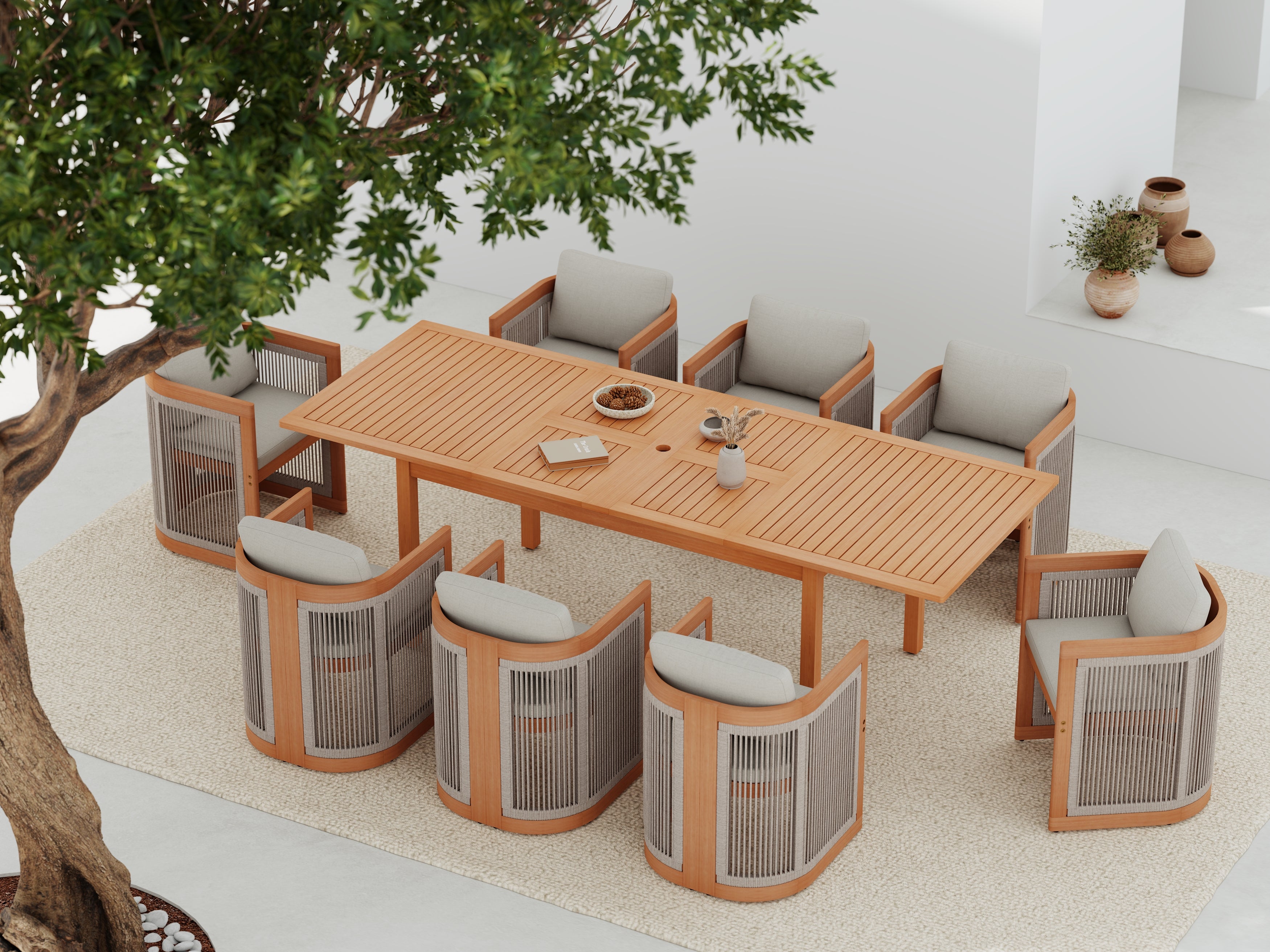

Few things add as much warmth, modern style, and natural sophistication to a backyard deck as solid timber seating. But as seasons pass and your patio endures the elements, you might notice subtle changes: fine cracks appearing along the grain, or rich golden-brown timber slowly fading into a silvery gray.
If you’ve wondered "Why is my wood outdoor furniture cracking or fading?", you’re not alone. The good news is that slight weathering is a natural characteristic of real hardwood—and in almost every case, it can be easily prevented, managed, or fully restored.
In this comprehensive guide, we’ll break down the science of outdoor wood degradation, explain the difference between harmless surface micro-checking and structural damage, and give you a simple step-by-step plan to restore your furniture’s original beauty.

1. Why Wood Outdoor Furniture Cracks (Checking vs. Structural Damage)
Wood is an organic, porous material that constantly "breathes." Even after timber is harvested, kiln-dried, and crafted into modern patio sets, it reacts to ambient humidity and temperature changes.
The Primary Cause: The Freeze-Thaw & Moisture Cycle
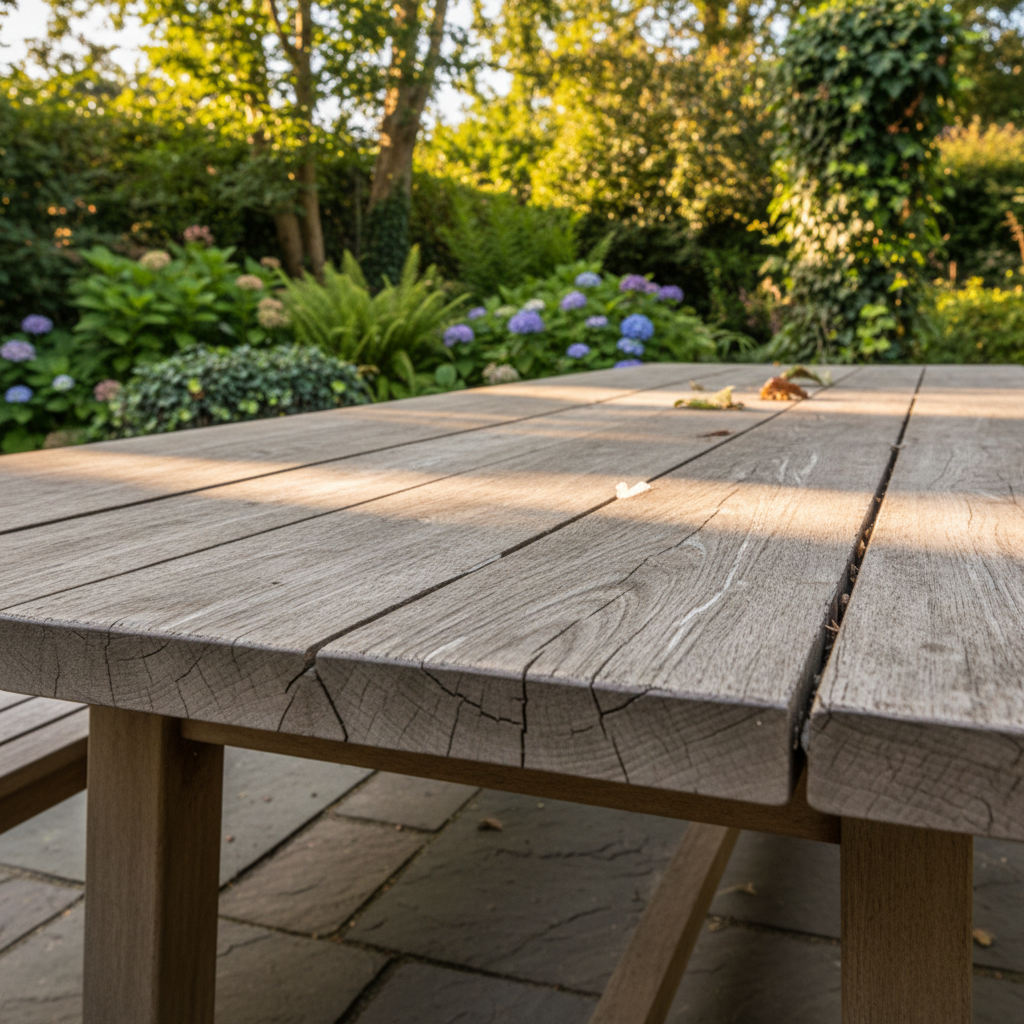
When it rains or humidity rises, wood absorbs micro-moisture and expands. When direct sun or arid heat follows, the outer surface layer dries out faster than the core interior. This uneven shrinkage creates tension, resulting in fine hairline splits along the grain.
Micro-Checking vs. Deep Cracks
-
Surface Checking (Normal & Safe): Small, thin hairline cracks running along the wood grain. This is a natural physical reaction to climate shifts and does not compromise structural integrity. Premium outdoor hardwoods like Acacia wood and Teak are dense enough to absorb these natural tension releases without snapping.
-
Structural Splitting (Needs Attention): Deep, wide splits that go entirely through a joint or leg, usually caused by standing in pooling water or enduring extreme winter freeze-thaw cycles unprotected.
2. Why Wood Outdoor Furniture Fades or Turns Gray
If your vibrant warm honey or amber-toned wooden dining table has shifted toward a weathered silver-gray, two main factors are at play:
UV Oxidation (The Sun’s Effect)
Just as ultraviolet light damages skin, strong solar radiation breaks down the natural lignin (the organic binding agent) in the outer micro-layers of timber. As lignin breaks down, the wood loses its natural pigment and develops a muted gray patina.
Washing Away of Natural Oils
Rainwater gradually washes away natural surface oils over time. While untreated teak furniture is famous for its silver patina (a look widely embraced in Scandinavian rustic design), hardwoods like Acacia and Eucalyptus retain their richest luster when periodically replenished with protective sealants.
3. How to Prevent Cracking & Fading Before It Happens
Prevention is always easier than restoration. A few proactive habits will keep your wood outdoor furniture looking showroom-ready for years:
-
Apply an Annual Sealer or Teak Oil: Treat your timber once or twice a year with a breathable outdoor wood sealer or natural teak/tung oil. This replenishes moisture barrier oils and locks in UV protection.
-
Use Breathable Furniture Covers: During rainy seasons or intense summer sun, shield your sets with fitted, water-resistant outdoor covers. Tip: Ensure covers are breathable so trapped moisture doesn't foster mildew.
-
Elevate Table & Chair Legs: Avoid letting wooden legs sit directly in puddles or wet grass. Placing your furniture on a paved terrace, gravel deck, or using small protective rubber feet prevents ground moisture from wicking upward into the grain.
-
Winter Storage: In Northern or Midwestern states with severe freezing cycles, store your tables and chairs in a dry garage, shed, or covered area during severe winter months.
4. Step-by-Step Guide: How to Fix Faded or Cracked Wood Furniture
If your wooden patio set has already suffered from sun exposure or light surface cracking, don't worry—restoring natural hardwood is straightforward.
Step 1: Deep Clean the Surface
Wipe away dirt, pollen, and debris using a soft-bristle brush, warm water, and mild dish soap (or a dedicated wood cleaner). Allow the piece to dry completely for 24–48 hours.
Step 2: Smooth Out Micro-Cracks and Faded Layers
Using fine-grit sandpaper (180 to 220-grit), gently sand along the direction of the wood grain. This process strips away the thin silvered surface layer and smooths out minor checking, exposing the fresh, vibrant timber beneath.
Step 3: Fill Deep Cracks (If Necessary)
For noticeably wider cracks, apply a exterior-grade, waterproof wood filler matching your furniture's shade (such as Acacia or Teak tone). Once dry, sand the filled area flush with the surrounding surface.
Step 4: Apply Protective Finish & UV Oil
Wipe away all sanding dust with a microfiber cloth. Using a clean brush or rag, apply a thin, even coat of high-quality outdoor wood sealer or oil. Allow it to absorb for 15–20 minutes, then buff off any excess with a dry cloth.

A little natural weathering is simply proof of authentic, high-quality timber living in harmony with nature. With basic care and occasional oiling, premium wooden patio furniture will deliver decades of beauty, comfort, and timeless backyard memories.
Looking for high-performance, weather-resilient furniture engineered for modern living? Explore Jardina’s curated collection of sustainably harvested wooden dining sets and deep-seating conversation furniture crafted for long-lasting open-air luxury.