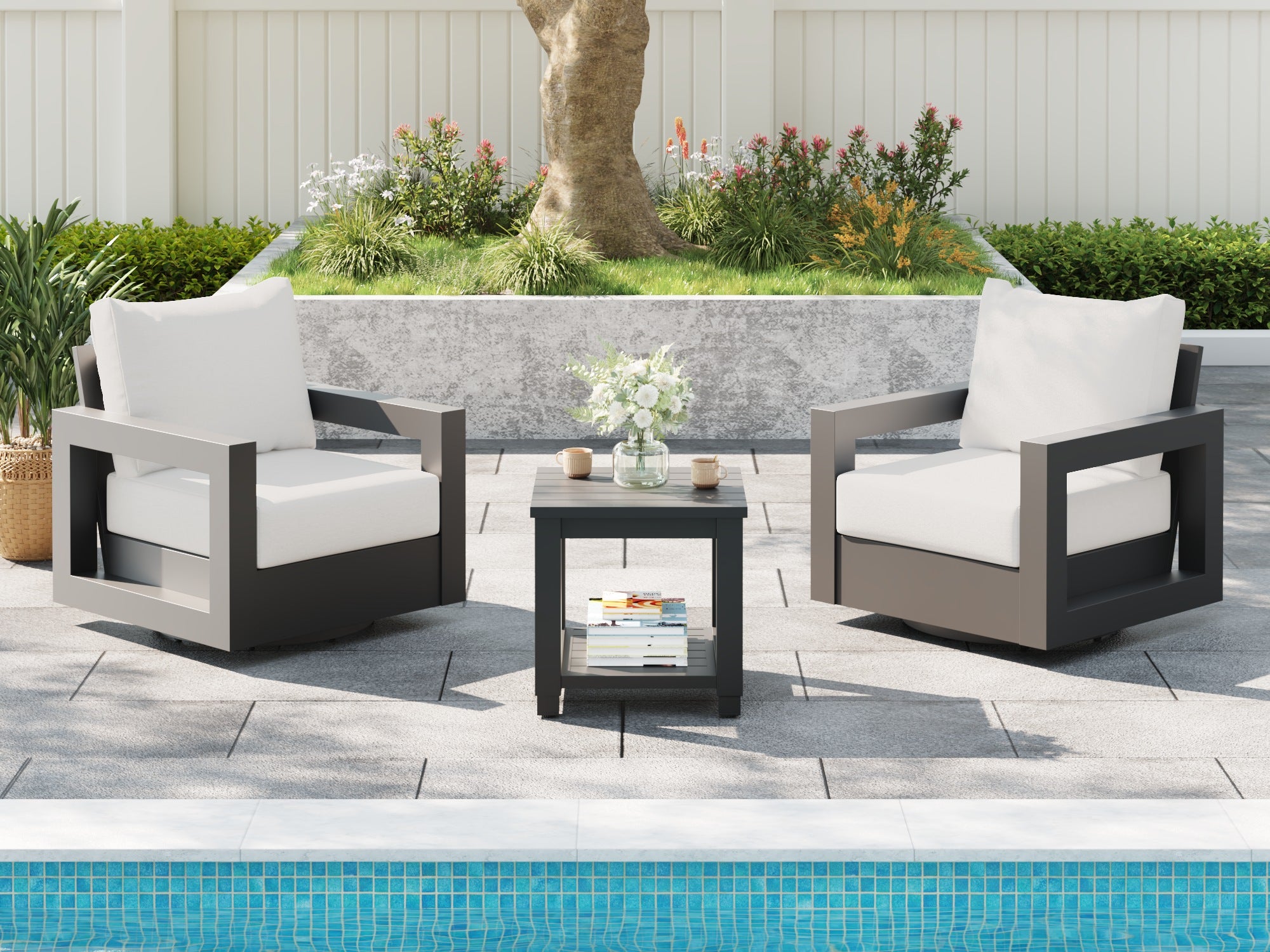

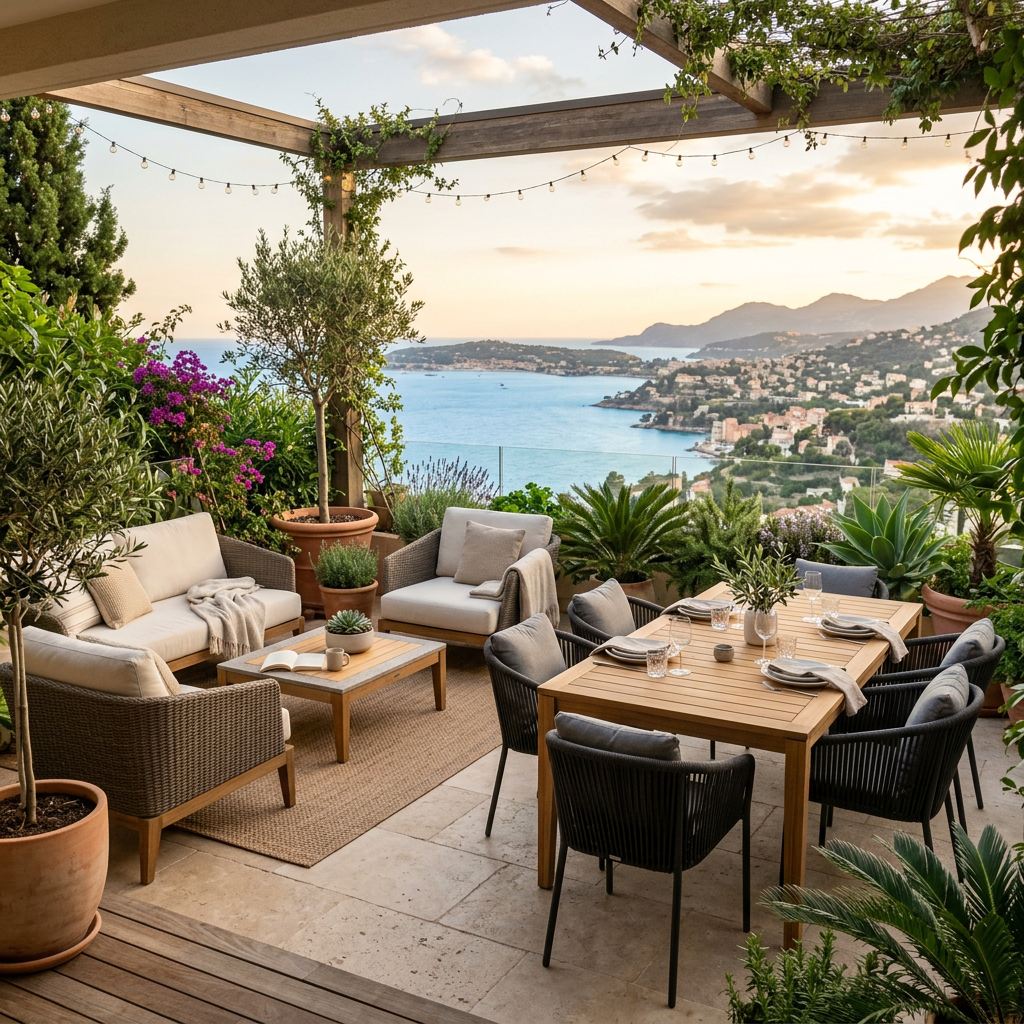
A terrace is more than a slab of concrete — it's an extra room you get only when the weather cooperates. But choosing furniture for it is trickier than shopping for a living room. Sun, rain, wind, and temperature swings all attack your pieces year-round. This guide cuts through the noise and gives you the practical information you actually need: which materials last, how to plan your space, and what to buy for your specific terrace.
Step One: Decide How You'll Actually Use the Space
Before you look at a single product, get clear on purpose. Ask yourself: Is this a morning-coffee spot? A dinner-for-six zone? A lounging retreat? Large terraces can host several zones — dining, relaxing, planting — which keeps things organized and makes the space feel bigger.

Small ones should commit to just one or two functions, because a terrace that tries to do everything usually does nothing well.
For most people the honest answer is: one primary use + one secondary. A bistro table for coffee plus a single lounge chair works far better on a narrow terrace than a cramped dining set you never eat at.

Step Two: Measure Like a Pro (This Is Where Most People Fail)
The most common mistake is measuring total area instead of usable floor space. You must account for door swing radius, railings, built-in planters, and any awkward angles.
Here are the clearance numbers professionals actually use:
- Main walkways: leave at least 75–90 cm (roughly 30–36 inches) of clear passage so movement stays fluid rather than cramped.
- Behind dining chairs: allow about 60 cm (24 inches) so chairs can be pulled out comfortably.
- Furniture footprint: keep furniture to about 40–60% of your total terrace footprint — this keeps the space feeling open instead of stuffed.
Pro tip for small terraces: use corners. Tucking seating or a dining set into a corner maximizes open floor space and makes the terrace feel less cluttered. Also think vertically — move greenery to walls or railings to keep the ground clear for seating

Step Three: Choose the Right Frame Material (The Single Biggest Decision)
Your frame material determines how long the furniture lasts and how much maintenance you'll do. Here's the honest breakdown:
Aluminum — The Best All-Round Pick

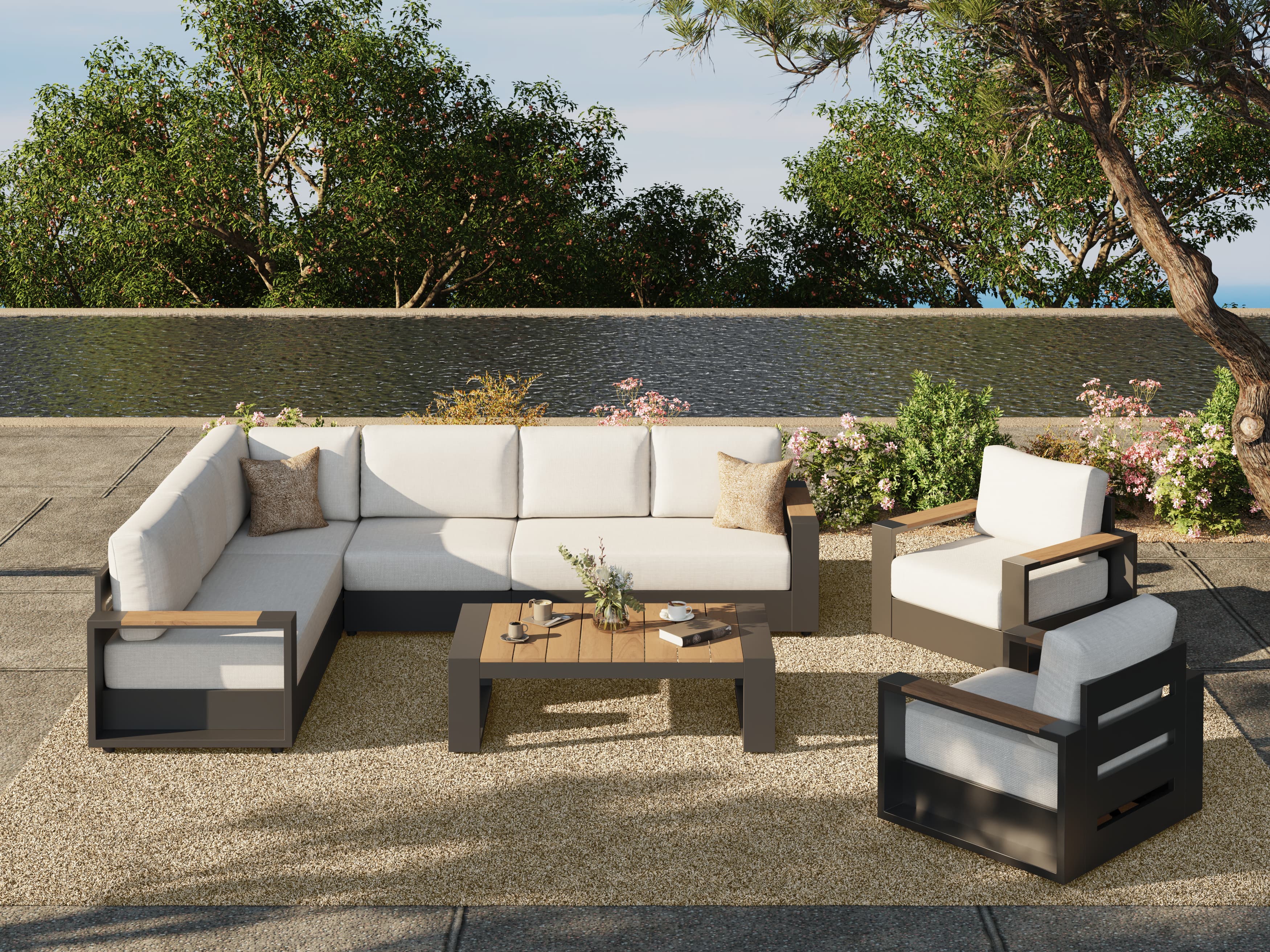
Aluminum frames are lightweight, rust-proof, and low-maintenance. They won't splinter or need refinishing. Look for anodized or powder-coated finishes to prevent oxidation. Aluminum cannot rust, which makes it the safer choice for uncovered terraces, humid climates, and poolside placement. In head-to-head comparisons, aluminum-framed sets consistently outperformed PE rattan on weather resistance and long-term durability for uncovered use.
Tradeoff: a cooler, more utilitarian look, and it can feel less sturdy than wood — though pairing it with cushions or woven surfaces fixes this.
Teak — The Gold Standard of Wood

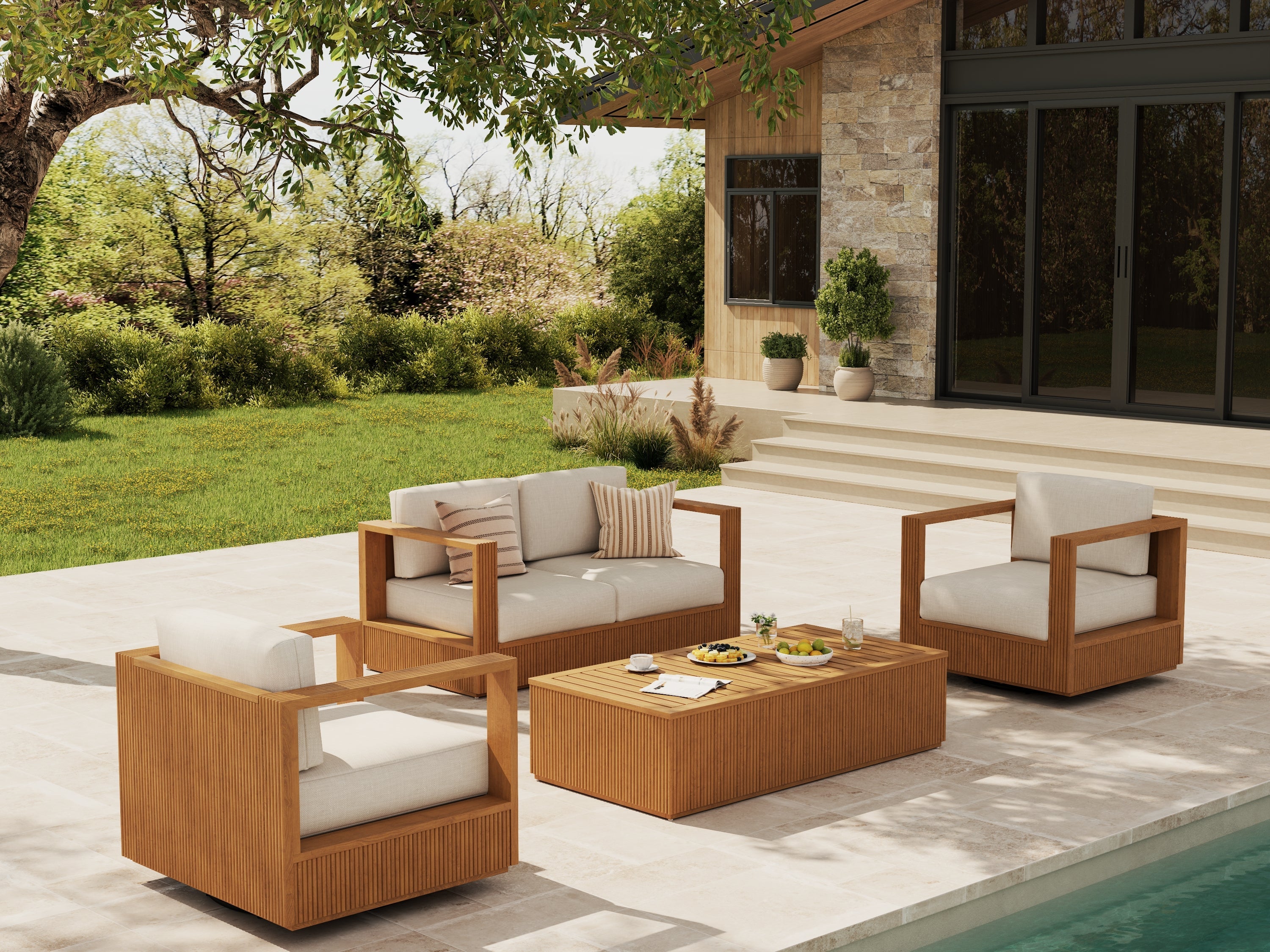
Teak is dense, naturally weather-resistant (thanks to high natural oil content that repels water and prevents rot), and actually improves in appearance as it grays with age. The tradeoffs are high cost and supply concerns.
Cheaper wood alternatives: acacia and eucalyptus wood are more affordable but need occasional sealing. Avoid budget softwoods like pine and spruce for outdoor furniture — they rot within a few years even with treatment.
Synthetic Rattan / Wicker (HDPE) — Warm Look, Needs the Right Frame

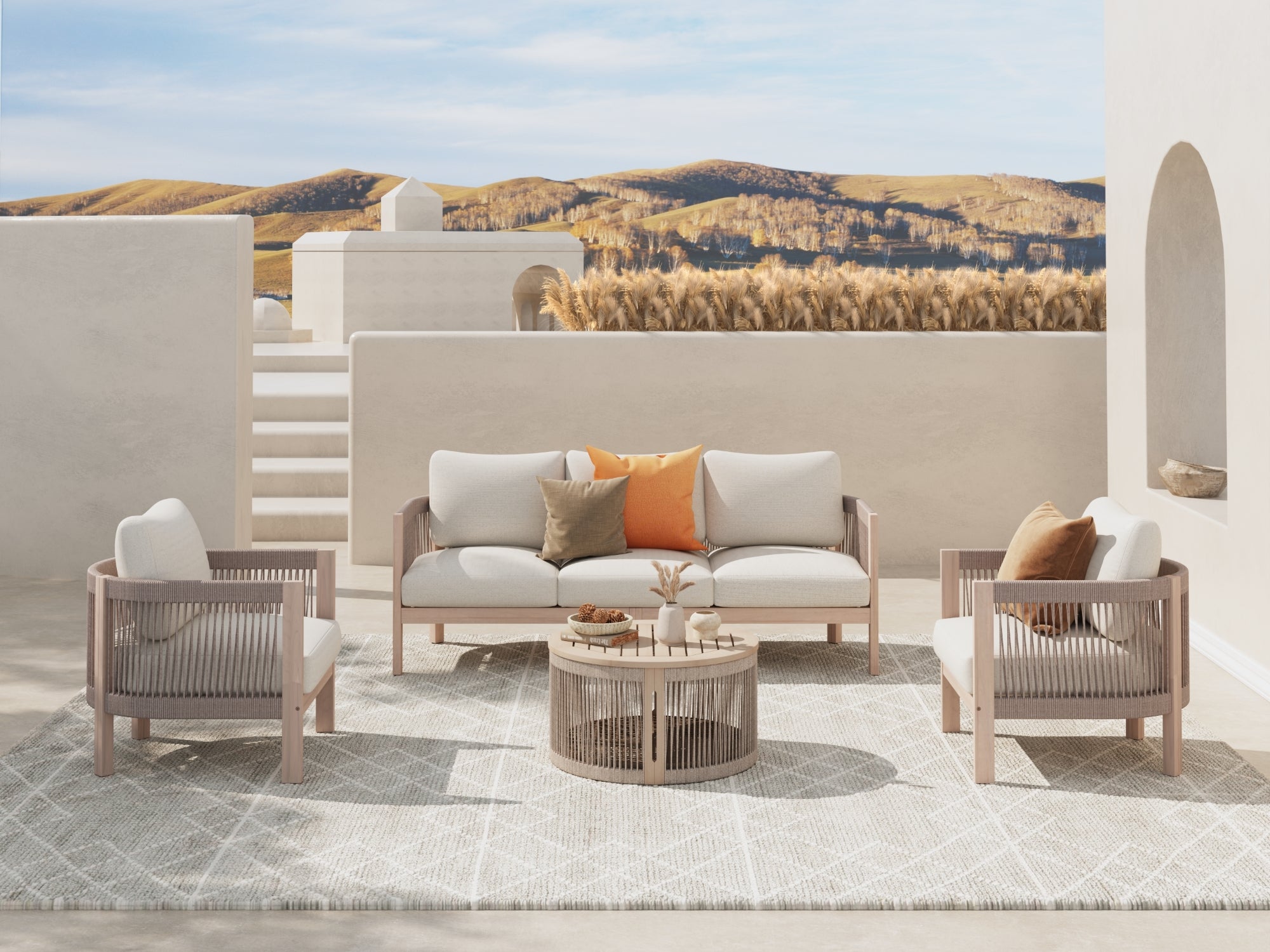
Synthetic all-weather wicker (resin-coated polyethylene or polypropylene) withstands sun and moisture far better than natural rattan. HDPE is UV-stabilized and waterproof; it doesn't absorb moisture, so it resists mold and mildew naturally. Check that it's UV-stabilized to prevent fading and brittleness.
Critical warning: the frame under the wicker is what matters. Rattan woven over powder-coated aluminum gives you the best of both worlds; rattan over bare steel is the combination to avoid in wet climates — hand-woven wicker over steel frames can trap moisture at the joints and rust from the inside out. Price does not reliably signal frame material, so check the product specs rather than assuming a pricier wicker set has a rust-resistant base.
Other Metals
-
Stainless steel: resists corrosion and suits modern designs, though fingerprints and water spots show easily.
- Cast aluminum / wrought iron: extremely durable but heavy — excellent for permanent installations where weight isn't an issue. Both rust without proper paint or powder coating.
Step Four: Don't Skimp on Cushions (The #1 Regret)
Cushions are where budget sets cut corners, and it's the detail buyers regret most after one season. Here's what to look for:
-
Thickness matters: anything under 3 inches of foam will bottom out against the seat frame within an hour of sitting. 4.5–5.1 inch cushions hold up through long dinners and afternoon lounging.

-
Removable, zippered, machine-washable covers separate a good set from a frustrating one — spot-clean-only cushions effectively guarantee a dingy set by year two.

-
Fabric: olefin and solution-dyed acrylic are industry standards — they dry fast and resist mildew better than cotton or linen. (Sunbrella is the best-known solution-dyed acrylic.)

-
Quick-dry foam cores in rainy regions: standard cushions that stay damp internally will mildew no matter how good the cover looks.

- Color: intense sun fades dark cushion fabrics fastest, so lighter colors like beige and grey age more gracefully in strong southern exposure.

Reality check on "leave it outside": no outdoor cushion in the standard price range is truly waterproof — seams and zips let water in during sustained rain. The practical approach is to keep cushions in a deck box or indoors when rain is forecast, and use a furniture cover for overnight protection. Budget for covers or storage as part of the purchase price — a modest cover set extends cushion and frame life by multiple seasons
Step Five: Match the Furniture Type to Your Terrace Size
Small / Narrow Terraces
Bistro sets: a small round table with two chairs occupies minimal square footage while still providing a functional surface. Look for foldable or stackable designs for easy storage.

Foldable furniture: chairs, tables, and even loungers that fold are ideal for tight spaces and can be stowed away.

Modular seating: sectional sofas or modular benches can be rearranged to fit your layout. Sets that reconfigure into multiple layouts beat fixed arrangements at the same price.

Narrow rectangular tables: a streamlined rectangular table (e.g., 140 × 80 cm) gives ample dining surface while its narrow width fits tighter areas without blocking traffic.

Storage benches: one piece replaces two — seating plus hidden storage.

Visual lightness: achieve "visual lightness" with slim frames you can see through; bulky furniture overwhelms small spaces. Match finishes across pieces to create a cohesive look that visually expands the area.

Medium to Large Terraces
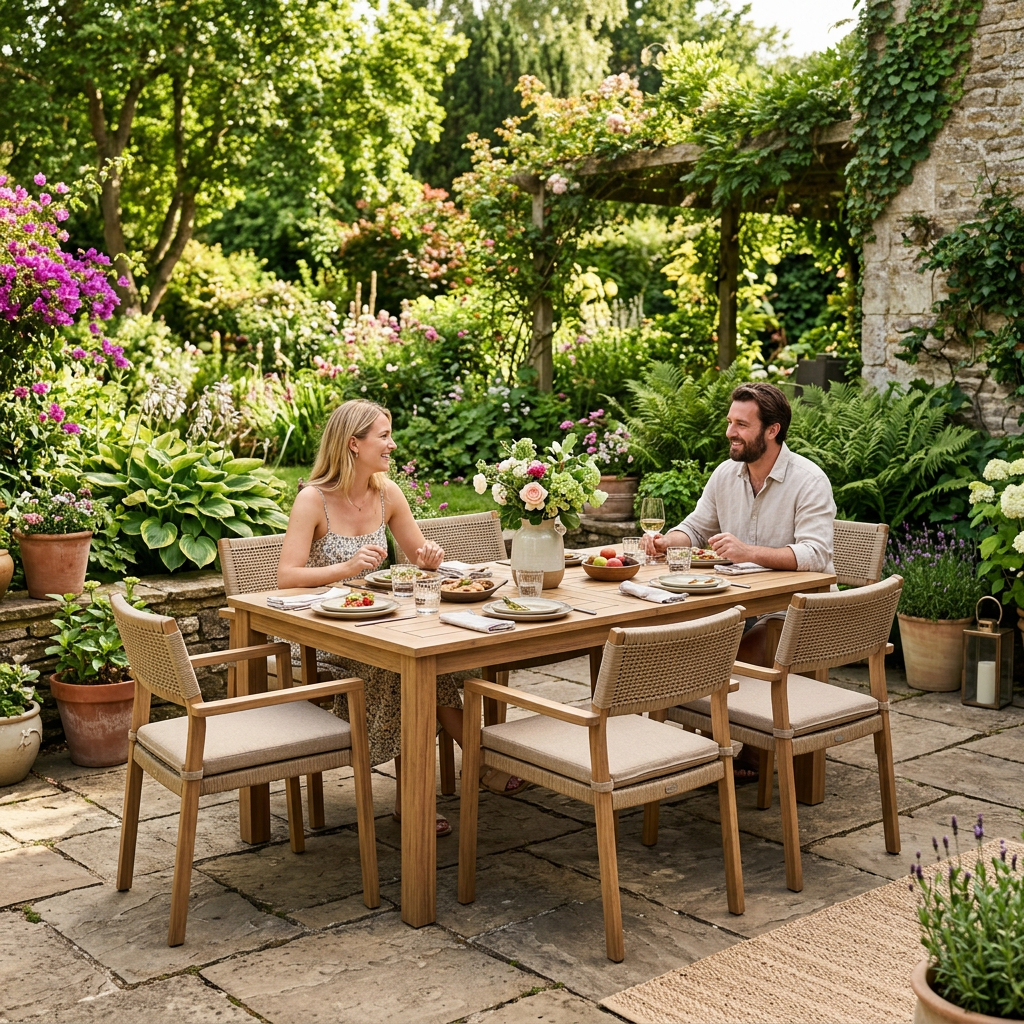
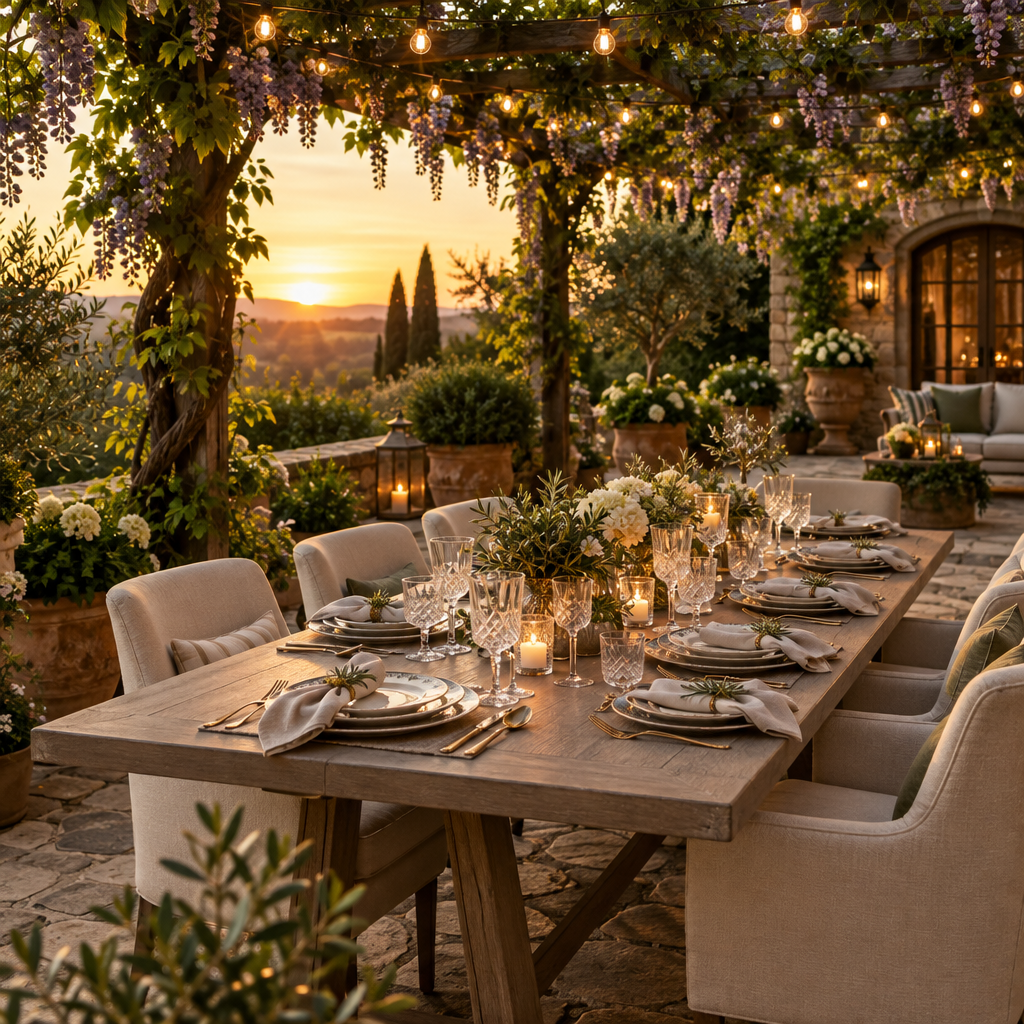
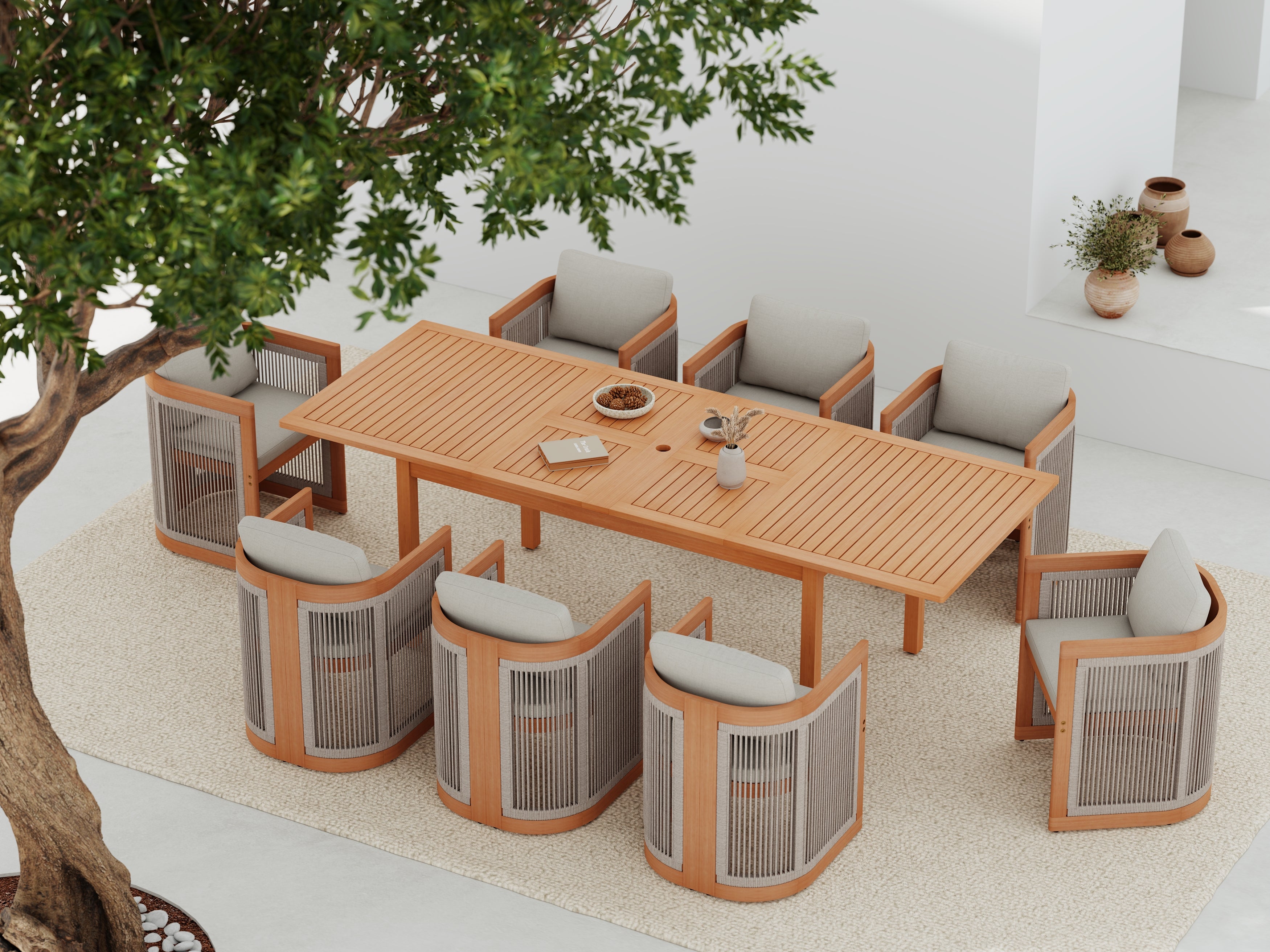
Dining set: a table with four to six chairs works for eating and socializing.

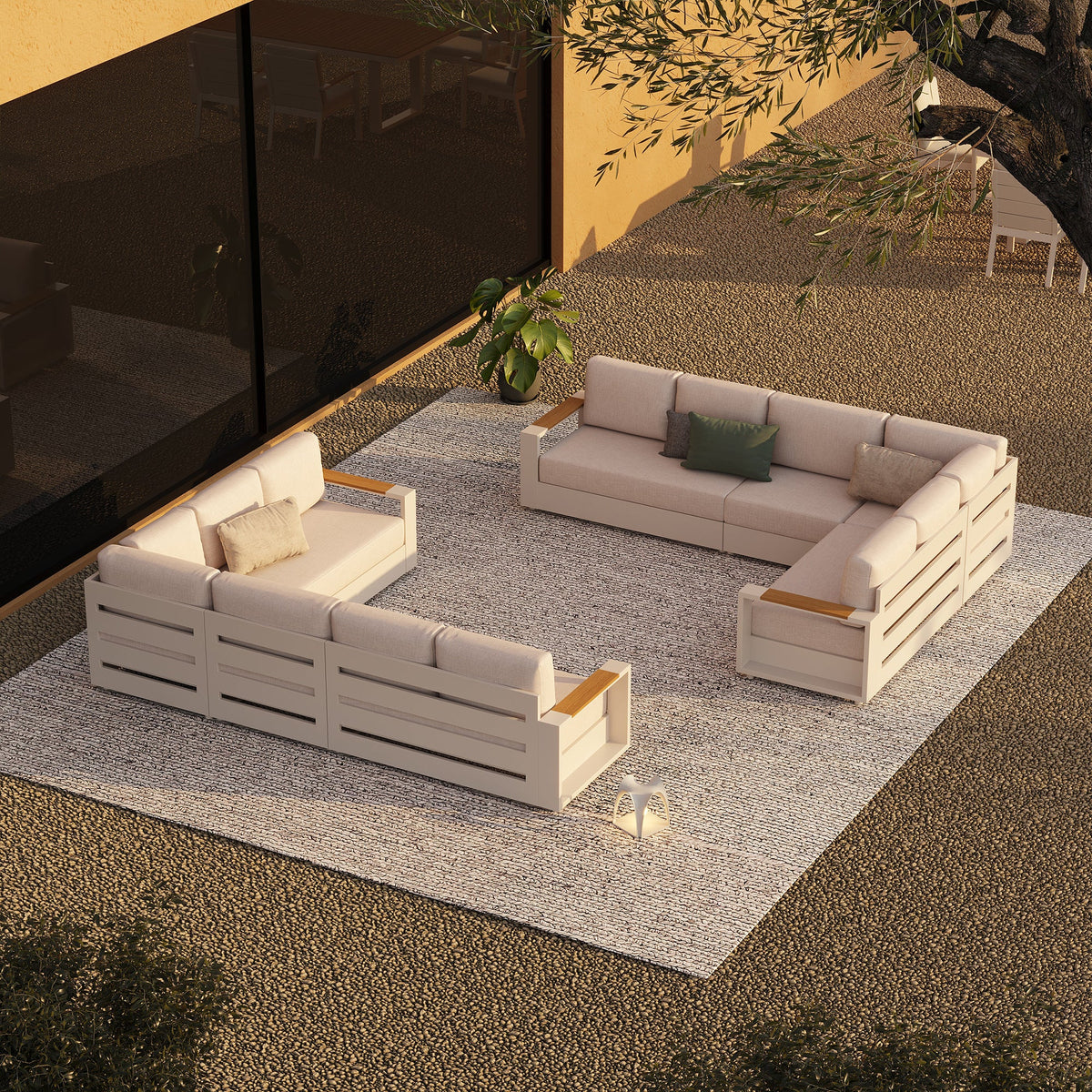
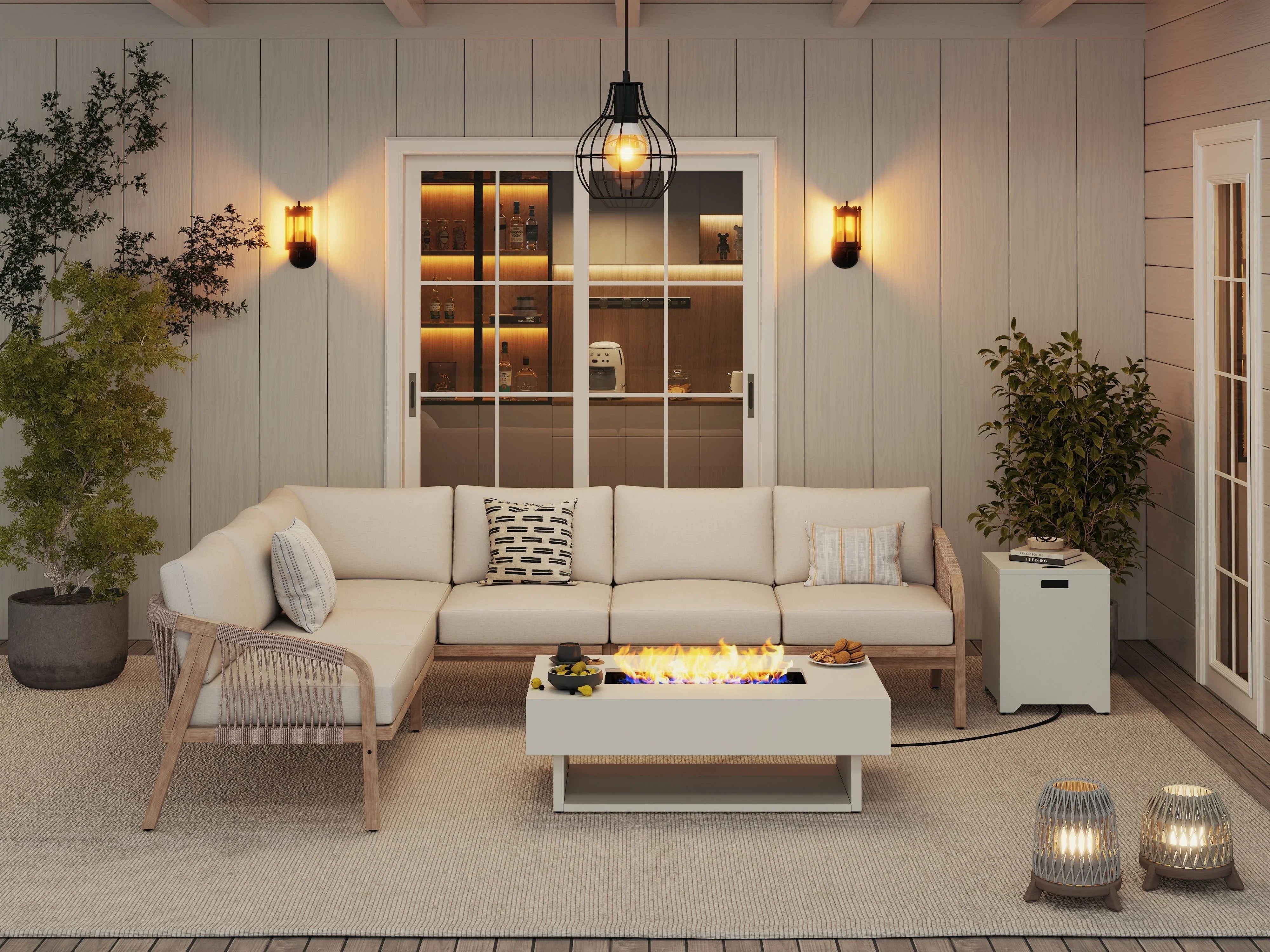
Lounge / modular sectional: cushioned sectionals rival indoor sofas and reshape as needs change.

Accent seating: swivel or rocking chairs add a welcoming feel without eating as much space as a full lounge.

Storage ottoman / bench: solves the problem of cushions, throws, and tools accumulating. Look for marine-grade or powder-coated hardware — cheap hinges and latches rust and seize up within a season or two.

Note on seven-piece sets: large sets only make sense if you genuinely have a big terrace; several mid-size options offer better comfort per square foot.

Step Six: Special Situations
-
Rooftop terrace in full sun: prioritize aluminum frames and UV-resistant materials. Light-coloured frames and cushions stay cooler and age better.
-
Waterproofed terrace floors: dragging heavy furniture can scratch or damage the membrane — choose furniture with proper feet, or place it once and rarely move it.
-
Weight limits (older buildings): aluminum-framed furniture gives you a full setup at a fraction of the weight of stone or solid teak.
- Windy terraces: avoid lightweight pieces that blow around; heavier frames or anchorable designs are safer.
Red Flags to Avoid When Shopping
- No UV resistance rating or material specification listed
- Only assembled dimensions given, with no folded or stored size
- Heavy fixed frames with no modular or folding option
- Cushion fabric described only as "outdoor" with no quick-dry or fade-resistance claim
- Rattan/wicker where the frame material isn't specified (likely bare steel inside)
- No replacement cushions available — cushions wear before frames do
Quick Maintenance Tips to Make It Last
- Brush off debris weekly; clean spills fast
- Store cushions in waterproof bins or a deck box in heavy rain or winter
- Use furniture covers — they cost far less than premature replacement
- For teak, occasional sealing helps preserve color (or let it gray naturally)
- Check whether pieces stack or disassemble if you plan to store them indoors over winter
The Bottom Line
| Your situation | Best pick |
|---|---|
| Uncovered / rainy / humid terrace | Powder-coated aluminum frame |
| Covered or semi-sheltered, want warmth | PE/HDPE rattan over aluminum frame |
| Premium budget, love natural wood | Teak |
| Small / narrow terrace | Bistro set, foldables, modular seating |
| Rooftop, full sun | Aluminum + light-colored, UV-resistant cushions |
| Tight budget but want longevity | Aluminum + thick washable cushions |

【The one rule that overrides everything】: match the frame material to your exposure, and never buy thin cushions. Those two decisions determine whether your terrace furniture looks great in year three or ends up on the curb in year two.