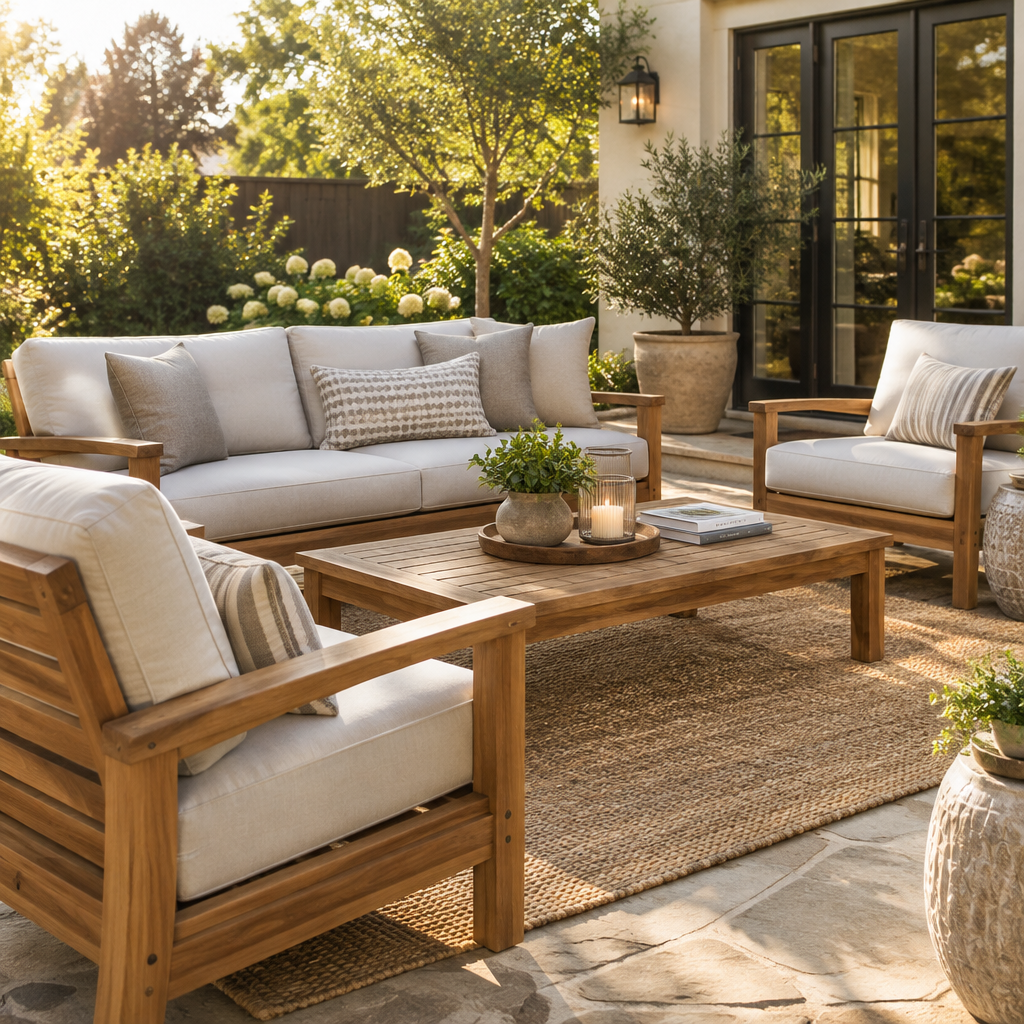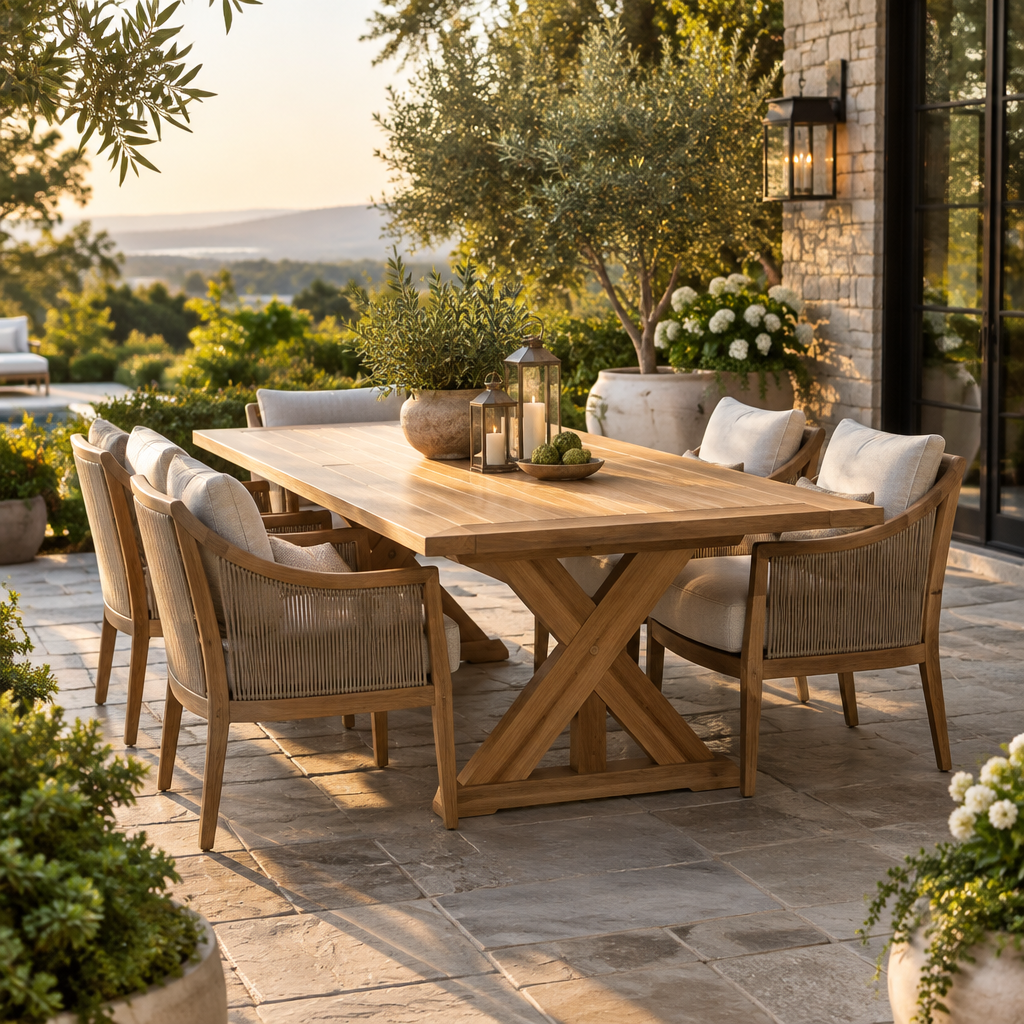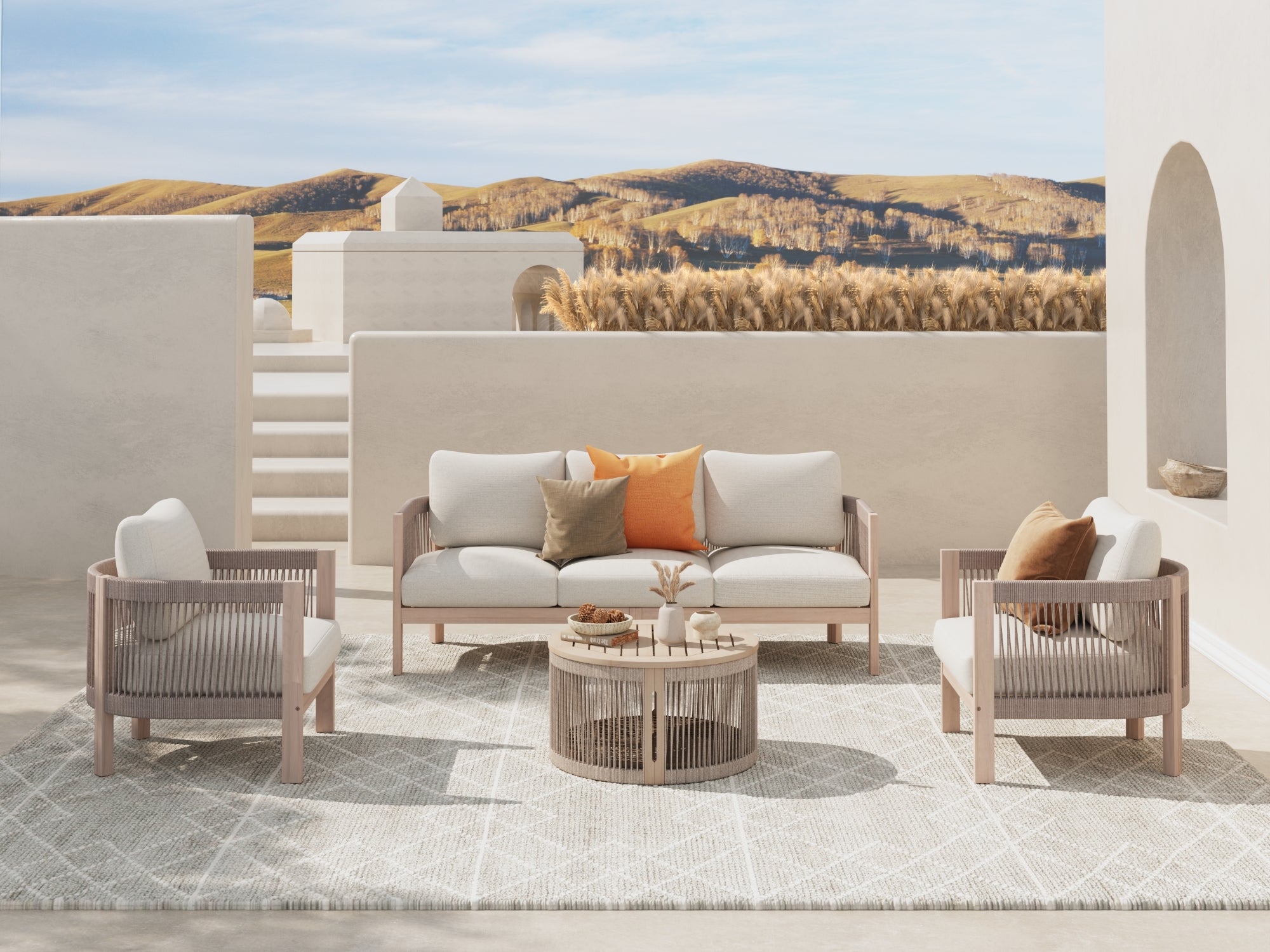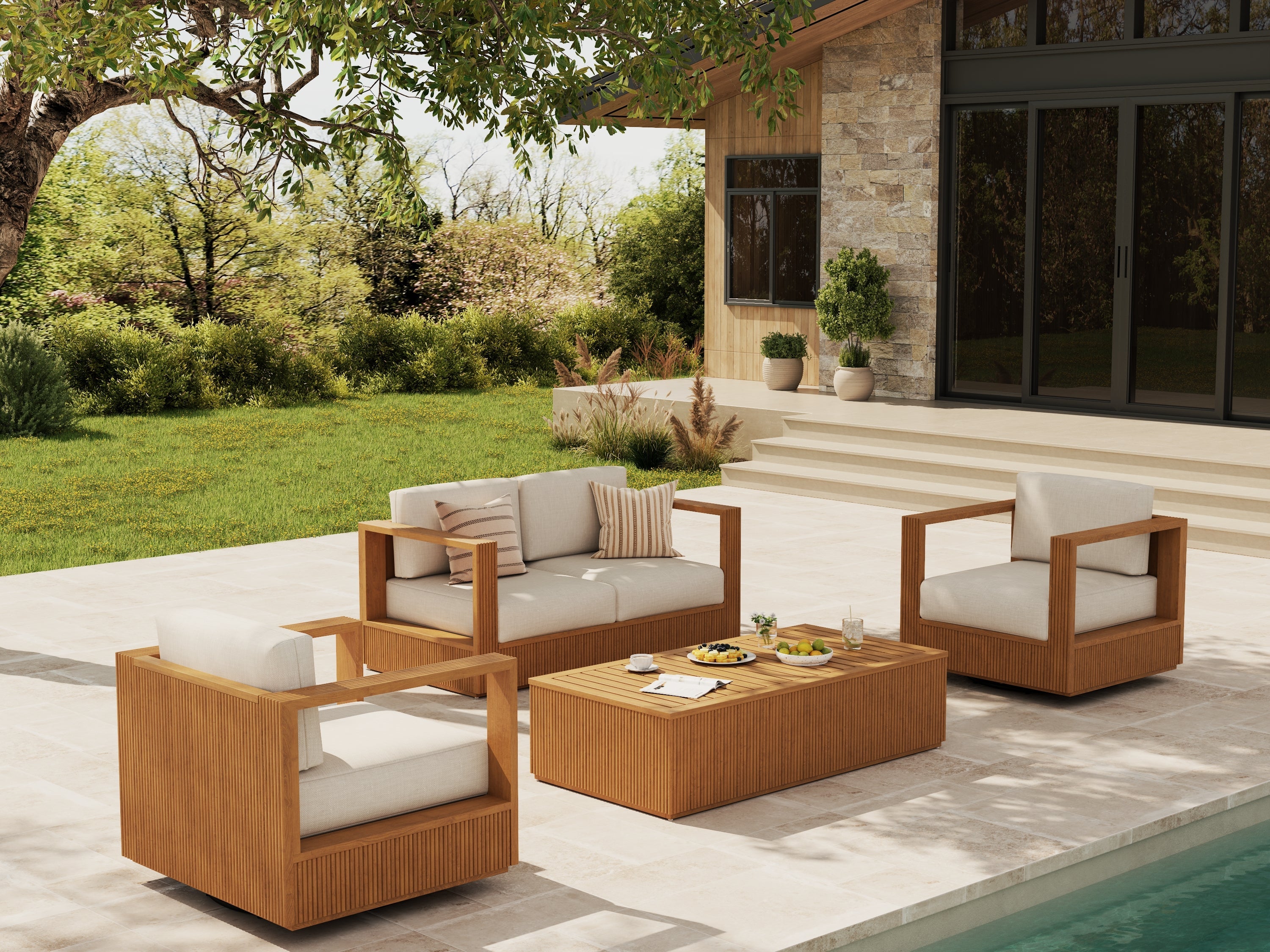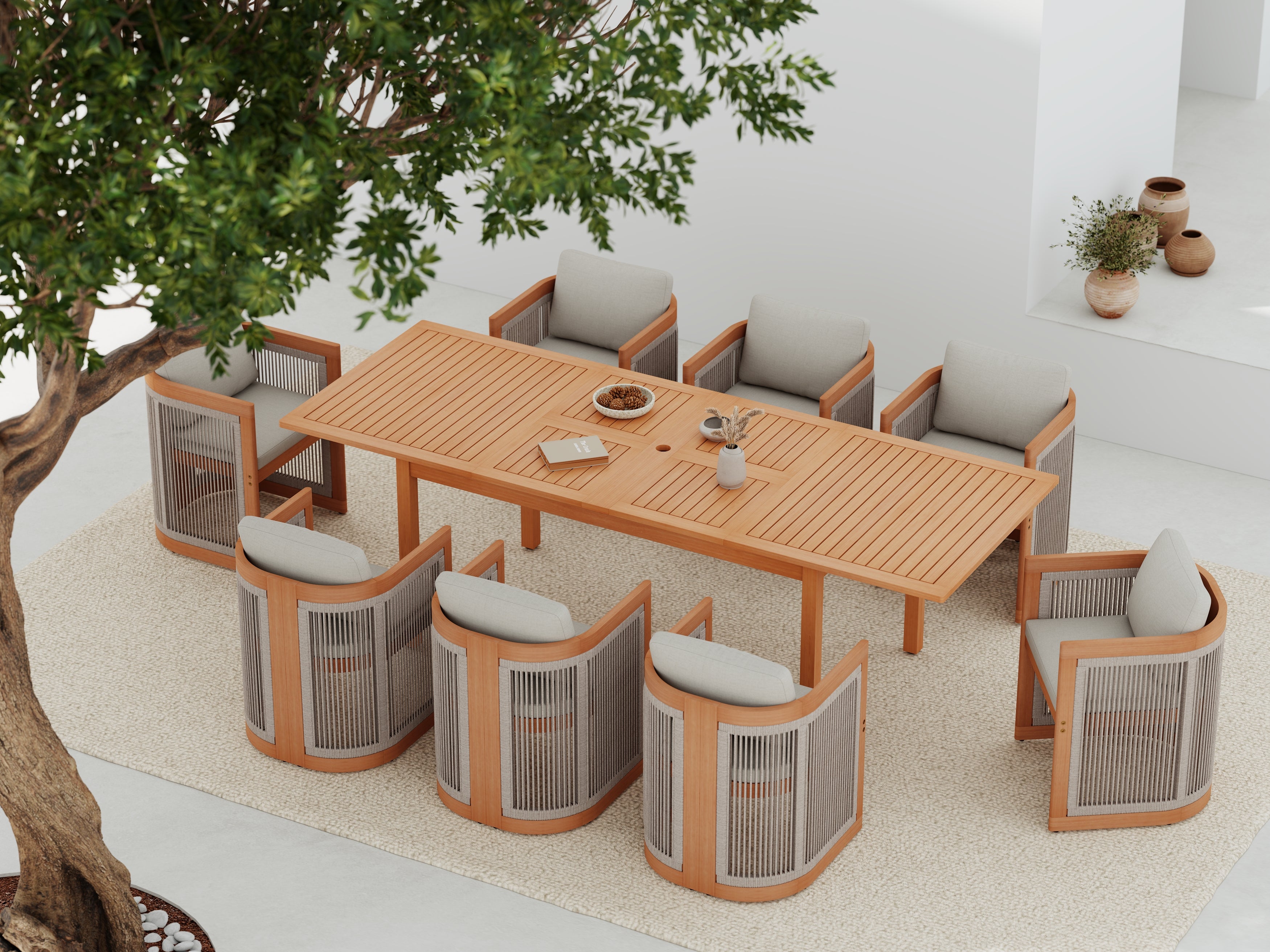

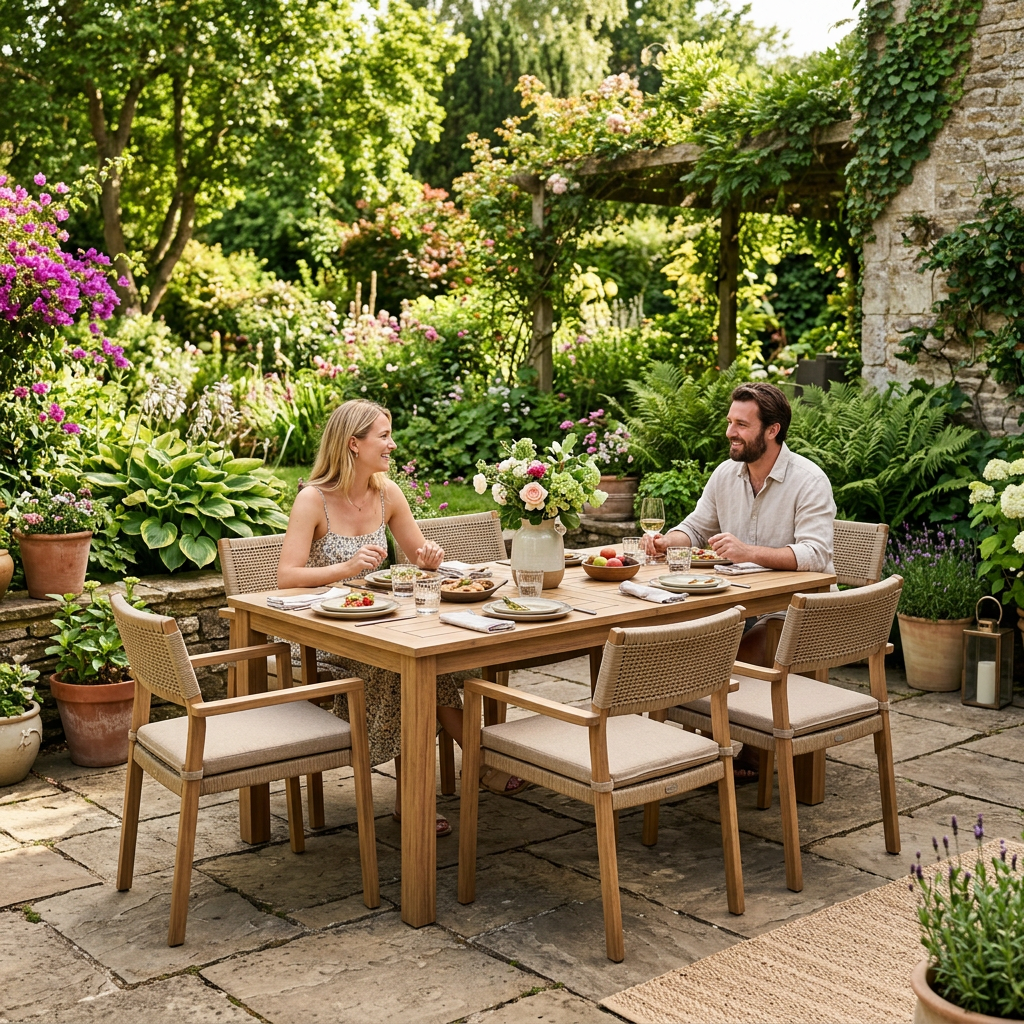
Teak (Tectona grandis) has long been celebrated as the gold standard for luxury furniture, renowned for its golden hue, tight grain, and exceptional outdoor durability. However, its high market value has led to a surge in imitations. Less expensive woods—such as shorea, eucalyptus, mango wood, or acacia—are frequently stained, oiled, or artificially finished to mimic authentic teak. In other cases, sellers market lower-grade sapwood or wood veneers as genuine solid teak.
To protect your investment, here are the primary physical characteristics, field tests, and craft details that reveal whether a piece is authentic teak or an imitation.
1. Inspect the Grain Structure and Color

Authentic teak possesses a distinct visual signature that synthetic stains struggle to replicate convincingly.
- Grain Alignment: Genuine Grade-A teak features a dense, tight, and predominantly straight grain. While occasional light waves or small swirls appear near the center of a log, excessive knotting, coarse patterns, or wildly erratic grain lines typically indicate a different species.
- Natural Color Progression: Freshly milled or finely sanded teak exhibits a warm honey-to-golden-brown shade. Over time, exposure to UV light and air alters untreated teak, developing a signature silvery-grey patina.
- Spotting Stains and Veneers: Imitation teak often uses a heavy topical stain to mask underlying wood. If the color appears unnaturally uniform, flat, or overly reddish-brown, look closer at the edges and end grain. A dramatic shift in grain pattern or color at cut edges usually indicates a thin teak veneer bonded to a cheaper core like plywood or MDF.
2. Conduct the Touch and Feel Test

The tactile feedback of genuine teak is one of its most reliable identifiers, driven by its high natural silica and oil content.
- Silky, Oily Surface: Run your hand across an unsealed or raw section of the piece. Authentic teak feels smooth, dense, and slightly waxy or oily to the touch. It does not feel dry, powdery, or chalky.
- Resilience to Splintering: Due to its tight cellular matrix, high-grade teak feels smooth along the grain and rarely splinters or peels under hand pressure.
- Heavy Lacquer Red Flags: Be cautious if outdoor teak furniture is covered in a thick, glass-like polyurethane coat. Manufacturers often apply heavy clear coats to lower-quality woods or sapwood to mimic the luster that genuine teak produces naturally through its intrinsic oils.
3. Perform a Water Drop Test

Teak’s high concentration of natural rubber and protective oils gives it natural water repellency without requiring synthetic waterproof coatings.
- Behavior of Water: Place two or three drops of clean water onto an unfinished, unsealed area of the wood (such as the underside of a table joint or the bottom of a chair leg).
- Observation: On genuine teak, the water droplets bead up and sit on the surface for a prolonged period rather than soaking in right away.
- The Fake Reaction: Secondary hardwoods or porous softwoods—even when lightly oiled—will rapidly absorb the moisture, causing the wood fibers around the droplets to darken within minutes.
4. Evaluate Weight and Density

Teak is a heavy, dense hardwood with a dry density of roughly 630 to 720 kg/m³.
- Heft: Lift one side of a chair or table. Authentic teak feels substantial and solid for its volume.
- Comparison: If a dining chair feels surprisingly light, flimsy, or easily tipped, it may be constructed from hollow composite framing, rubberwood, or softwood alternatives like pine or fir that have been stained golden.
5. Check for the Signature Leather Aroma
The natural oils (tectoquinones) within true teak release a distinct scent that persists long after harvesting.
- The Scent Profile: Unfinished genuine teak carries a faint, earthy aroma reminiscent of natural leather or timber resin.
- Detecting Substitutes: Fake teak usually lacks this distinct natural scent entirely, or it smells heavily of petroleum, chemical solvents, artificial stains, or varnish.
6. Understand Wood Grading (Heartwood vs. Sapwood)

Even when a piece is made from the Tectona grandis tree, not all parts of the trunk deliver the same performance. Knowing the difference prevents paying top prices for low-grade wood.
- Grade A (Heartwood): Harvested from the dense center of mature trees. It holds the highest oil concentration, offers a uniform golden color, contains virtually no knots, and provides superior resistance to outdoor weather.
- Grade B & C (Sapwood): Sourced from the outer layers of the tree. Sapwood is lighter in color (often yellowish-white), exhibits uneven grain, has significantly lower oil content, and is far more prone to rotting, cracking, and insect damage over time. Sellers offering "budget teak" are frequently using Grade C sapwood.
7. Assess Joinery and Craftsmanship

Because raw teak is a premium material, reputable furniture makers pair it with high-end woodworking techniques rather than low-cost assembly methods.
- Traditional Joinery: High-quality teak pieces typically feature mortise-and-tenon or dovetail joints, often secured with wooden dowels.
- Hardware Details: Look at the metal components. Fine outdoor teak furniture utilizes marine-grade stainless steel or brass hardware that resists rust. The presence of visible pocket screws, cheap staples, or basic steel fasteners suggests a lower-tier product unlikely to be constructed from genuine heartwood.
Key Takeaways for Buyers
When evaluating potential purchases, combine these checks: examine the grain, feel for natural surface oils, test water repellency on unsealed spots, and gauge the overall weight. Finally, request documentation regarding the origin and grade of the timber; reputable manufacturers willingly provide timber certifications (such as FSC or SVLK) verifying ethically harvested, genuine teak. If you are looking to invest in authentic, high-quality FSC Teak Furniture, explore our premium selection at Jardina Teak Furniture Collection.