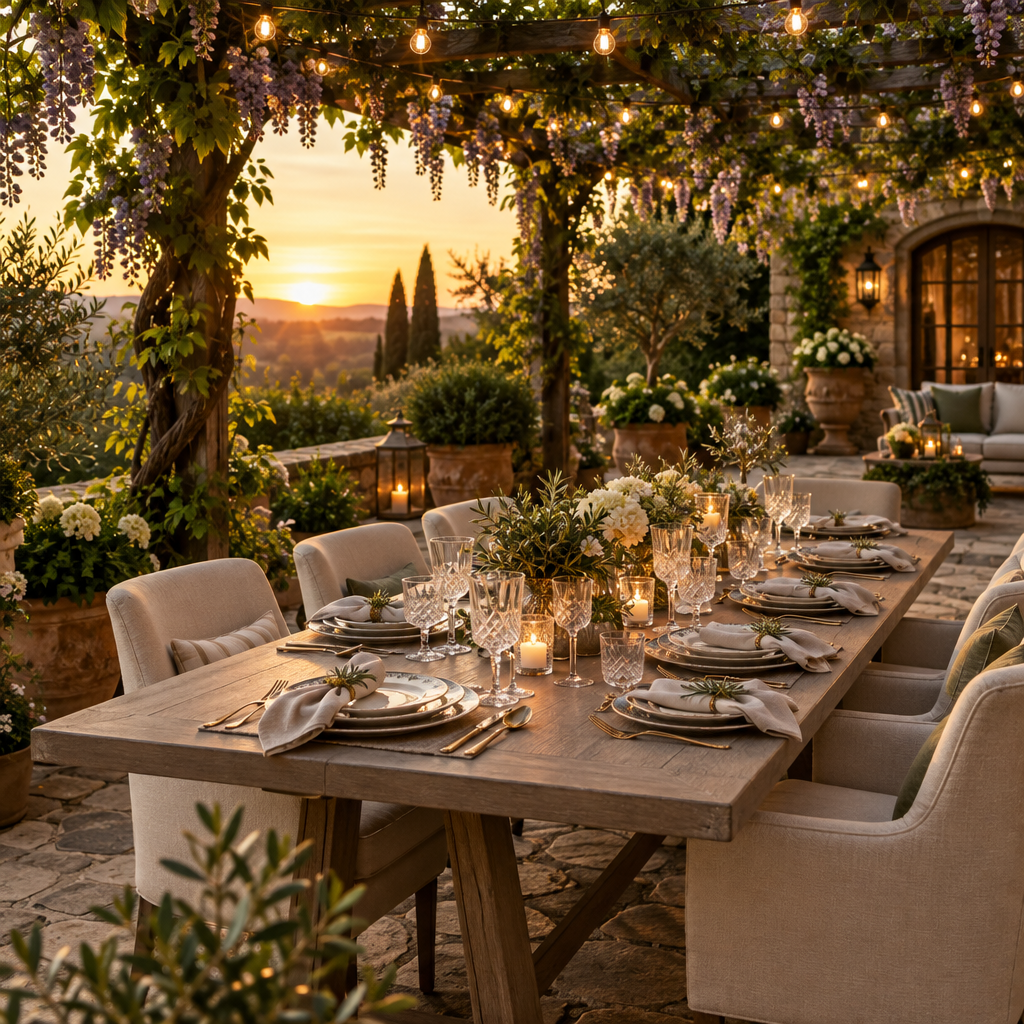

Wondering if wooden patio furniture gets hot under direct sunlight? We compare wood, aluminum, and wicker thermal conductivity so you can choose the coolest outdoor seating.
When planning your backyard retreat or outdoor dining setup, comfort is paramount—especially during high-summer heat waves across sunny regions like California, Texas, and Florida. Nobody wants to sit down for an afternoon barbecue only to be greeted by scorching hot seats.
If you’re deciding between popular patio materials, one critical question often comes up: Does wood outdoor furniture get hot in the sun?
The short answer is no—natural wood remains remarkably cool to the touch compared to metal, synthetic plastics, and glass. Read on to explore the thermal science behind outdoor materials, see how wood stacks up against aluminum and wicker, and learn how to keep your patio lounge effortlessly comfortable all summer long.

How Patio Materials Handle Direct Heat?
If you’re looking for a quick comparison, here is how the top three outdoor furniture materials respond to direct sunlight and high ambient temperatures:
| Material | Thermal Conductivity | Sun Comfort Level | Heat Retention |
| Solid Wood (Teak, Acacia, Eucalyptus) | Very Low | Cool & Breathable | Low (Dissipates heat quickly) |
| Aluminum & Metal | Very High | Hot to Severe Burn Risk | High (Traps surface heat) |
| All-Weather PE Wicker | Moderate | Warm to Hot | Moderate (Can soften under extreme heat) |
The Science of Thermal Conductivity: Why Wood Stays Cool
Why does a dark metal bench burn your bare legs while a heavy timber deck feels warm and inviting? The answer lies in thermal conductivity—the physical rate at which a material transfers heat.
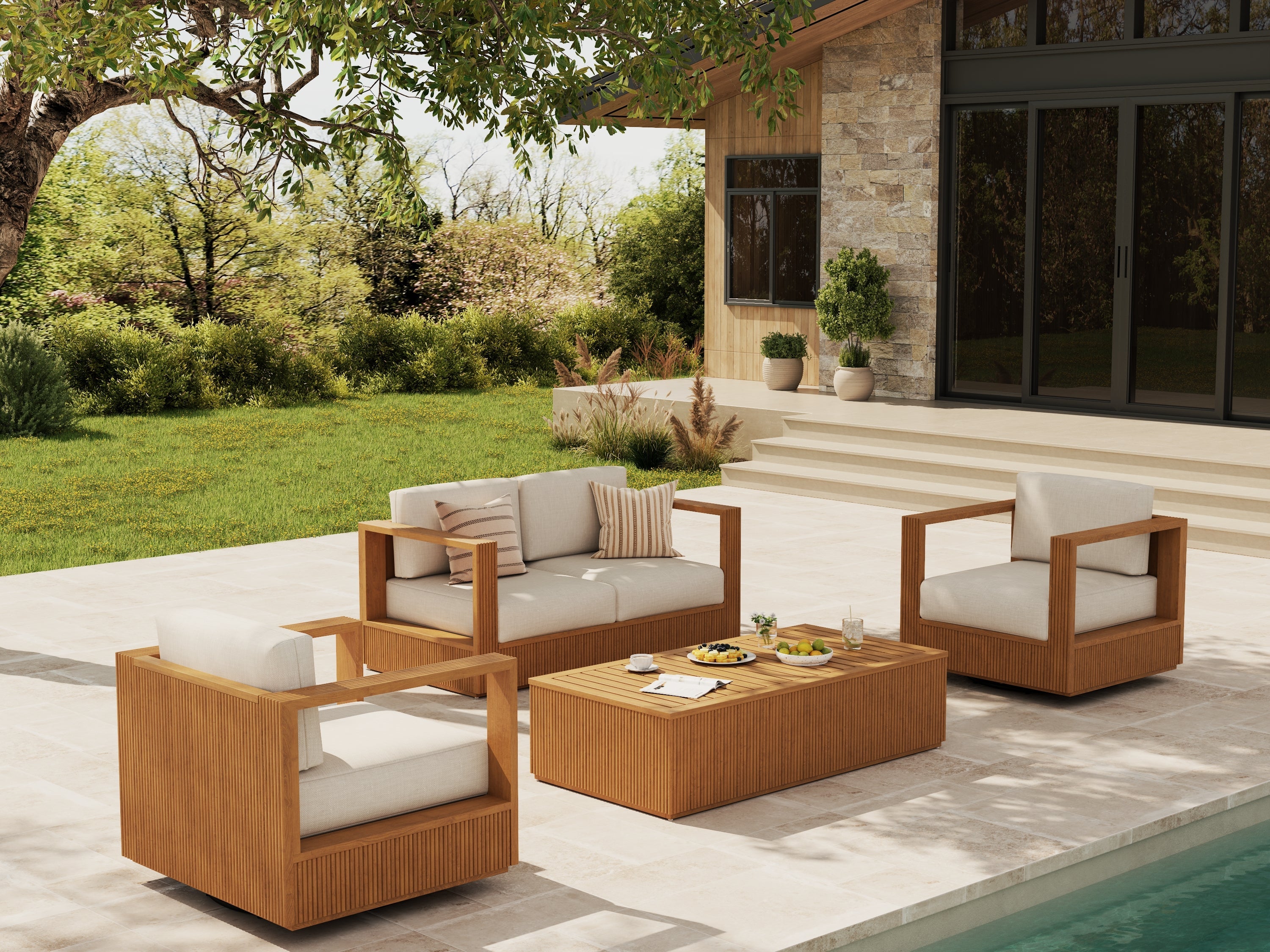
Natural hardwoods—such as FSC®-certified Teak, dense Acacia wood, and premium Eucalyptus—are natural insulators. Because timber possesses a cellular structure with microscopic air pockets, it resists thermal absorption and heat transfer. Even under direct noon sunlight, solid wooden frames dissipate thermal radiation efficiently, making wood outdoor furniture one of the safest and most comfortable choices for sun-drenched patios.
Material Showdown: Wood vs. Aluminum vs. Wicker
To help you make an informed decision for your garden or deck, let’s take a closer look at how wood compares to other popular outdoor materials in real-world summer conditions:
1. Wood vs. Aluminum (Metal)
-
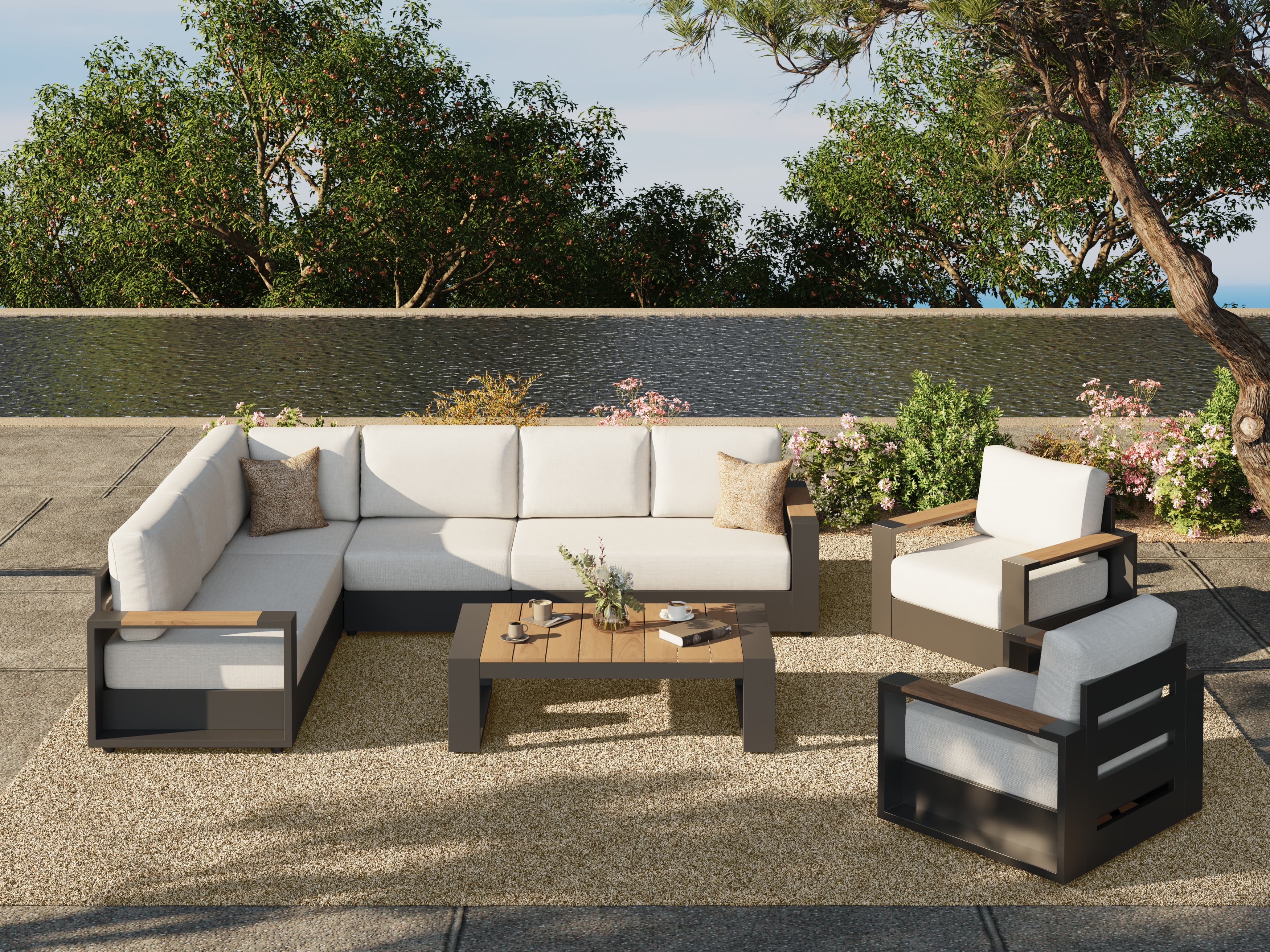
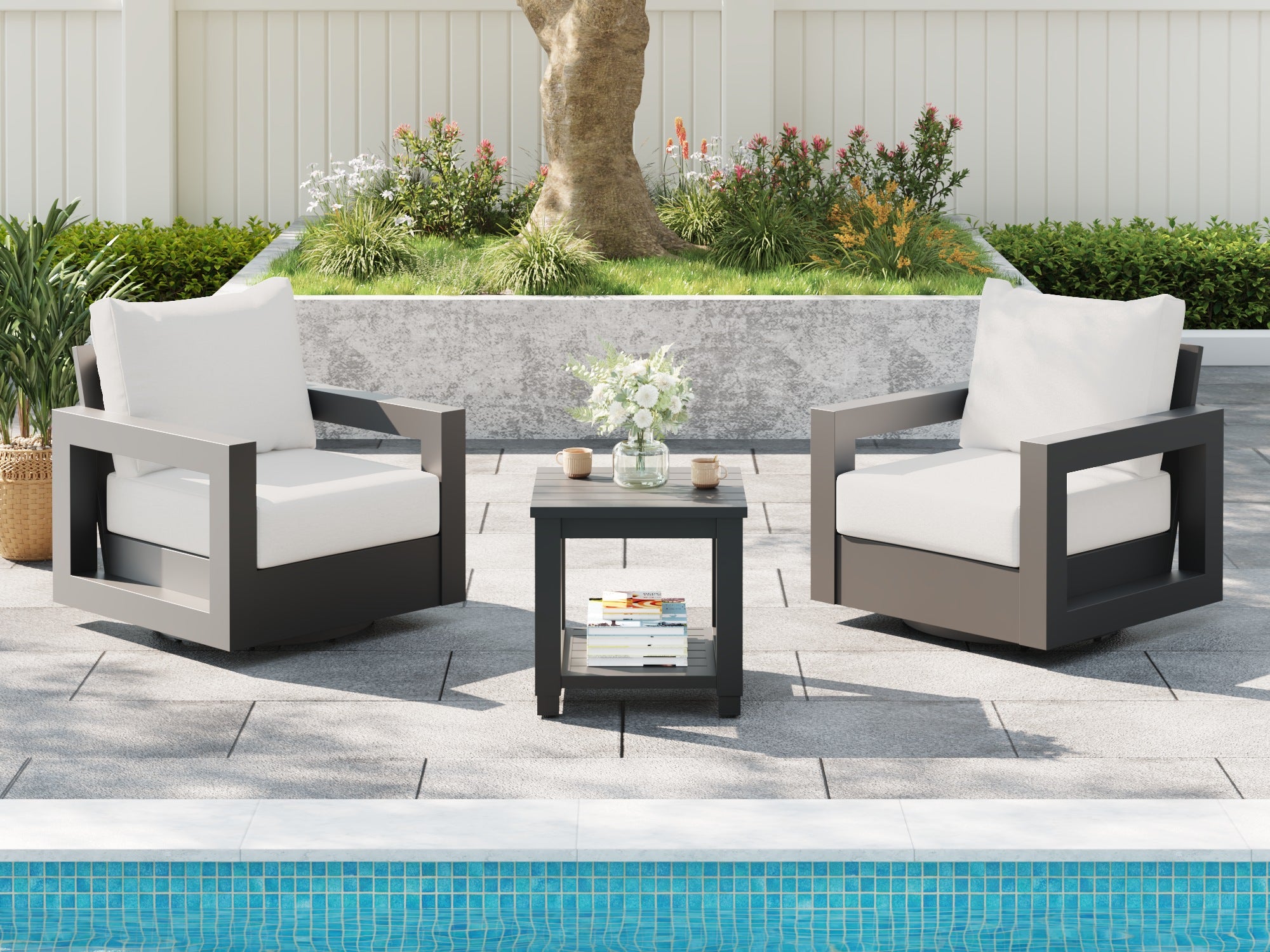
Aluminum Furniture: Lightweight and rustproof, aluminum is a staple of modern patio design. However, metal is an exceptionally fast heat conductor. Unshaded aluminum armrests and frames can quickly reach extreme temperatures under direct UV rays, creating a burn hazard for bare skin, children, and pets.
-
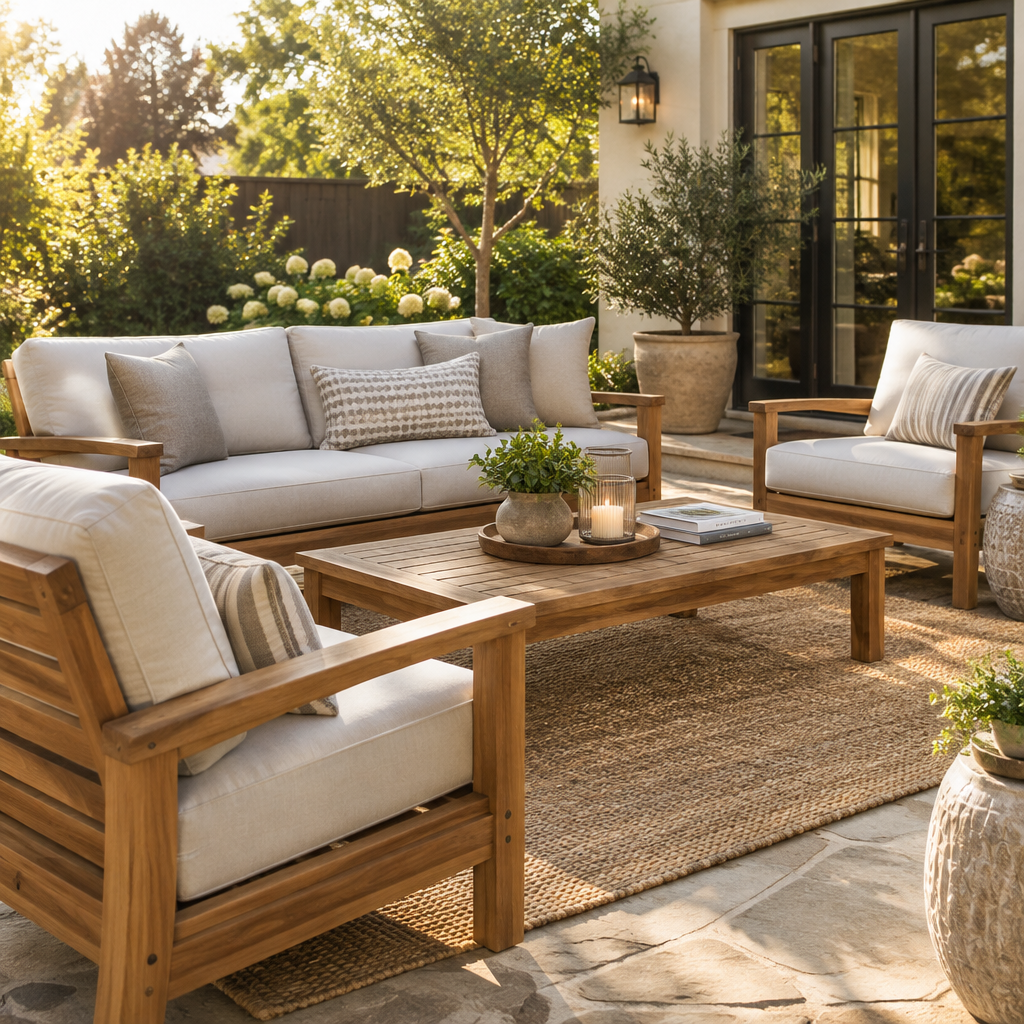
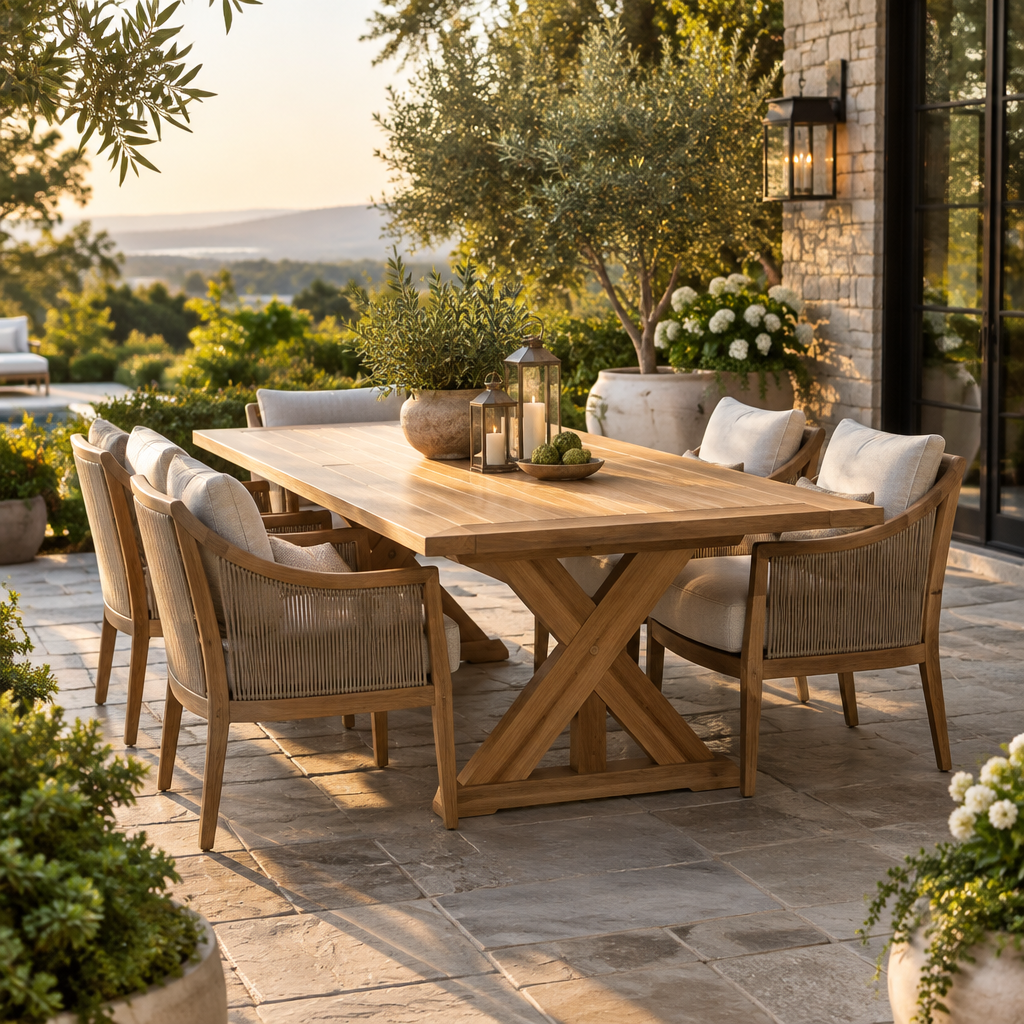
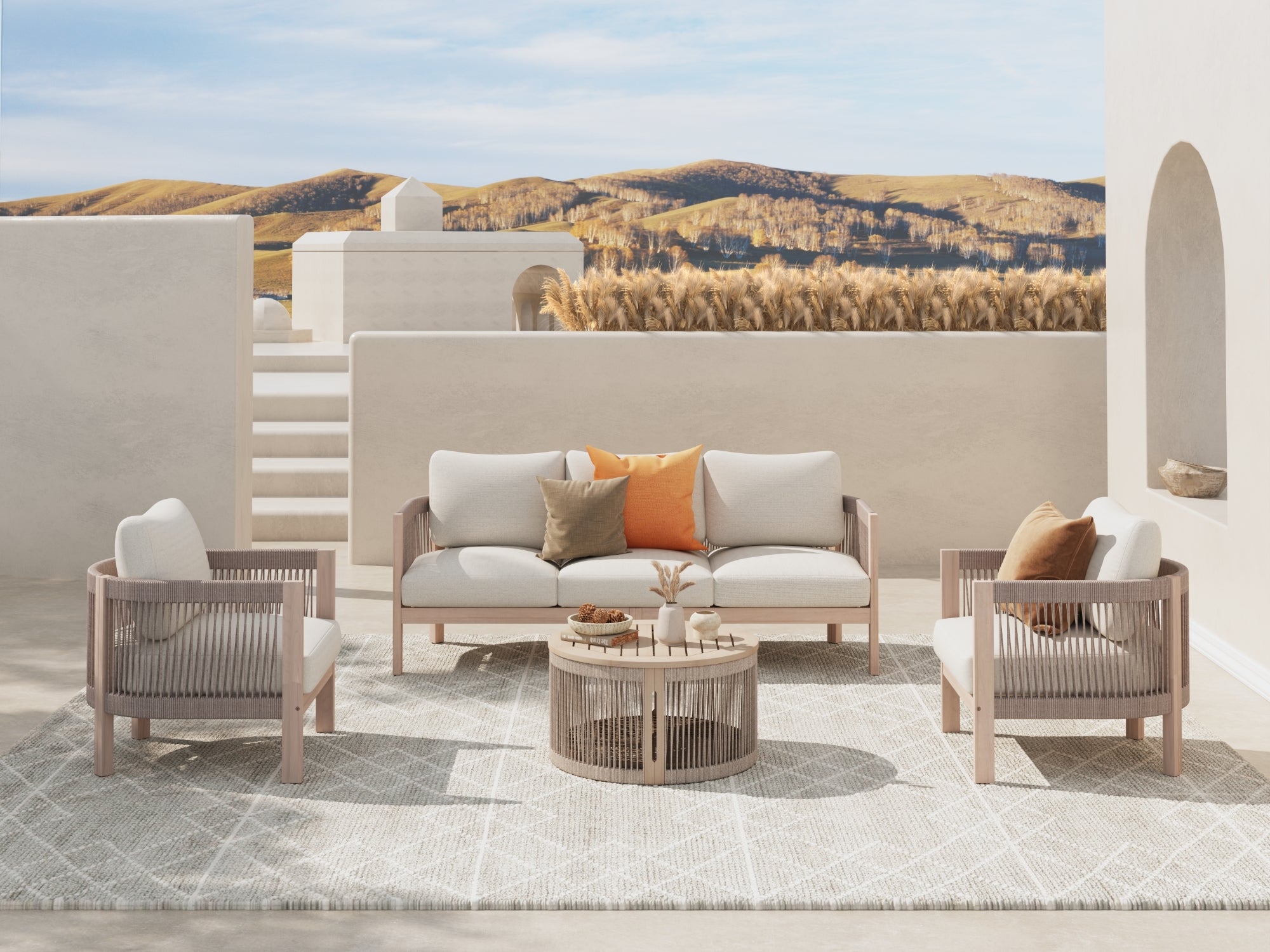
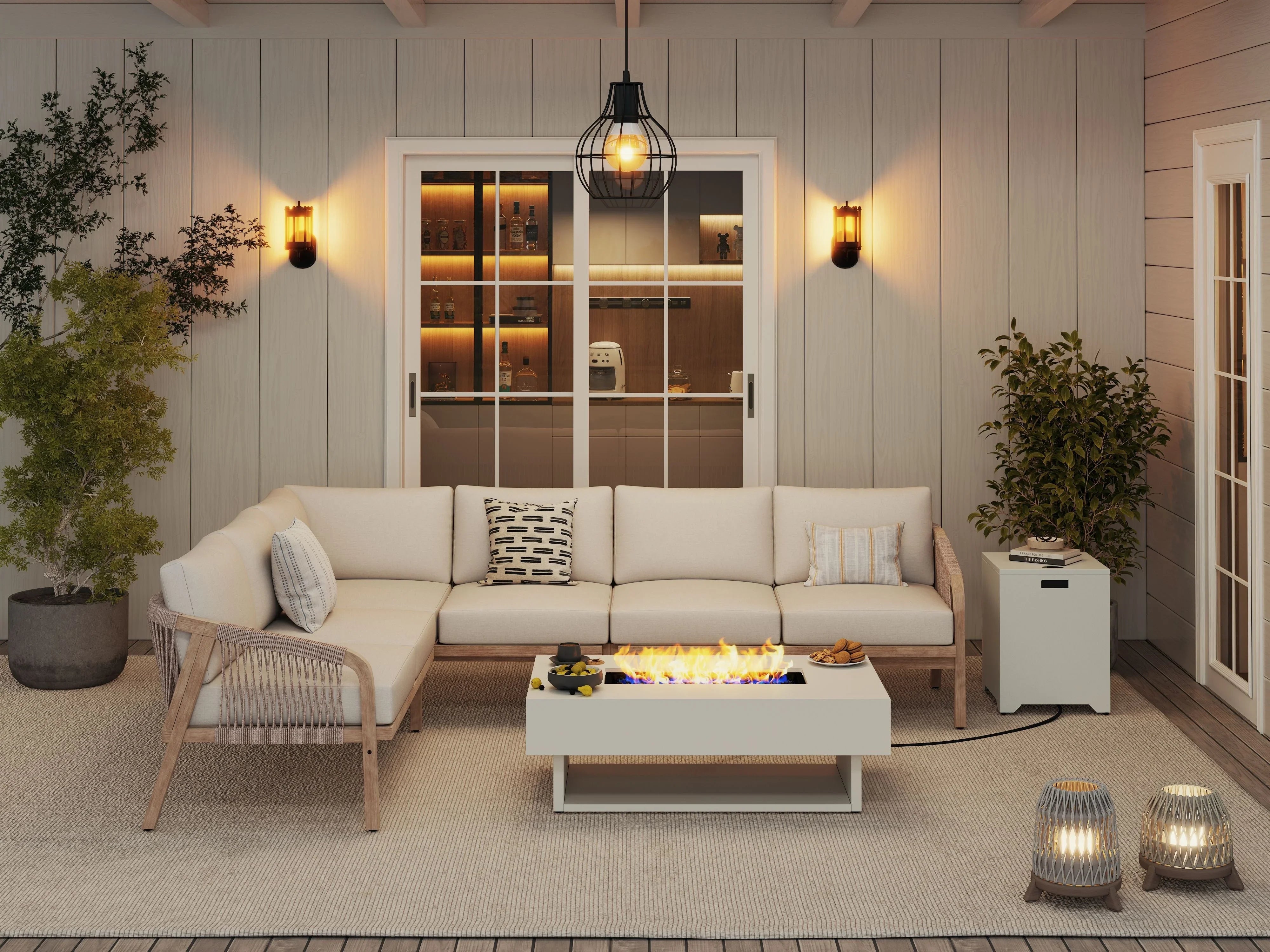
The Wood Advantage: Wooden armrests, table surfaces, and chair frames maintain a natural, lukewarm touch. If you love modern architectural silhouettes but want to avoid hot metal surfaces, hybrid designs—such as modern acacia wood outdoor furniture paired with soft-touch cording—offer the ideal blend of aesthetic elegance and sun safety.
2. Wood vs. Synthetic PE Wicker
-
Synthetic Wicker: Made from high-density polyethylene (HDPE), outdoor resin wicker handles heat better than raw metal. However, dark-colored plastics tend to trap surface heat, becoming uncomfortably sticky or hot to the touch in climates over 90°F. In rare cases, low-grade plastic wicker can even sag or warp under extreme heat.
-
The Wood Advantage: Dense hardwoods maintain structural integrity and a crisp, clean aesthetic regardless of the temperature. Solid wood won't soften, off-gas, or feel sticky on humid afternoons.
How Different Hardwoods Perform in High Sunlight
Not all woods behave identically under intense sun exposure. Premium outdoor furniture brands rely on specific dense hardwoods known for weather resilience and stability:
-
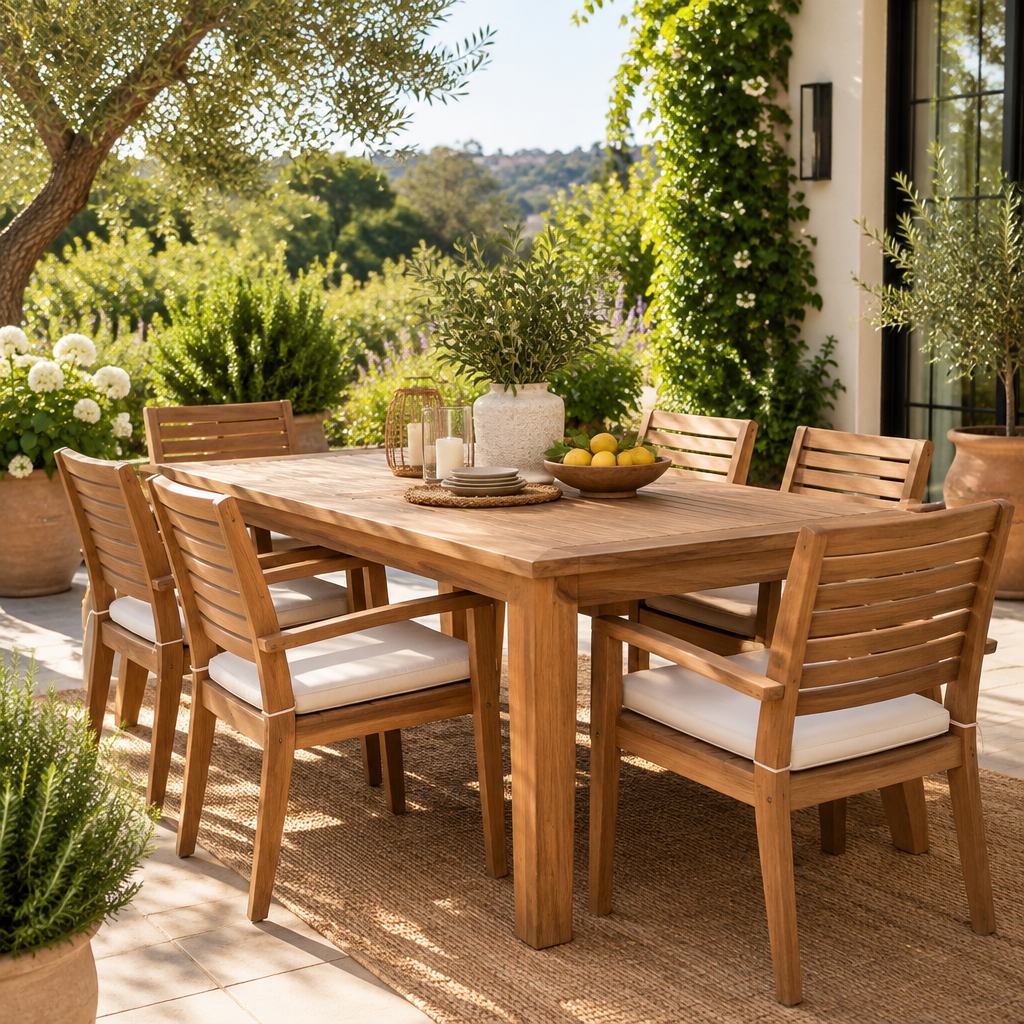
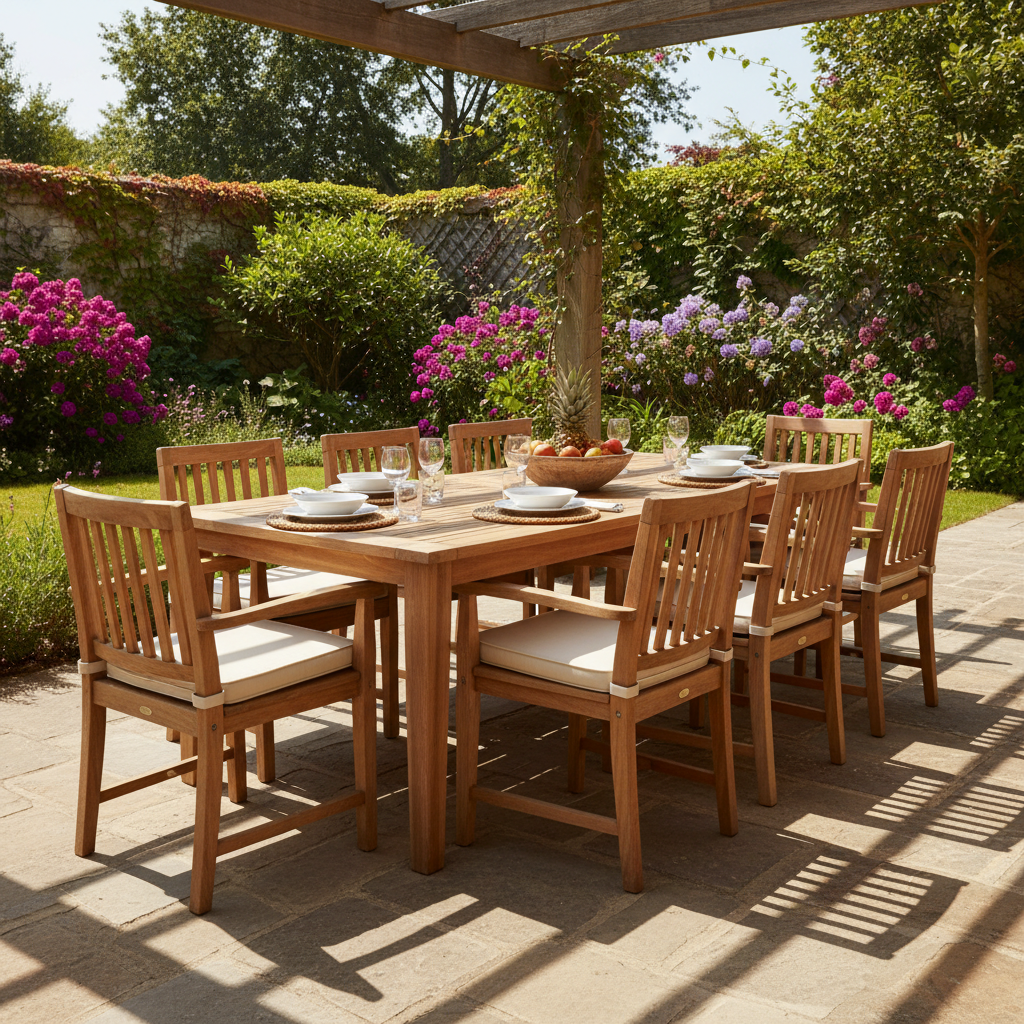
Teak Patio Furniture: Widely recognized as the premier timber for open-air living, teak is naturally rich in organic oils and dense grains. These oils reflect moisture and prevent the timber from drying out, cracking, or becoming uncomfortably hot under prolonged sun exposure.
-
Acacia Wood Outdoor Furniture: A heavy, dense hardwood known for its rich grain contrast and remarkable strength. Protective exterior sealants reflect UV rays, allowing acacia dining tables and sofa sets to remain smooth, stylish, and cool to the touch.
-
Eucalyptus Wood: With high natural density and a warm honey tone, eucalyptus naturally resists heat absorption while offering an eco-friendly, accessible alternative to traditional hardwoods.
Pro Tips: Keeping Your Patio Seating Cool All Summer
While wooden frames naturally resist surface heat, taking a few simple steps will elevate your backyard comfort even during mid-summer heatwaves:
-
Incorporate High-Performance Cushions: Pair solid wood frames with breathable, water-resistant Olefin cushions. Light-colored fabrics (such as cream, beige, or soft gray) reflect sunlight and keep seating extra plush.
-
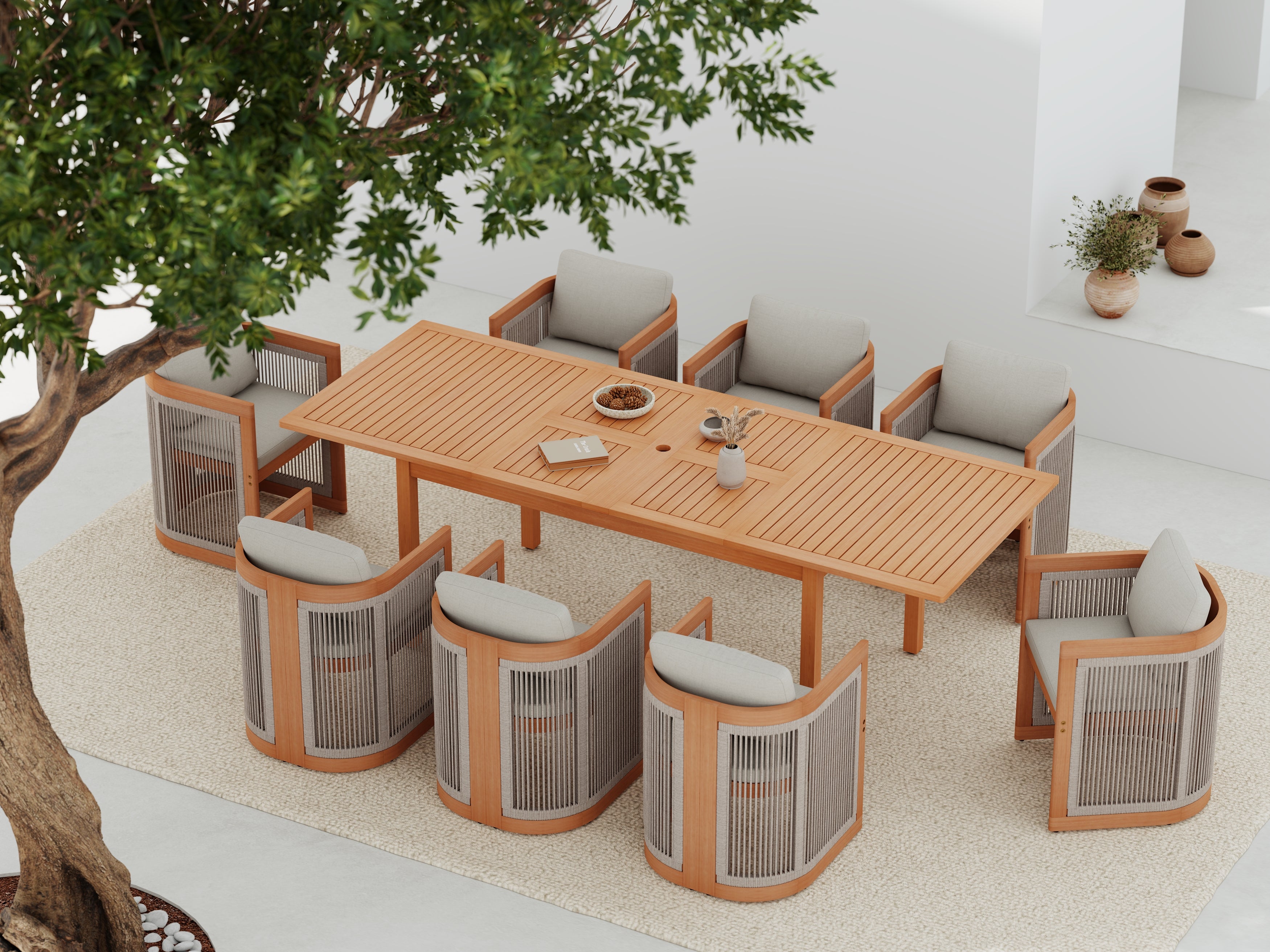
Add a Patio Umbrella: Shield your outdoor dining area with a large cantilever or market umbrella. Selecting a wood dining set with a built-in umbrella hole makes it simple to cast cool shade over your guests during outdoor luncheons.
-
Opt for Rope and Wood Combinations: Open-weave handwoven rope backrests promote cross-ventilation and airflow, keeping your back cool and sweat-free while relaxing on the deck.
If you live in a warm climate or simply want a patio setup that is safe, comfortable, and inviting at any time of day, solid wood outdoor furniture is one of the absolute best investments you can make.
Unlike metals that burn or plastics that trap heat, natural wood offers a timeless balance of warmth, durability, and cool-to-the-touch comfort. Ready to elevate your open-air living space? Explore Jardina’s sustainably crafted collections of wooden dining sets and deep-seating conversation furniture designed for modern, effortless relaxation.