
Solid wood furniture is built to last, but environmental exposure and daily use can cause wear over time. Whether you’re dealing with minor cosmetic flaws or structural damage, restoring your pieces is entirely achievable.
Here is a comprehensive guide to 6 common solid wood furniture repairs and how to fix them step-by-step.
1. Fixing Cracks

Hairline & Small Cracks: Select a color-matched wood filler or putty. Press the filler deep into the crack, smooth it over, and let it cure completely. Once dry, sand the area flush using fine-grit sandpaper (220-grit) and finish with a coat of matching clear varnish or hard-wax oil.
Deep & Wide Cracks: For structural cracks, insert a custom-cut wood strip (Dutchman patch) or fill with clear/tinted epoxy resin mixed with wood dust. Apply exterior-grade wood glue, insert the wood patch, clamp the joint tightly overnight, and sand it flush before applying a protective topcoat.
2. Correcting Warping

Mild Warping: Use clamps or ropes to gently pull the warped part back into shape. Secure the furniture in this position and leave it in a well-ventilated, dry area for several days (or weeks, depending on the severity). The wood will gradually adjust to the corrected shape.
Severe Warping: If the warping is too extreme to fix with clamping, replace the warped board or component. Measure the damaged part accurately, cut a new piece of wood to size, and reattach it using wood glue and hardware (e.g., screws). Ensure the new part is properly aligned to avoid future warping.
3. Restoring Faded Color

Mild Fading: Use a wood stain or wood wax oil that matches the original color. Clean the furniture surface first, then apply the stain/oil with a brush or cloth, working in the direction of the wood grain. Let it dry completely to restore the color and luster.
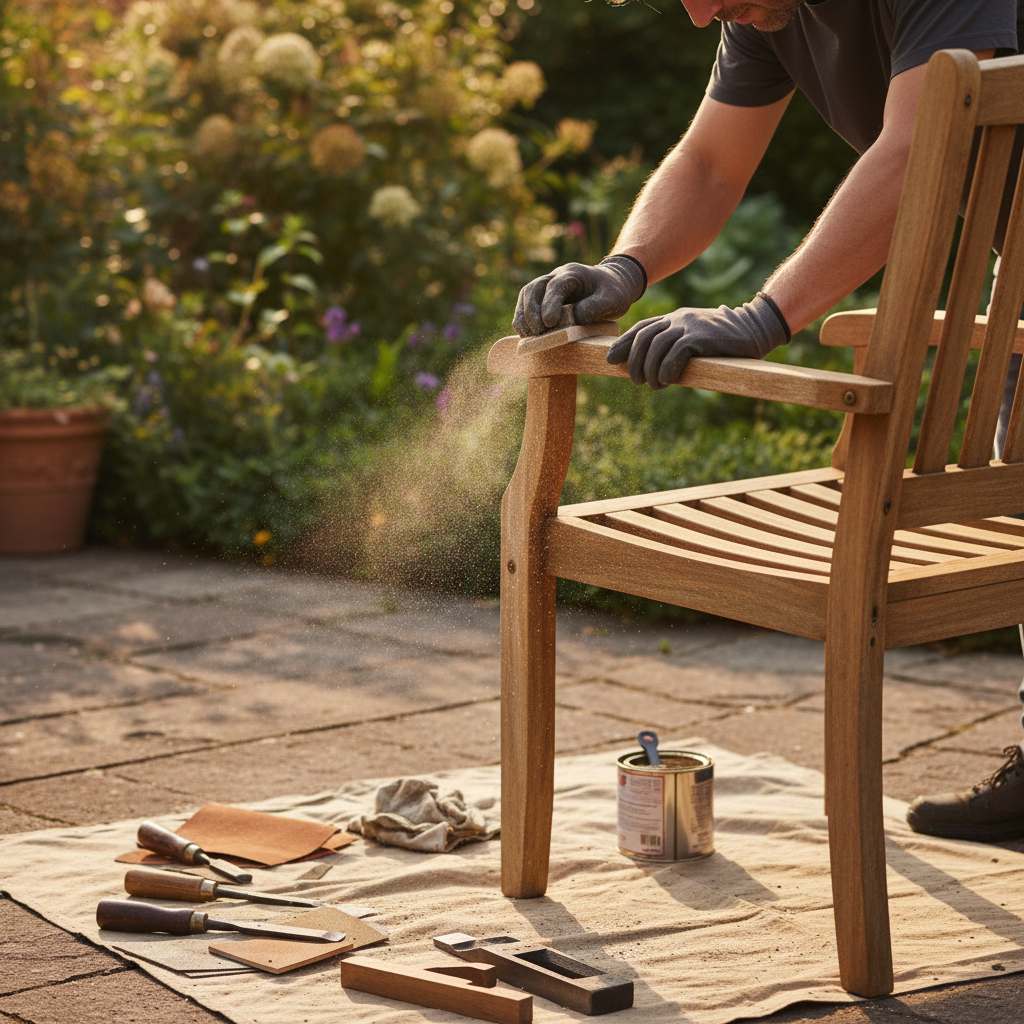
Severe Fading: Start by sanding the surface with medium-grit sandpaper to remove the old, faded coating. Wipe away the sanding dust, then apply a new coat of stain or outdoor wood paint. For added protection, finish with a clear UV-resistant varnish to prevent future fading.
4. Repairing Peeling Paint/Coatings
Small Peeling Areas: Scrape away loose paint using a putty knife, then feather the edges with fine sandpaper for a seamless transition. Clean the area, brush on a color-matched touch-up paint, and apply a clear protective sealer once dry.
Large Peeling Areas: Remove all loose paint using a paint scraper or sanding block. Sand the entire surface until it’s smooth and free of old coating residue. Clean the surface thoroughly and let it dry. Apply a primer (if needed) to help the new paint adhere, then brush on a fresh coat of outdoor wood paint or protective oil. Allow the paint to dry completely before using the furniture.
5. Treating Insect Infestation & Mold
Insect Infestation: First, use an outdoor-safe insecticide (specifically for wood-boring insects) to kill any remaining pests. Spray the insecticide directly on the affected areas and into the insect holes. Let it dry according to the product instructions. Once the insects are eliminated, fill the holes with wood filler, sand the surface, and apply a protective coating to prevent future infestations.
Mold Growth: Mix a solution of bleach and water (1 part bleach to 4 parts water) in a bucket. Wear gloves and a mask to protect yourself, then use a sponge or brush to scrub the moldy areas gently. Rinse the surface thoroughly with clean water and let it dry completely in the sun. For extra protection, apply a mold-resistant wood treatment after drying.
6. Tightening Loose Joints
Loose Hardware: Use a screwdriver or wrench to tighten any loose screws, bolts, or nuts. If the hardware is stripped or damaged, replace it with new pieces—preferably stainless steel or galvanized hardware, as these are resistant to rust and corrosion.
Rusty Hardware: Use sandpaper or a wire brush to remove rust from the hardware. Wipe the hardware clean, then apply a thin layer of rust-resistant oil. If the rust is too severe, replace the hardware entirely to ensure a secure connection.

Pro-Tip for Long-Lasting Restoration
Always perform repairs in a temperature-controlled environment and allow each layer of adhesive, stain, or finish to dry completely before moving to the next step. Regular maintenance—such as annual oiling and seasonal cleaning—will double the lifespan of your solid wood furniture.