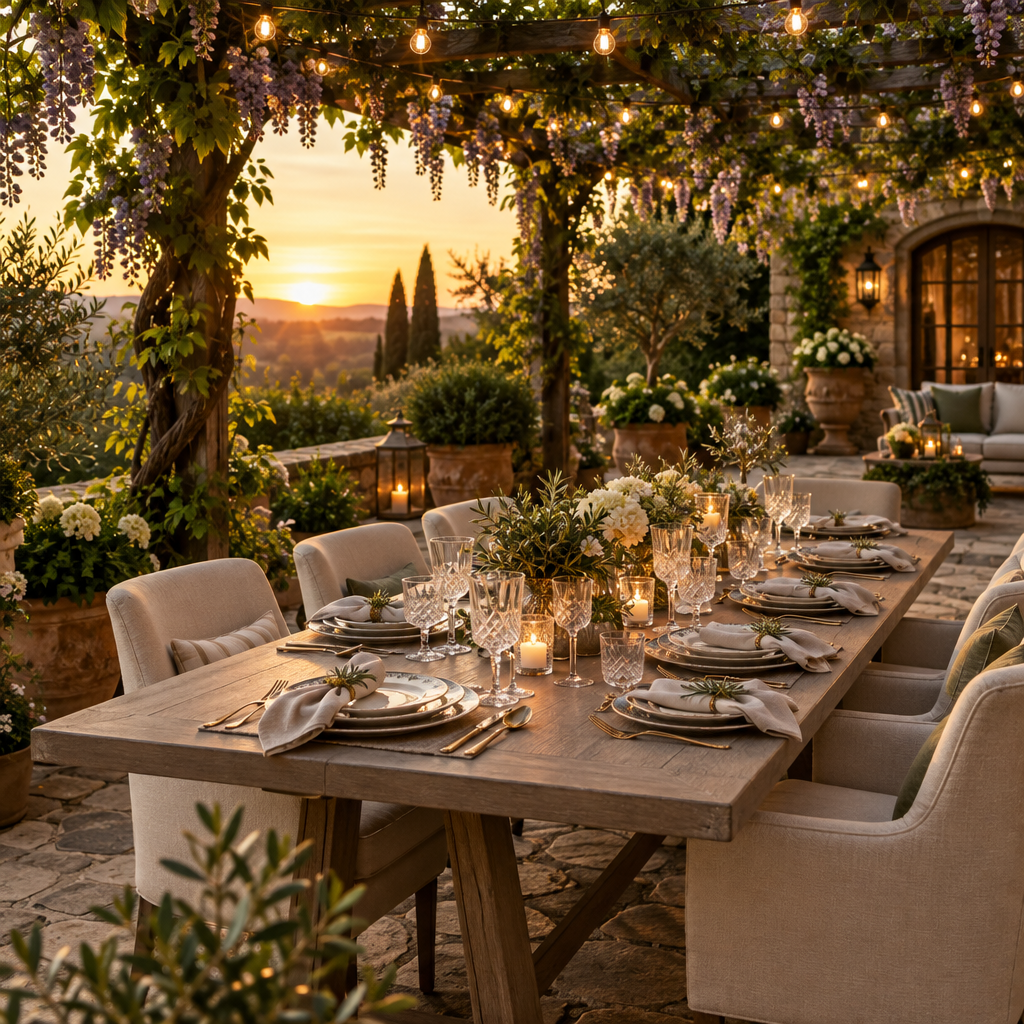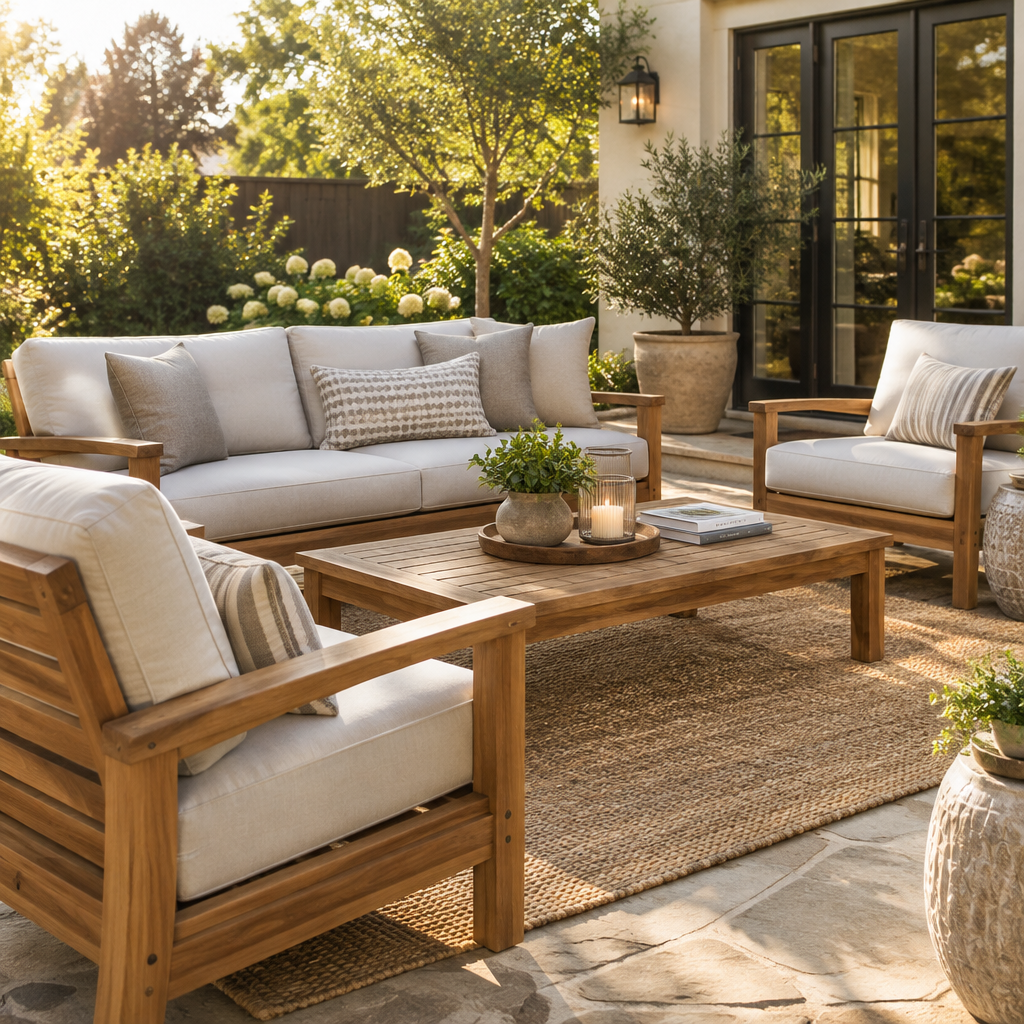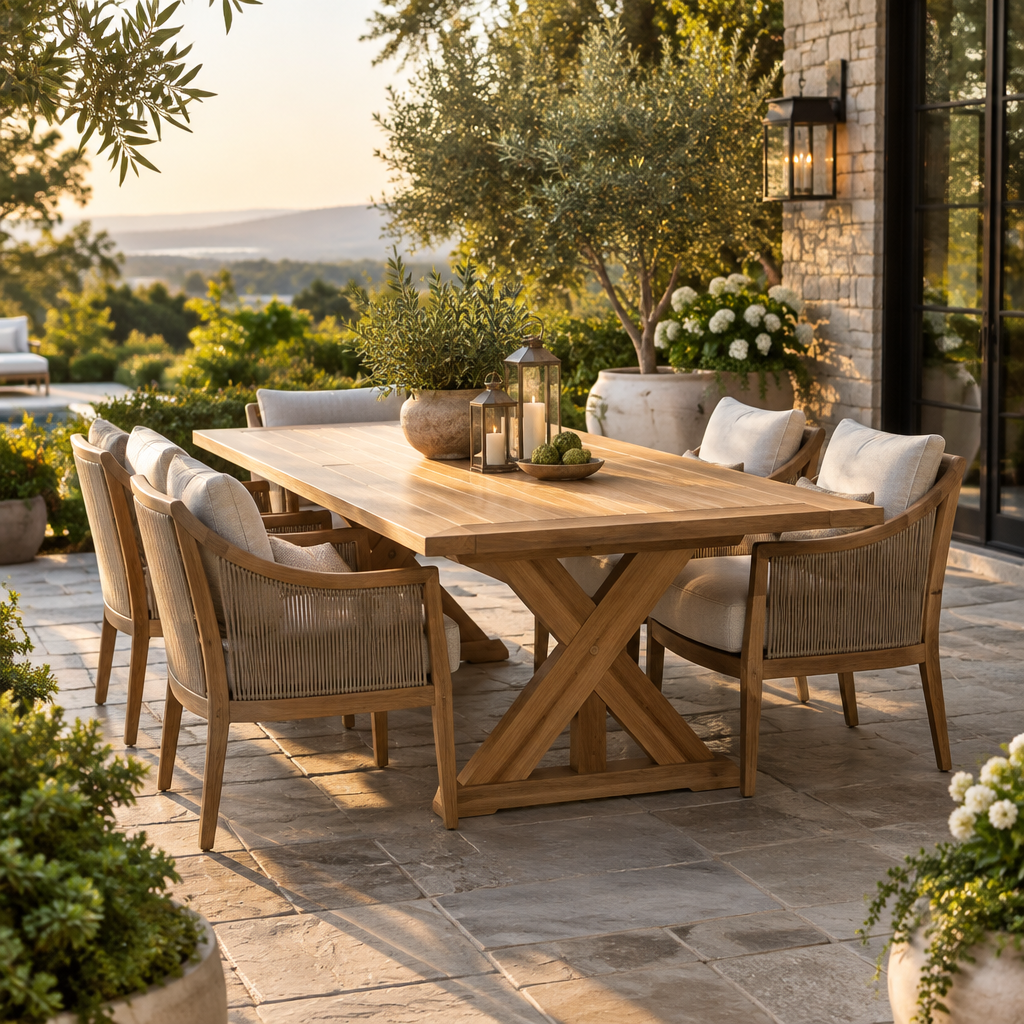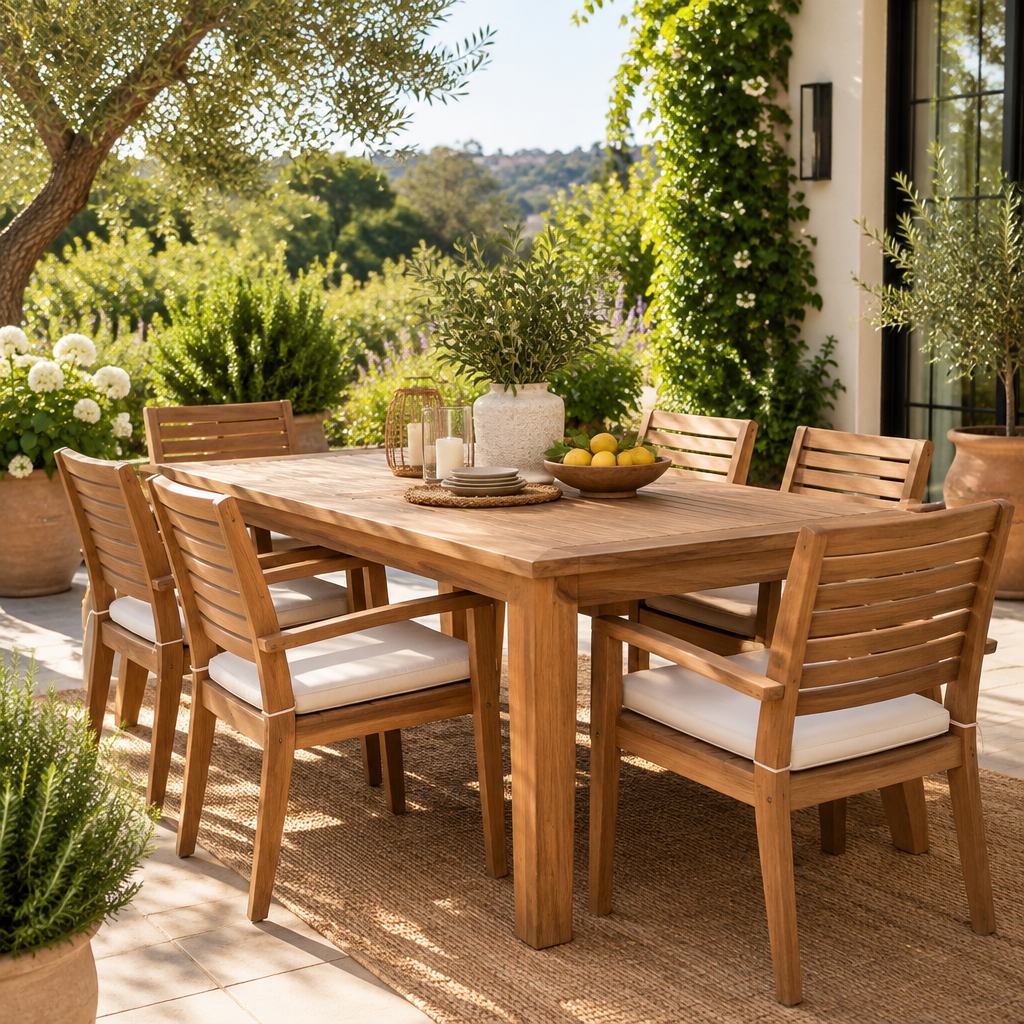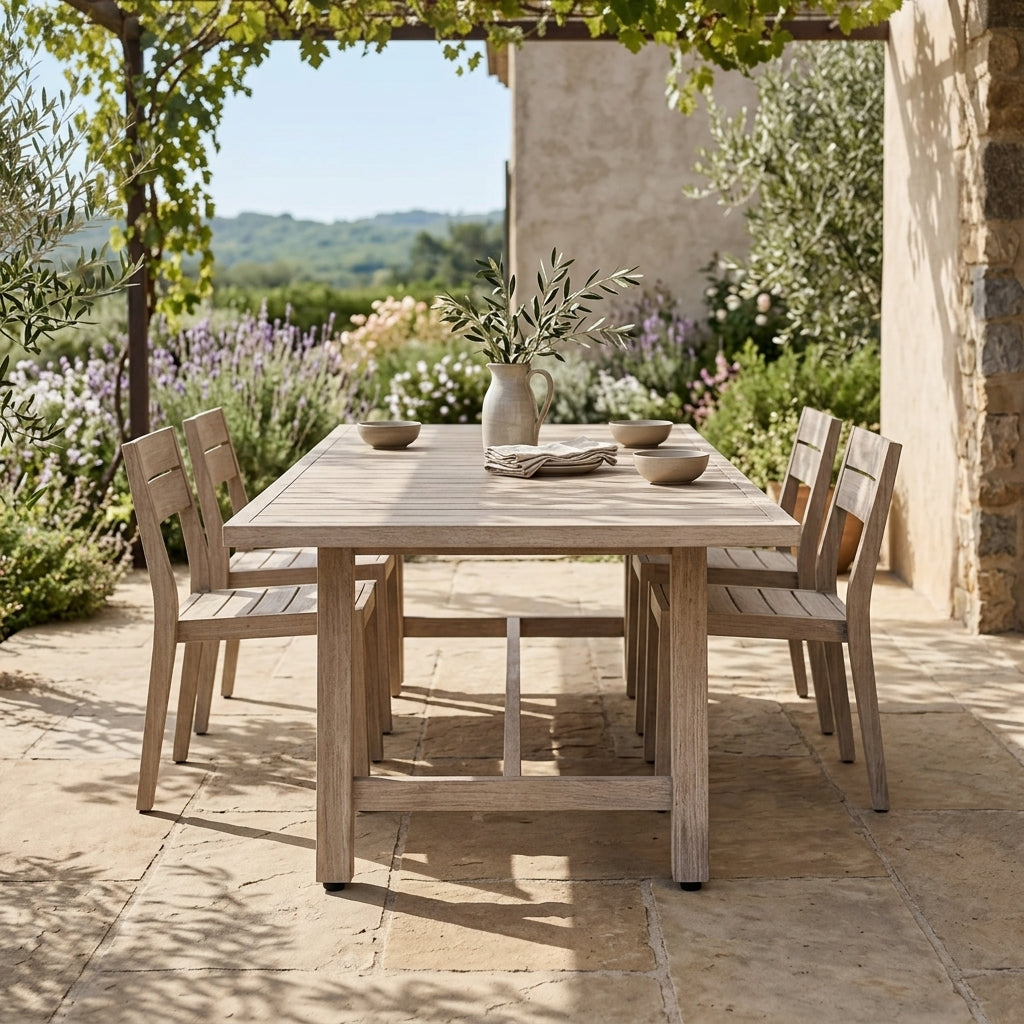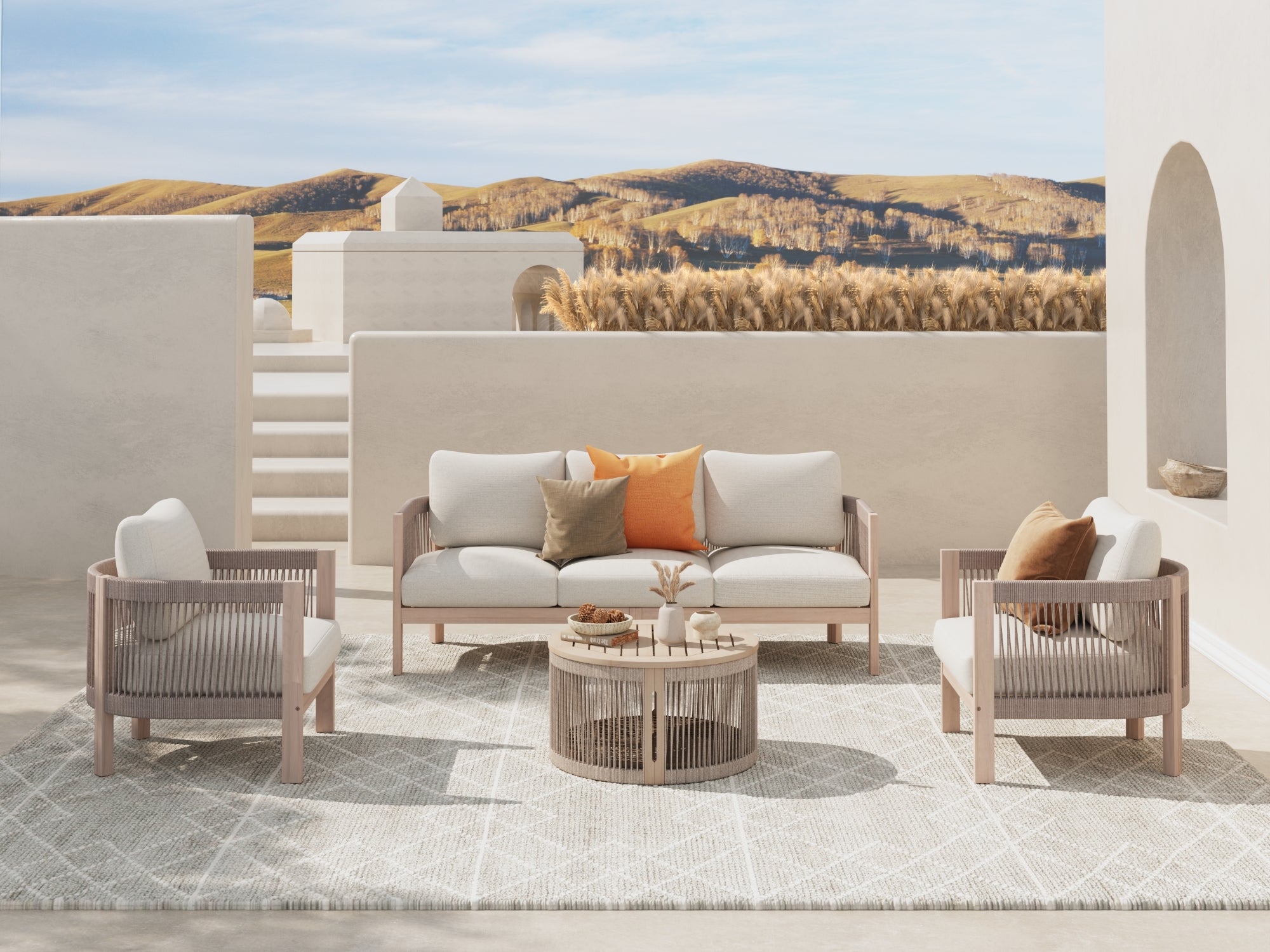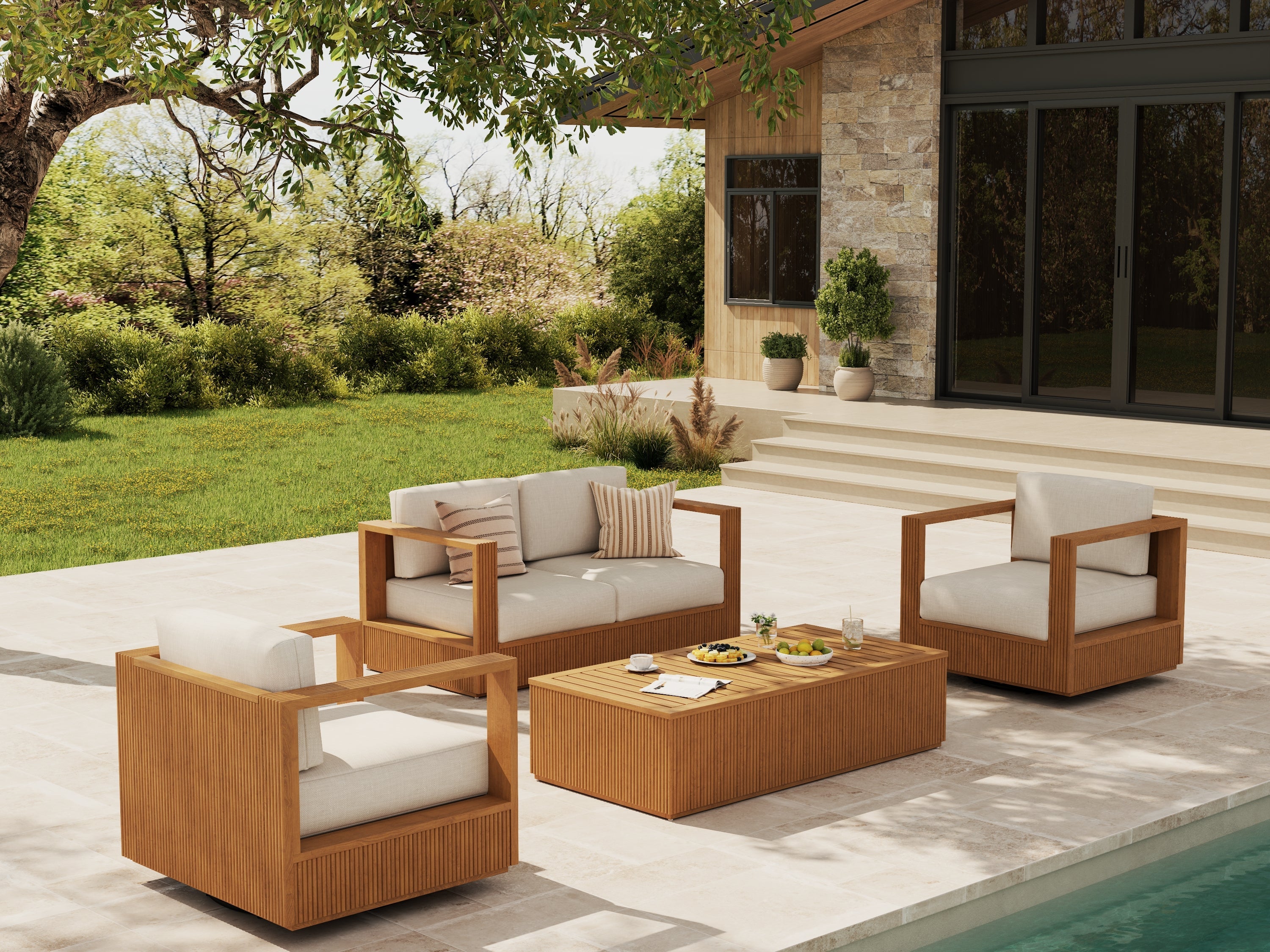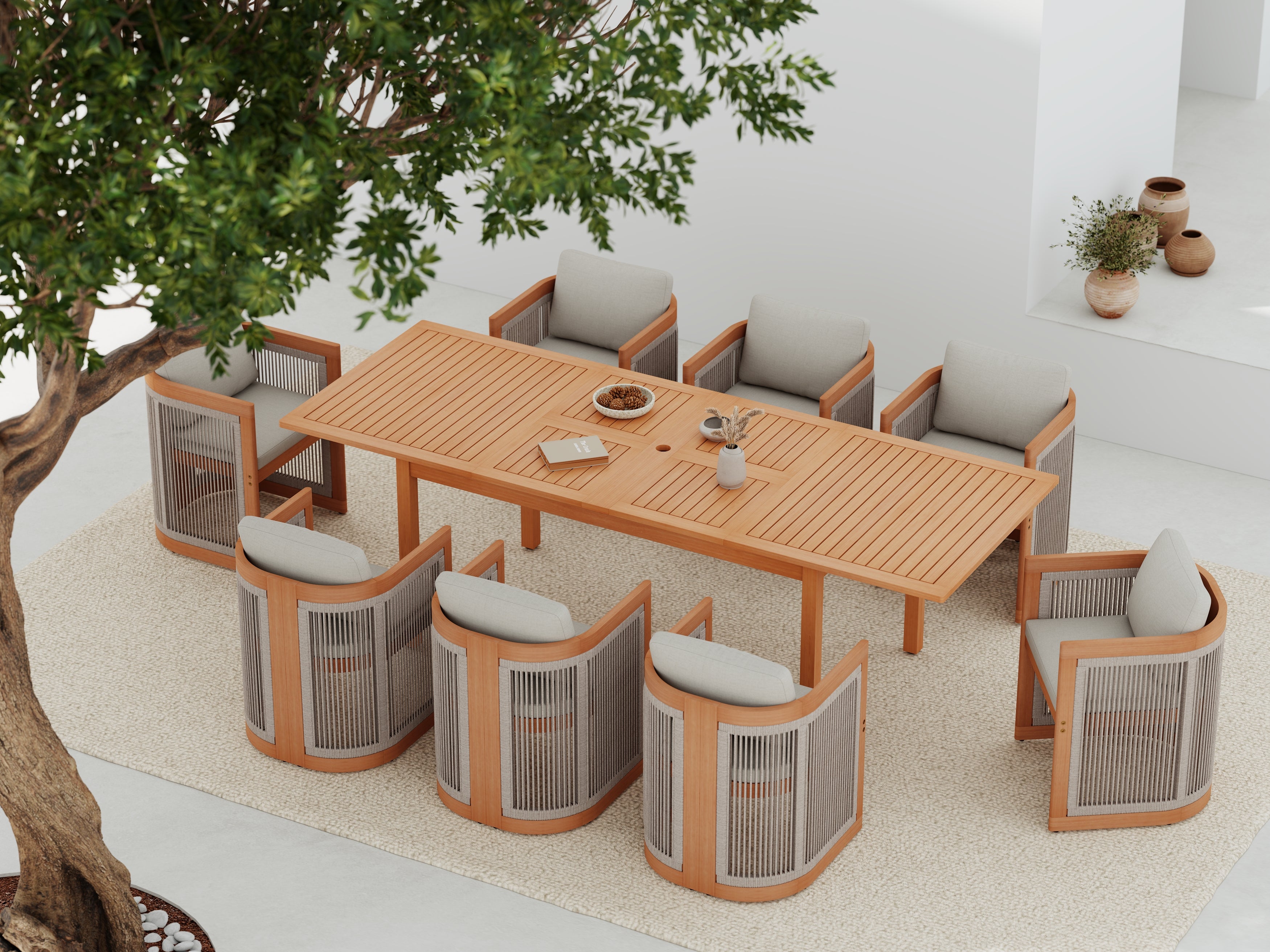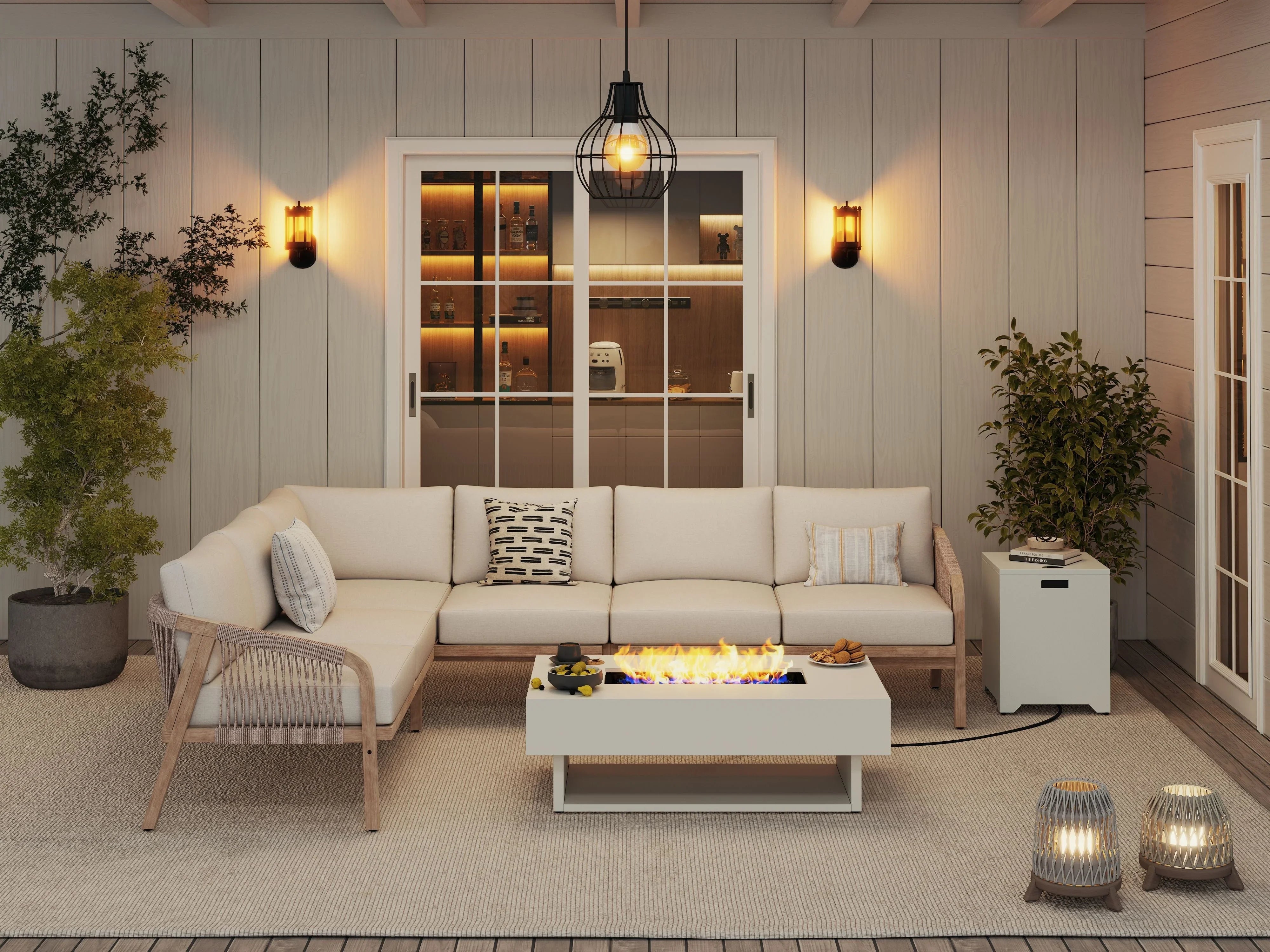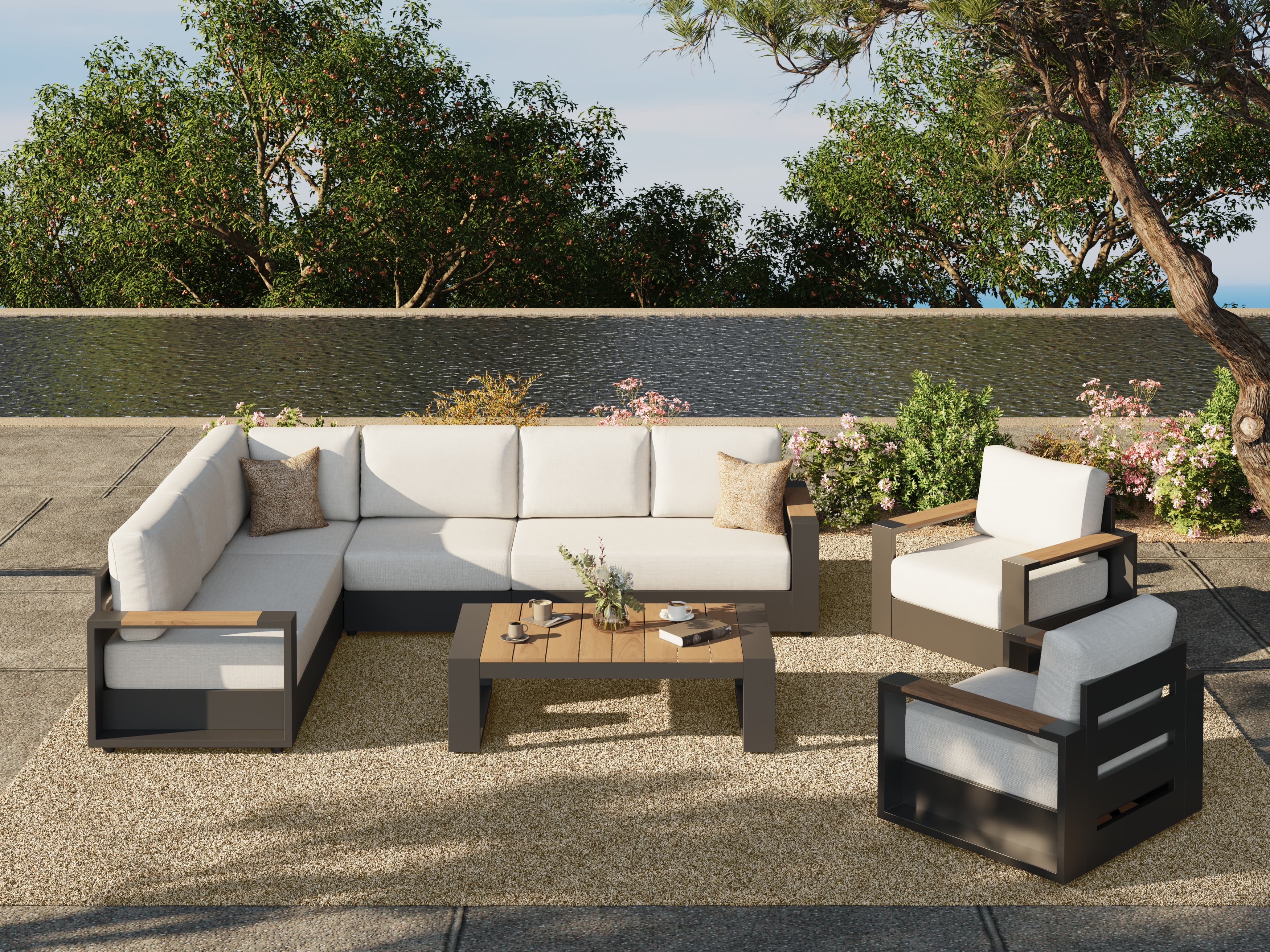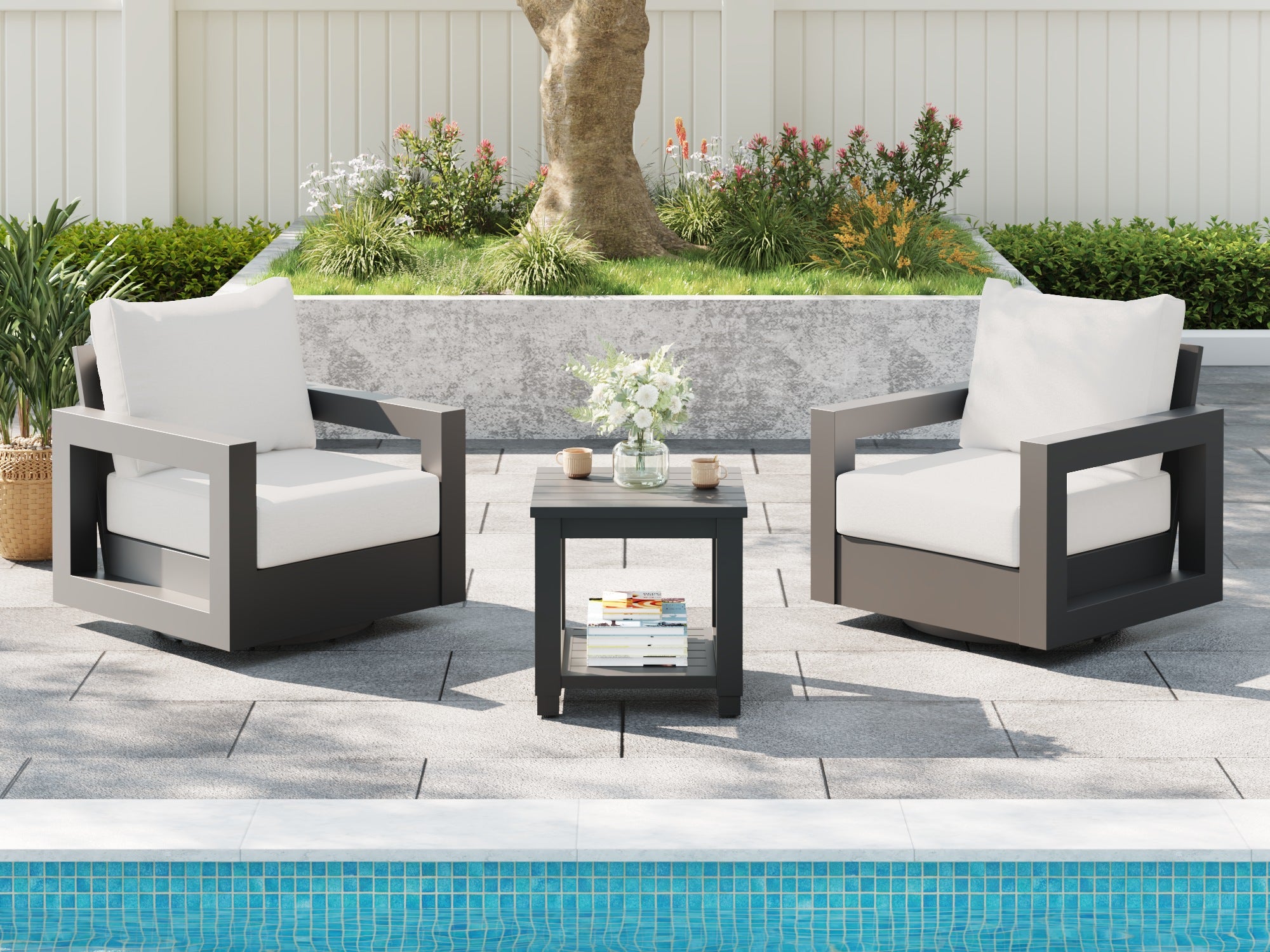

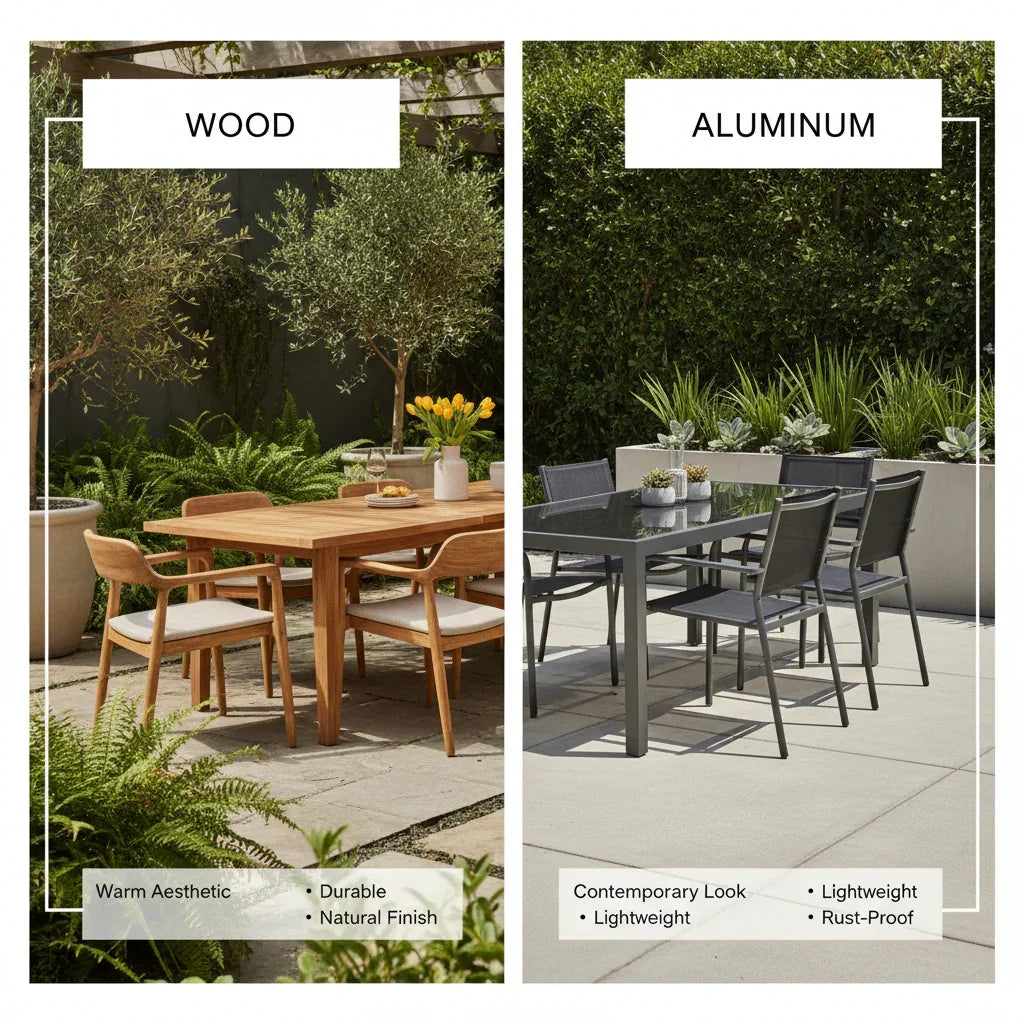
Choosing the right outdoor dining set is not just about style — material plays a critical role in durability, maintenance, comfort, and long-term value. Among the most popular options on the market today, wood and aluminum outdoor dining sets stand out as two leading choices.
So which one is right for your patio? Let’s take a detailed look at how they compare.
1. Aesthetic & Design Appeal
| Feature | Wood | Aluminum |
| Visual Impact | Organic, textured grain, natural beauty | Clean lines, smooth finishes |
| Design Versatility | Classic and rustic styles | Contemporary and modern styles |
| Color Options | Natural tones (teak, acacia, eucalyptus) | Wide range of powder-coated colors |

Wood creates a welcoming and cozy dining atmosphere, ideal for garden settings and farmhouse-style patios.
Aluminum fits seamlessly into modern outdoor environments and urban spaces.
2. Durability & Weather Resistance
| Factor | Wood Outdoor Dining Sets | Aluminum Outdoor Dining Sets |
| Moisture Resistance | Naturally resistant (depending on wood type) | Completely rust-free |
| Corrosion Risk | Can warp or crack if untreated | No rust or corrosion |
| Coastal Suitability | Requires extra care | Excellent choice |
| Protective Finish | Oil or sealant needed | Powder coating provides protection |

High-quality hardwood like teak or eucalyptus contains natural oils that resist moisture and insects. However, wood still needs periodic sealing.
Aluminum, especially powder-coated aluminum, offers exceptional resistance to rain, humidity, and salt air — making it one of the most practical materials for outdoor dining sets.
3. Weight & Mobility
| Aspect | Wood | Aluminum |
| Weight | Heavy and sturdy | Lightweight |
| Wind Stability | Very stable | May need securing in strong wind |
| Rearranging | Less convenient | Easy to move |

If you frequently rearrange your patio layout, aluminum provides flexibility.
If stability is your priority, wood offers a solid, grounded feel.
4. Maintenance Requirements
| Maintenance Task | Wood Dining Sets | Aluminum Dining Sets |
|---|---|---|
| Regular Cleaning | Mild soap and water | Mild soap and water |
| Annual Treatment | Oil or sealant recommended | Not required |
| Storage | Recommended in harsh weather | Optional |
| Long-Term Upkeep | Moderate commitment | Minimal effort |

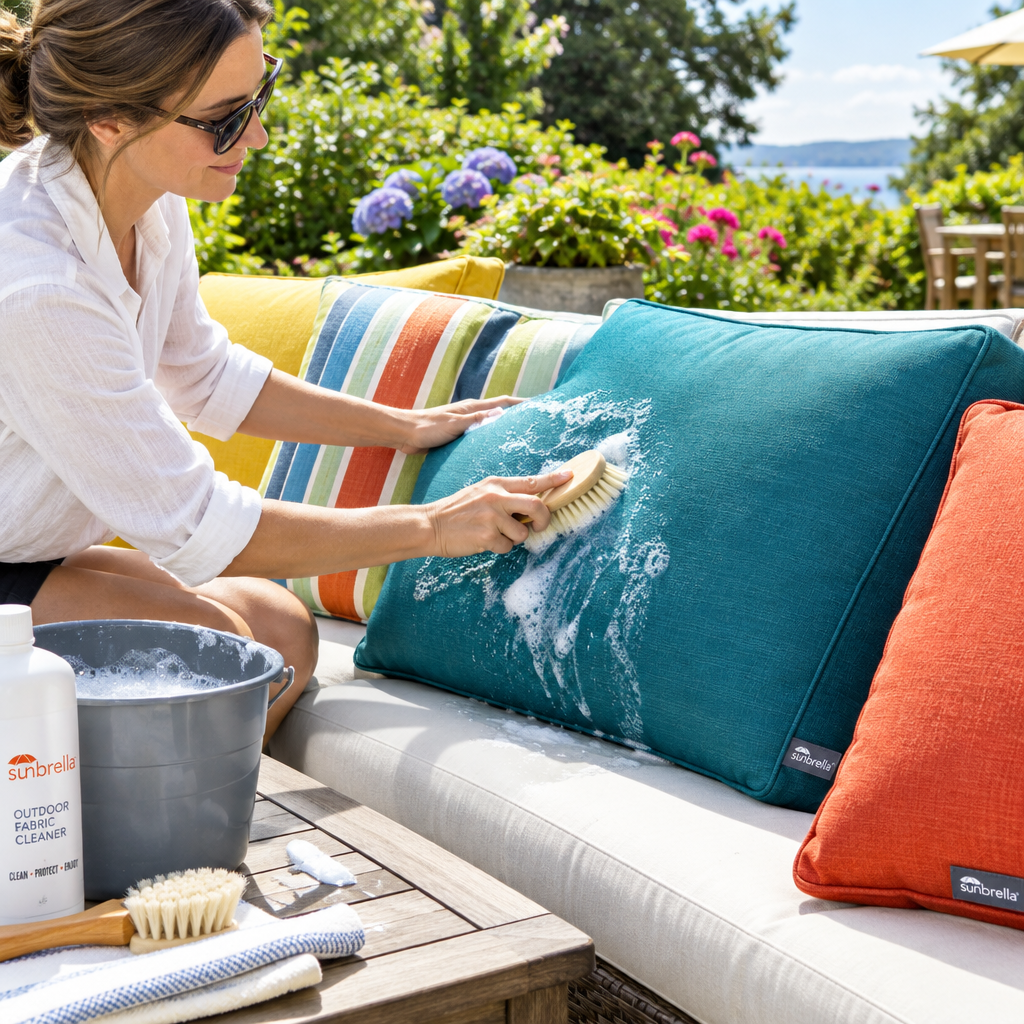
Wood requires more consistent care to maintain its original color. Without treatment, it may develop a natural gray patina.
Aluminum is virtually maintenance-free, making it ideal for busy homeowners.
5. Comfort & Temperature Performance
| Comfort Factor | Wood | Aluminum |
|---|---|---|
| Surface Feel | Warm and natural | Smooth and cool initially |
| Heat Absorption | Moderate | Higher in direct sunlight |
| Cushion Compatibility | Excellent | Excellent |

Metal surfaces can heat up under strong sunlight, though powder coating helps reduce heat retention. Adding cushions or an umbrella enhances comfort for both materials.
6. Sustainability & Environmental Impact
| Sustainability Factor | Wood | Aluminum |
|---|---|---|
| Renewable Material | Yes (if responsibly sourced) | Not renewable |
| Recyclable | Limited | Highly recyclable |
| Eco-Friendly Option | FSC-certified hardwood | Recycled aluminum available |

Both materials can be environmentally responsible when sourced and manufactured properly.
Which Outdoor Dining Set Material Is Right for You?
Choose Wood If You Prefer:
- Natural texture and warmth
- A traditional or rustic aesthetic
- Heavier, more substantial furniture
- A premium organic look
Choose Aluminum If You Prefer:
- A modern, streamlined design
- Rust-free durability
- Lightweight flexibility
- Minimal maintenance
Ultimately, both wood and aluminum can create a beautiful and functional outdoor dining area. If you’re wondering what kind of outdoor dining sets last longer, the answer depends less on the material alone and more on how well it aligns with your climate, lifestyle, and maintenance expectations. Choosing the right option for your environment and daily use is what truly determines long-term performance and satisfaction.