

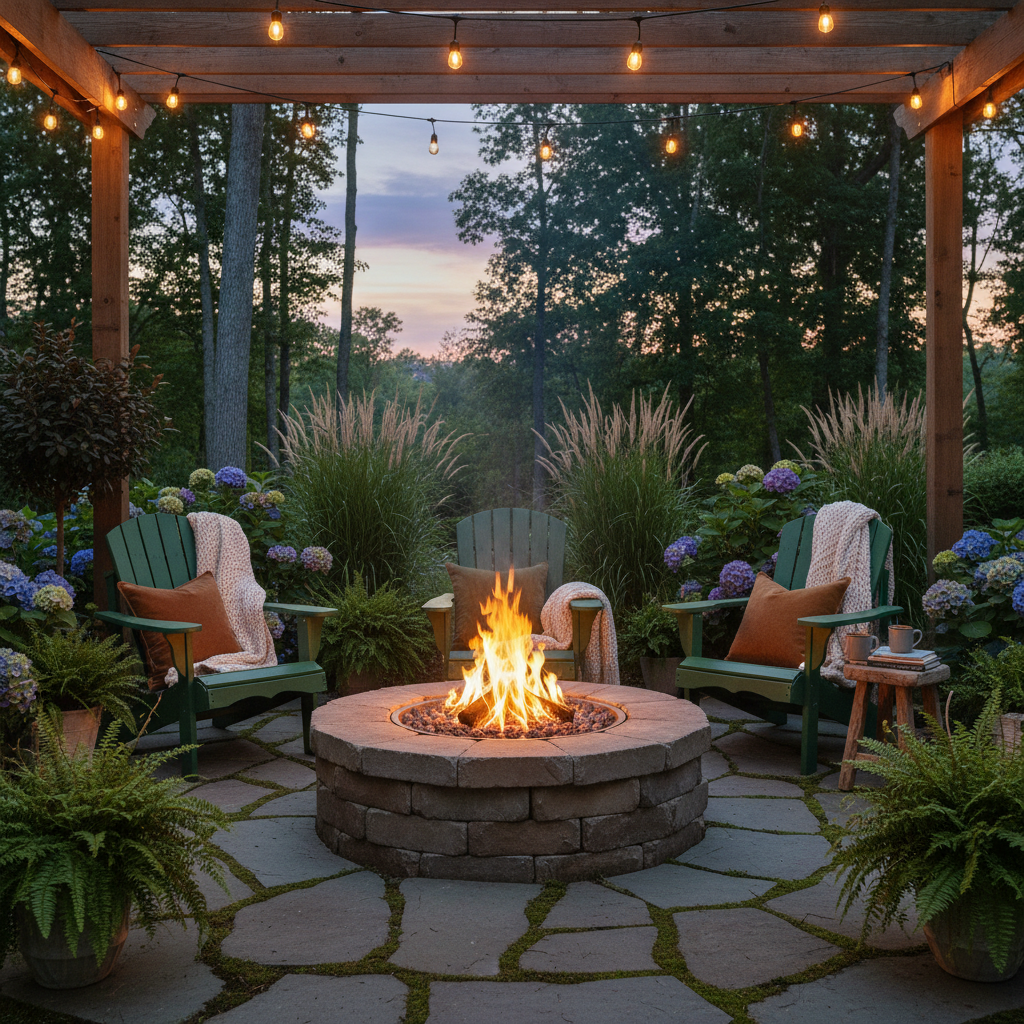
Few things bring an outdoor space to life quite like a fire feature. Whether you are hosting a lively spring gathering or unwinding on a crisp autumn evening, a fire pit creates an inviting focal point for any patio.
However, when choosing the right centerpiece for your backyard, you will inevitably face a classic debate: Gas Fire Pit vs. Wood Fire Pit. Both offer distinct vibes, warmth levels, and maintenance needs. To help you decide which option fits your lifestyle, budget, and outdoor design, we’ve broken down the key differences below.
1. Ambiance and Experience
Wood Fire Pit: The Traditional Charm

-
The Vibe: Authentic, nostalgic, and multisensory.
-
The Highlight: Nothing beats the soothing crackle of real logs, the faint aroma of burning wood, and the dance of natural flames. It offers a cozy, campfire-like atmosphere right in your backyard.
- The Downside: Smoke. Depending on wind directions, wood smoke can sting your eyes and leave a lingering smell on your clothes and hair.
Gas Fire Pit: Modern & Effortless

-
The Vibe: Sleek, clean, and sophisticated.
-
The Highlight: Gas fire pits (powered by propane or natural gas) offer instant gratification. Turn a knob or press an igniter, and you have instant flames without smoke, ash, or embers.
- The Downside: While warm and elegant, it lacks the signature crackle and wood-smoke scent of a traditional campfire.
2. Heat Output and Performance
Wood Fire Pits: Wood burns significantly hotter than gas. If your primary goal is maximum heat output during chilly nights, a wood-burning fire pit will keep a larger group warm. However, heat levels can be unpredictable and require constant monitoring.

Gas Fire Pits: Gas fire pits provide steady, controllable warmth. While they generate ample heat for cozying up nearby, they generally produce less intense heat than a roaring wood fire. On the flip side, you can control the flame height with a quick turn of a dial.

3. Convenience & Maintenance
| Feature | Wood Fire Pit | Gas Fire Pit |
| Startup Time | Requires prep, kindling, and tending | Instant (Push-button ignition) |
| Cleanup | Regular ash removal & soot cleaning | Minimal (Occasional burner check) |
| Fuel Storage | Requires dry wood storage | Propane tank or utility line connection |
| Safety | High (Flying sparks & embers) | High control (Instant turn-off valve) |
If convenience is your top priority, Gas is the clear winner. There is no need to haul heavy logs, battle damp wood, or clean up ash the next morning.
4. Safety and Regulations
Safety is a crucial consideration, especially on wooden decks or in suburban neighborhoods:
Embers and Smoke: Wood fire pits produce flying sparks and heavy smoke, which can be a hazard for covered patios, close neighbors, or fire-prone areas. Many local municipalities impose strict fire bans on open wood fires during dry seasons.
Deck Friendliness: Gas fire pits generate zero sparks and very clean heat, making them much safer for use near outdoor furniture, under pergolas, or on composite decks (when paired with proper heat shields).

Which One Should You Choose?
Choose a Wood Fire Pit if... You love the authentic campfire experience, don't mind the cleanup, enjoy the ritual of building a fire, and want maximum warmth for cold outdoor nights.
Choose a Gas Fire Pit if... You value convenience, effortless maintenance, smoke-free lounging, and sleek modern aesthetic that integrates seamlessly with your patio furniture.

Pairing a gas or wood fire pit with weather-resistant hardwood seating—such as sustainable acacia or teak outdoor furniture—creates an instant outdoor living room perfect for year-round entertaining.