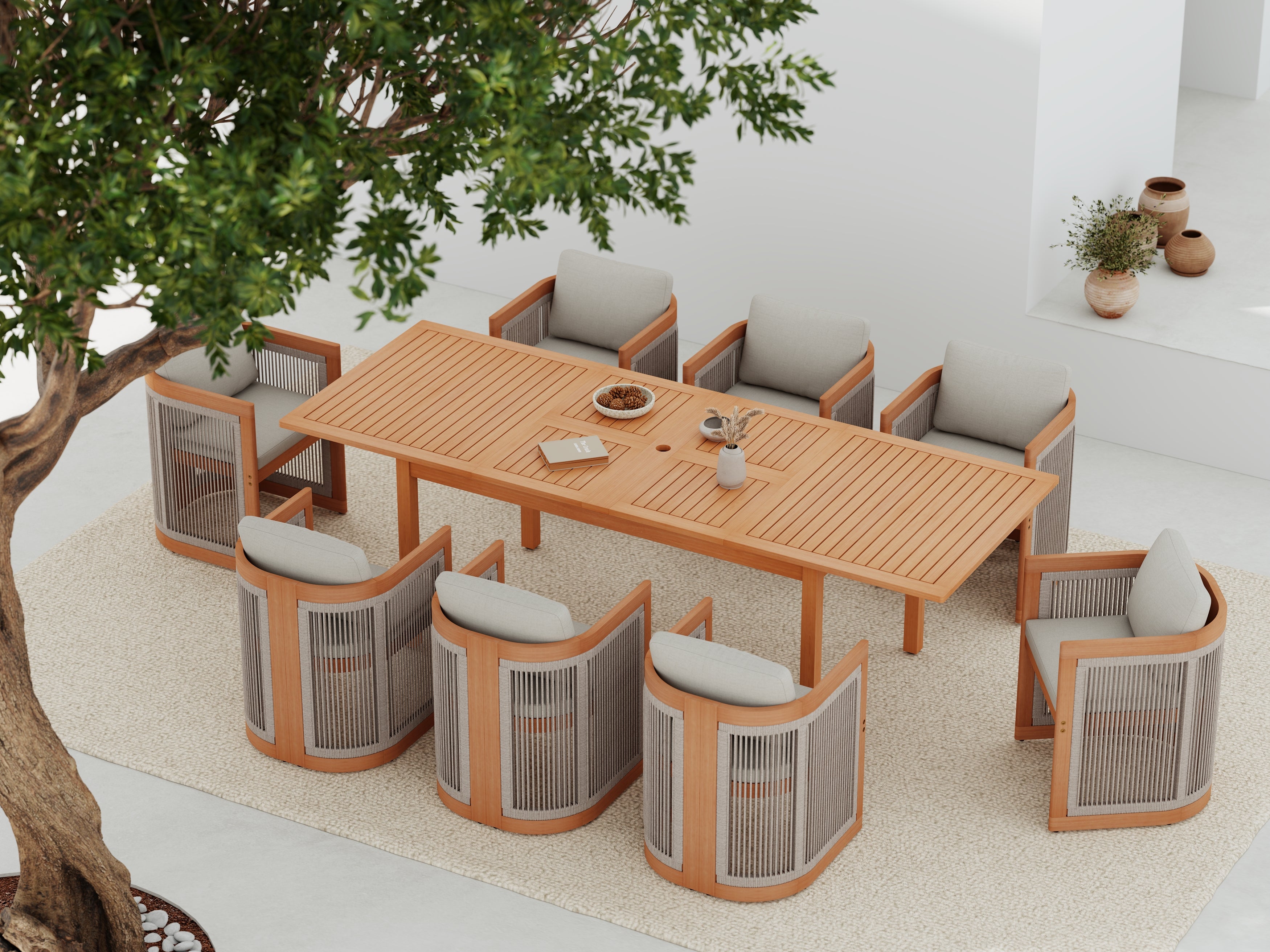

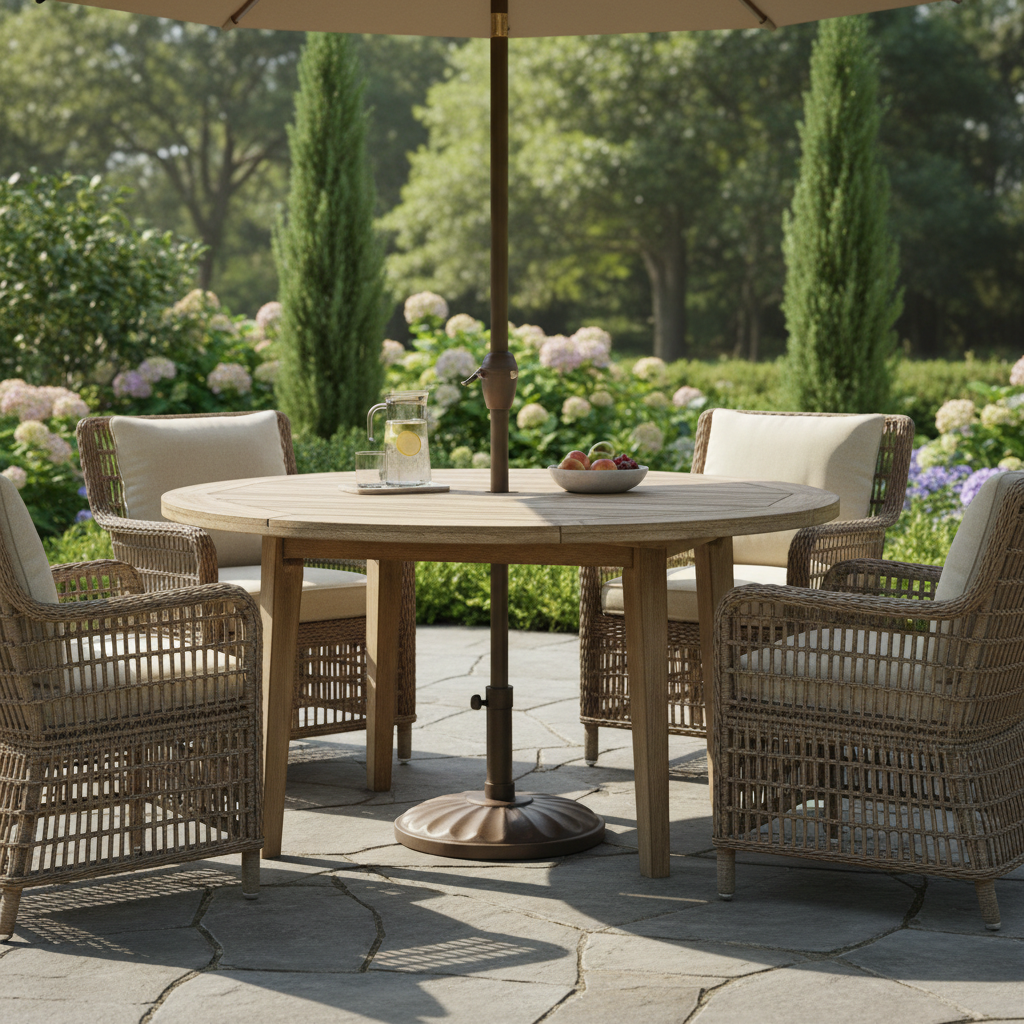
Yes, absolutely. While a dining table with an umbrella hole helps hold the pole in a vertical position, it is not designed to support the umbrella on its own. You should always place a weighted umbrella base (typically 30 to 50 lbs minimum for table-supported umbrellas) beneath the table to keep it securely anchored during sudden wind gusts.
Many homeowners assume that inserting an umbrella pole through a sturdy dining tabletop provides enough support. However, omitting an umbrella base is one of the most common—and costly—mistakes in outdoor patio setup.
Here is why you still need an umbrella stand under your dining table, how wind leverage works, and how to choose the right base weight for your patio set.

Why the Table Hole Alone Isn't Enough
To understand why a stand is necessary, think about how wind interacts with an outdoor umbrella:
-
The Table Stabilizes Laterally, Not Vertically: The hole in your outdoor dining table with umbrella hole acts as a guide ring. It prevents the pole from swaying left or right, but it provides zero downward weight.
-
The Canopy Acts Like a Sail: When open, an umbrella canopy catches wind currents. Without a heavy base holding the bottom of the pole to the ground, even a moderate breeze can lift the umbrella straight out of the hole or cause it to lean violently.
-
Extreme Leverage on the Tabletop: If wind tilts an unanchored umbrella, the pole acts as a powerful lever against the edges of the table's center hole. This force can bend aluminum, crack wood, or shatter glass tabletops.
To learn more about how table integration works, read our guide on how to attach an umbrella to a patio table.

What Happens If You Don't Use an Umbrella Base?
Skipping the umbrella stand creates several safety hazards and risk of property damage:
-
Table damage: Constant friction and wind movement can scratch, dent, or weaken the table frame.
-
Tip-overs: Strong gusts can lift the umbrella and overturn lightweight dining tables, spilling drinks and damaging chairs.
-
Safety hazards: A runaway umbrella blown across the yard or deck poses a threat to guests, windows, and surrounding property.
How Heavy Should Your Umbrella Base Be Under a Dining Table?
Because the table provides lateral support, an umbrella placed through a table requires less weight than a freestanding umbrella (which typically needs 75–100+ lbs). However, you still need sufficient mass beneath the table.
Here is a quick reference guide based on canopy diameter:
| Umbrella Canopy Size | Recommended Base Weight (Through-Table) | Ideal For |
| up to 6.5 ft | 30 – 35 lbs | Bistro sets, 2 to 4-person small round tables |
| 7.5 ft – 9 ft | 40 – 50 lbs | Standard 4 to 6-person patio dining sets |
| 10 ft – 11 ft | 50 – 75 lbs | Large 6 to 8-person rectangular dining tables |
Note: If you plan to use the umbrella freestanding (without a table), increase the recommended weight by at least 20 to 30 lbs.
For help picking the right canopy dimensions before buying a base, check out our article on what size patio umbrella to choose for your outdoor dining table.
Key Features to Look for in an Under-Table Umbrella Base
When shopping for an umbrella stand to place beneath your dining set, keep these factors in mind:
-
Low Profile / Flat Design: Make sure the base is low enough so guests don't bump their feet against it while seated.
-
Proper Tube Height: Ensure the stem of the base fits beneath the bottom crossbar or support ring of your dining table.
-
Tightening Knob: Choose a base with a secure side knob to clamp tightly onto the umbrella pole.
-
Weather-Resistant Material: Look for heavy-duty cast iron, resin-filled bases, or powder-coated steel to prevent rust on your patio deck.

An umbrella hole and a weighted base work as a team: the table holds the pole upright, while the base keeps the pole anchored to the ground. Using both ensures your dining space remains safe, comfortable, and stylish all season long.
If you are currently setting up your backyard space, explore our full collection of patio dining sets with umbrella holes designed for easy shade integration.