
When choosing an outdoor dining table, one key design decision you’ll face is whether to get a table with a built-in umbrella hole or one without. Both have their advantages — the right choice depends on how you plan to use your outdoor space.

Why you might prefer a table with an umbrella hole?
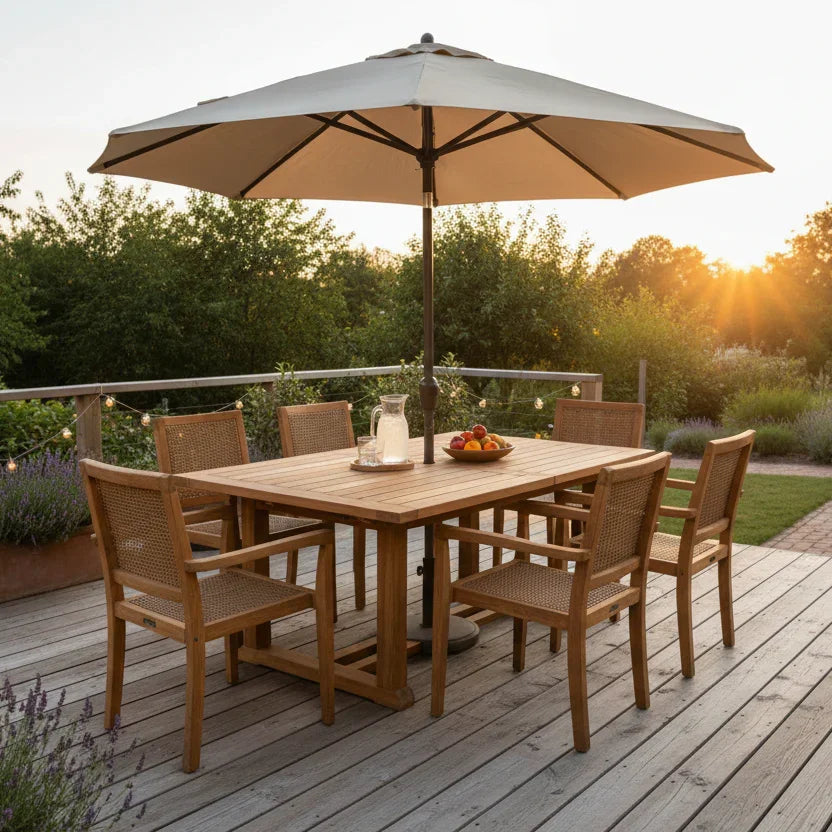
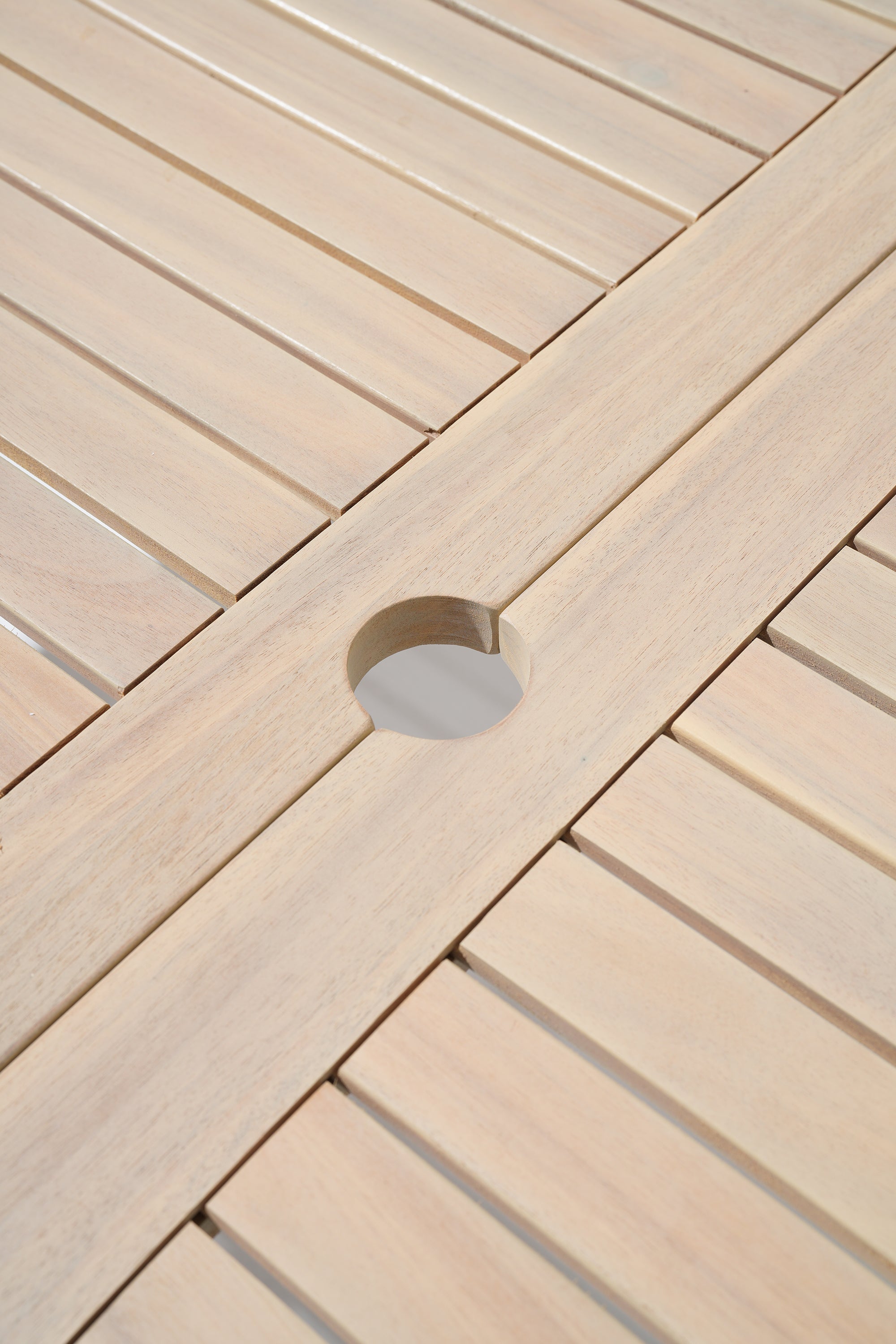
- Sun (and light rain) protection: A built-in umbrella hole lets you place a patio umbrella right through the center of the table — perfect for shading your dining area from strong sun or shielding against a light drizzle. Shade can make outdoor meals far more comfortable during sunny afternoons.
- Comfort & usability: With an umbrella, the tabletop stays cooler (wood or metal won’t heat up under direct sun), making it more pleasant to sit, eat, even work outdoors.
- Aesthetic & ambiance: An umbrella often becomes a central design element — adding style, color, and a relaxed “patio vibe” to your outdoor setting.
- Flexibility: If your table has a removable cap or plug for the hole (common in many designs), you can use the table with or without an umbrella — so you get the best of both worlds.
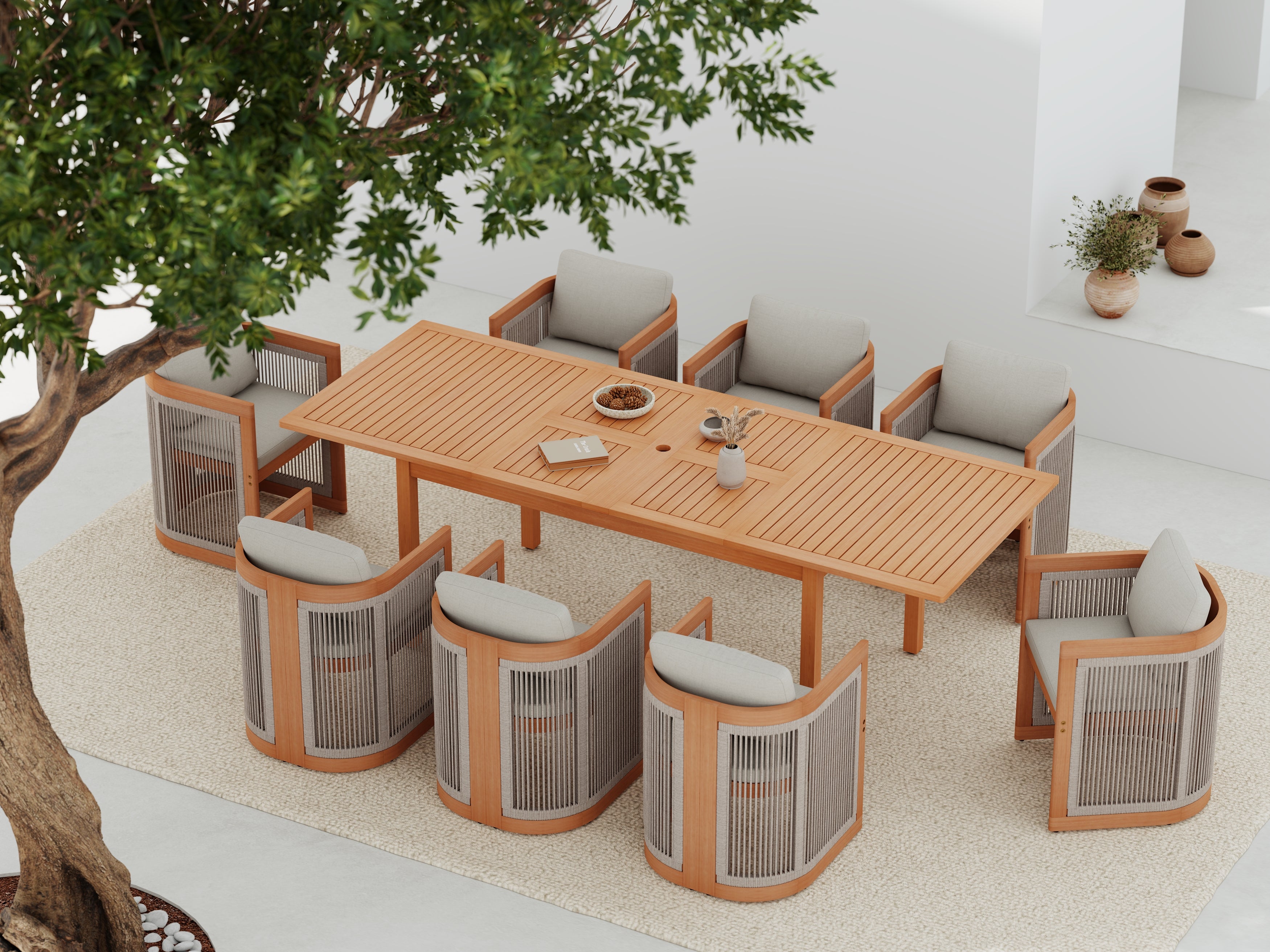
For example, the set Foristern Wooden Dining Set for 8 People from Jardina offers a generous 90.6″ surface for 8 people — ideal for family meals — and while if it lacks a hole, you’d miss the option to add an umbrella. In contrast, the set Thalea 83'' Rectangular Wooden Outdoor Dining Set with Umbrella Hole explicitly includes an umbrella hole, making it easier to add shade and turn your patio into a comfortable year-round gathering spot.

Why you might prefer a table without an umbrella hole?
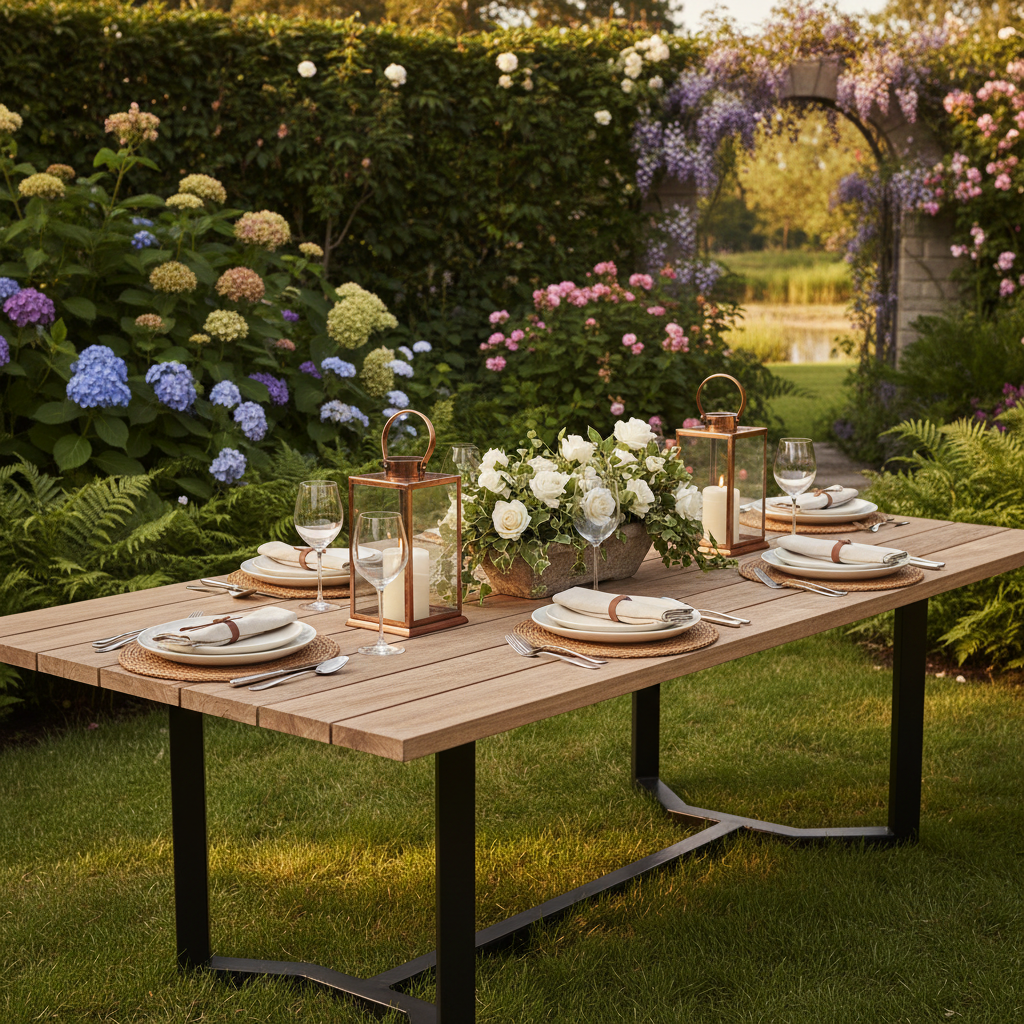
- Simpler, cleaner design: A table without a hole often looks more seamless — just a flat, uninterrupted surface. For those who prefer minimalism or don’t plan to use an umbrella, this can look cleaner and more elegant.
- Potentially stronger surface: Without a cut-out, the tabletop might feel more solid and stable. There’s no need to worry about a grommet ring or the structural weakening that might come from cutting a hole.
- Better for certain layouts: If your outdoor space is shaded, covered (e.g., under a pergola or patio roof), or you use a freestanding umbrella base elsewhere, a hole becomes unnecessary — and you might prefer a full-surface table. As discussed in patio-furniture guides, sometimes a freestanding umbrella (with base) offers better flexibility: you can place shade where you need it, not just at the center of the table.
- Less maintenance / hardware to worry about: Tables with holes often come with metal or plastic grommets, and if not sealed or maintained, those can degrade under weather. A slab-top table avoids that complexity.

So — which is “better”? It depends on your needs
| Scenario / Need | Best Choice |
|---|---|
| You want shade for sunny afternoons, or live in a hot climate | Table with umbrella hole |
| You prefer a clean, minimal aesthetic or rarely use an umbrella | Table without hole |
| You have a sheltered patio / covered outdoor area | Table without hole might be fine |
| You want flexibility — e.g. sometimes shade, sometimes open sun | Table with hole (with removable plug) |
| You move furniture often or need maximum stability | Consider a full-surface table (no hole) or a heavy, sturdy table with hole + weighted umbrella base / grommet |

If you’re designing a patio or backyard meant for everyday outdoor dining, entertaining, or lounging, going with a table with an umbrella hole is usually the more versatile choice. It gives you the flexibility to add shade when needed and still enjoy a full tabletop when not.

On the other hand, if you know your space is well-shaded, mostly used under cover, or you care most about a clean, unified look, a hole-free table could be the right fit — simpler, cleaner, and often easier to maintain.